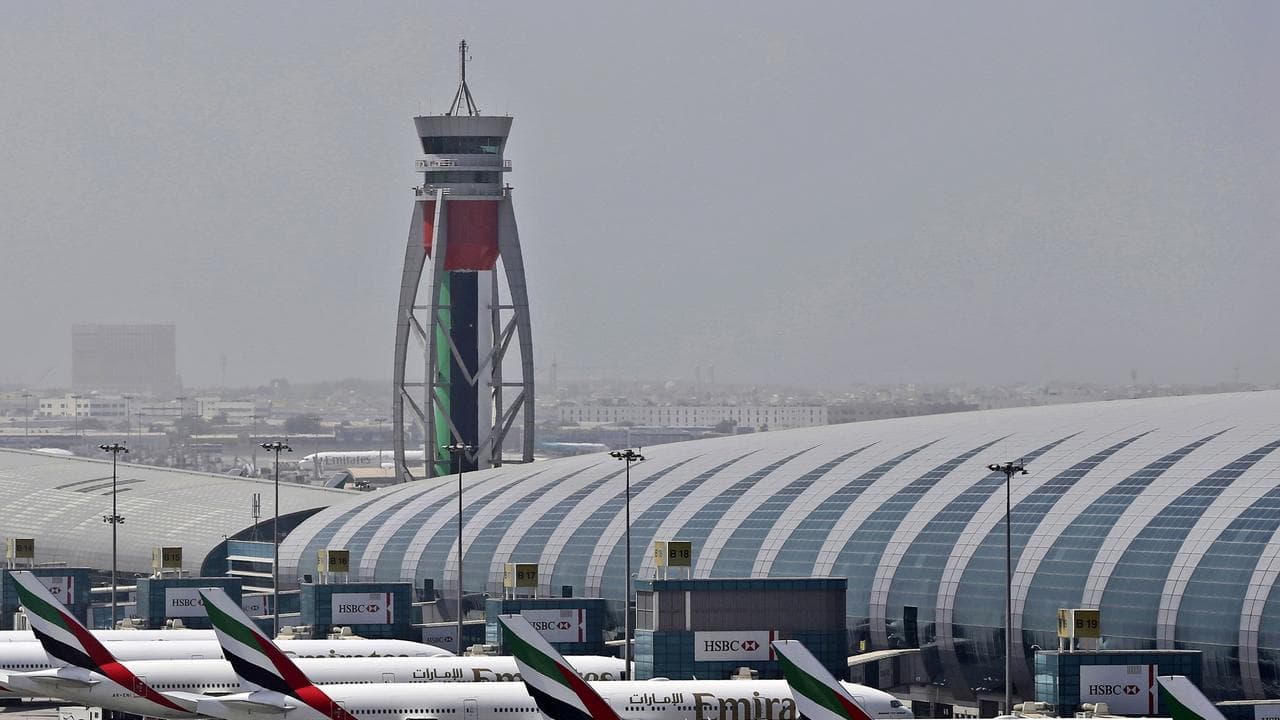
The airline and tourism industries are scrambling to deal with the fallout from the escalating US and Israeli air war against Iran, while governments rush to bring stranded travellers home from the Middle East following the cancellation of more than 20,000 flights in recent days.
Major Gulf hubs including Dubai, the world's busiest international airport, remained closed or severely restricted for a fourth day, leaving tens of thousands of passengers stranded.
According to Flightradar24, some 21,300 flights have been cancelled at seven major airports including Dubai, Doha and Abu Dhabi since the strikes started.
The attacks have upended travel across a growing region with several thriving business hubs that are trying to diversify away from oil-dominated economies.
The turmoil also narrows an already-slim flight corridor for long-haul flights between Europe and Asia, complicating operations for global air carriers.
Stranded travellers across the Gulf rushed to secure seats on a limited number of repatriation flights as governments moved to bring passengers home even as explosions tore through Tehran and Beirut. Emirates, flydubai and Etihad have been operating a limited number of flights since Monday, mostly to repatriate stranded passengers.
"It's pretty well the biggest shutdown we've seen certainly since the COVID pandemic," said Paul Charles, CEO of luxury travel consultancy PC Agency, adding that beyond passenger disruption the cargo impact would run to "billions of dollars".
The UAE government said 60 flights had taken off, operating in dedicated emergency air corridors. The next phase will be operating more than 80 flights.
The United States is securing military and charter flights to evacuate Americans from the Middle East, a US State Department official said on X on Tuesday, adding that it was in contact with nearly 3000 US citizens.
The department was under fire from US lawmakers who said the Trump administration should have advised people to leave before the attacks started.
Delta Air Lines said on Tuesday it has paused New York-Tel Aviv flights through March 22 because of the conflict and is offering rebooking options and a travel waiver for affected customers through March 31.
Demand for alternatives to Gulf airlines has surged, with bookings and ticket prices jumping on routes like Hong Kong-London, Reuters checks showed on Tuesday. Should the conflict drag on, it could cost the Middle East billions in tourism dollars, analysts estimate.
"We can't get home, we can't go back to work, we can't get the kids back to school," said Tatiana Leclerc, a French tourist stuck in Thailand, whose flight had been set to go via the Middle East hubs that are a key link between Asia and Europe.
In an early sign of a thaw, Virgin Atlantic said on Tuesday it would resume services as scheduled between London's Heathrow Airport and Dubai or Riyadh.
Shares of air carriers worldwide fell on Tuesday. The operational and financial effect varies significantly among airlines, said Karen Li, JP Morgan's head of Asia infrastructure, industrials and transport research.
"There are important differences across carriers in terms of hedging strategy, air cargo exposure, and network rerouting capabilities that will shape the actual impact from the Middle East situation," Li said.
Oil prices have surged amid the widening conflict. Benchmark crude is up roughly 30 per cent so far this year, threatening to lift jet fuel costs and squeeze airline profits.
Delta said every one-cent increase in the price of jet fuel per gallon added about $US40 million ($A57 million) to its yearly fuel bill.
Qantas Airways CEO Vanessa Hudson said the airline has "pretty good" fuel hedging but the spike in oil prices was significant for the industry. The Australian airline's shares fell 1.8 per cent.


