Senior Trump administration officials say Iran poses a major threat to the United States ahead of negotiations over Tehran's nuclear program.
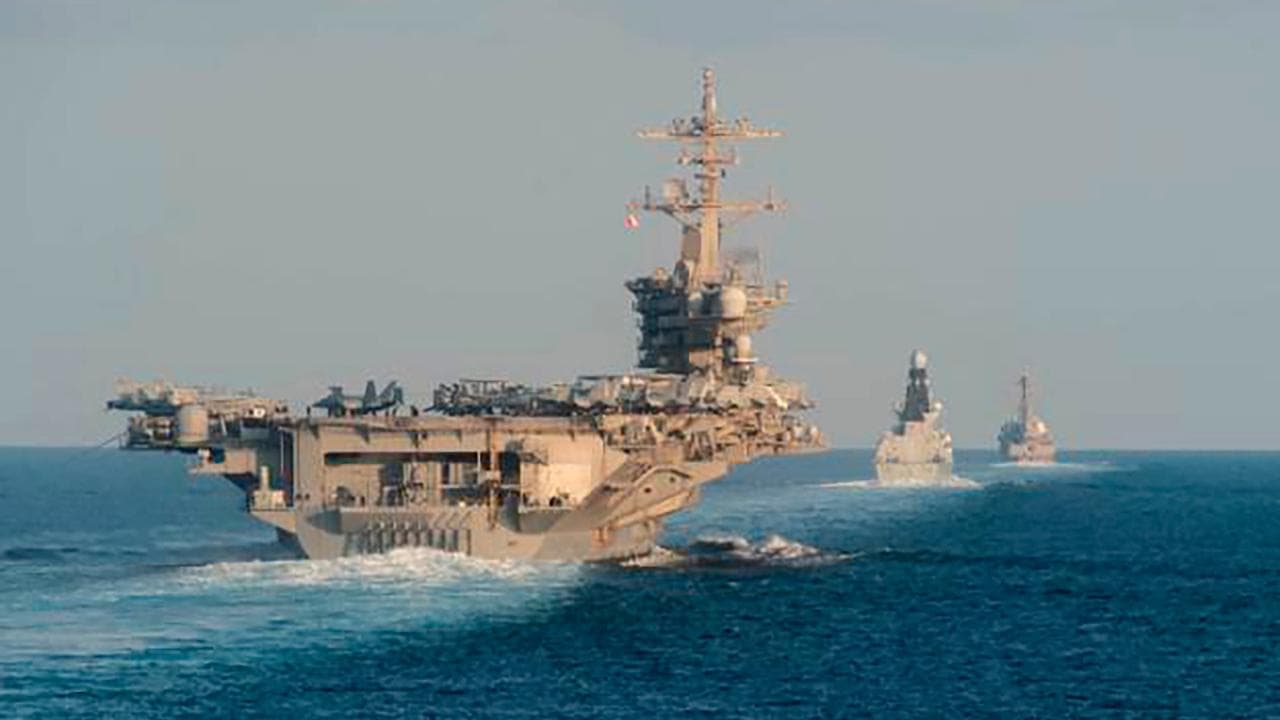
US and Iranian negotiators are due to meet in Geneva on Thursday, local time, the third round of nuclear talks in 2026, as the US has built up one of its biggest military deployments in the Middle East ahead of possible strikes on the Islamic Republic.
President Donald Trump ordered strikes on Iran in 2025, claiming in July they had "obliterated" the country's nuclear facilities.
"After their nuclear program was obliterated, they were told not to try to restart it, and here they are," US Secretary of State Marco Rubio told reporters.
"You can see them always trying to rebuild elements of it. They're not enriching right now, but they're trying to get to the point where they ultimately can."
Rubio said Iran also possessed a very large number of ballistic missiles that threaten US interests in the region and it was trying to develop weapons that can reach the continental United States.
"Beyond just the nuclear program, they possess these conventional weapons that are solely designed to attack America and attack Americans if they so choose to do so ... They already possess weapons that can reach much of Europe already now, as we speak," Rubio said.
Earlier, Vice President JD Vance the US position is that Iran can’t have a nuclear weapon, and Trump preferred settling the matter using diplomacy.
However he would unleash the US military against Iran, if necessary, and that “most Americans understand that you can’t let the craziest and the worst regime in the world have nuclear weapons", Vance told Fox News.
Meanwhile, satellite photos appear to show the American vessels that typically are docked in Bahrain, the home of the US Navy’s 5th Fleet, all out at sea.
Before Iran’s attack on Qatar in June, the 5th Fleet similarly scattered its ships at sea to protect against a potential attack.
Trump touched on Iran and the nuclear negotiations in his State of the Union speech late on Tuesday, US time.
“They were warned to make no future attempts to rebuild their weapons program, and in particular nuclear weapons, yet they continue. They’re starting it all over,” Trump said.
Responding to Trump, Iranian Foreign Ministry spokesman Esmail Baghaei sought to compare him to Joseph Goebbels, Adolf Hitler’s propaganda minister.
He accused Trump and his administration of conducting a “disinformation & misinformation campaign” against Iran.
“Whatever they’re alleging in regards to Iran’s nuclear program, Iran’s ballistic missiles, and the number of casualties during January’s unrest is simply the repetition of ‘big lies", Baghaei wrote on social media platform X.
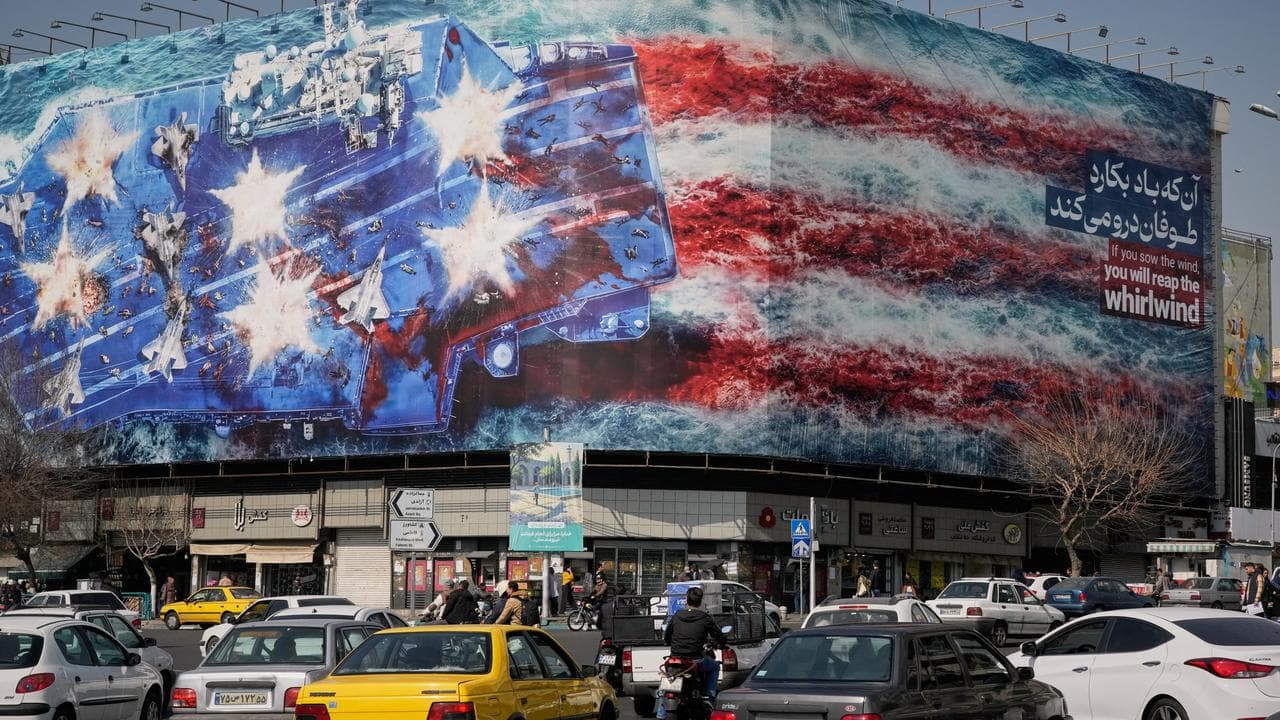
Mohammad Bagher Qalibaf, Iran's parliament speaker, said separately that the US could either try diplomacy or face Iran's wrath.
“If you choose the table of diplomacy - a diplomacy in which the dignity of the Iranian nation and mutual interests are respected - we will also be at that table," Qalibaf said, according to the semiofficial Student News Network, a media outlet believed to be close to the all-volunteer Basij force of Iran's paramilitary Revolutionary Guard.
“But if you decide to repeat past experiences through deception, lies, flawed analysis and false information, and launch an attack in the midst of negotiations, you will undoubtedly taste the firm blow of the Iranian nation and the country’s defensive forces.”
A flight carrying Iranian Foreign Minister Abbas Araghchi and his team arrived late on Wednesday in Geneva, where they will meet American officials led by special US Mideast envoy Steve Witkoff.
With Reuters


