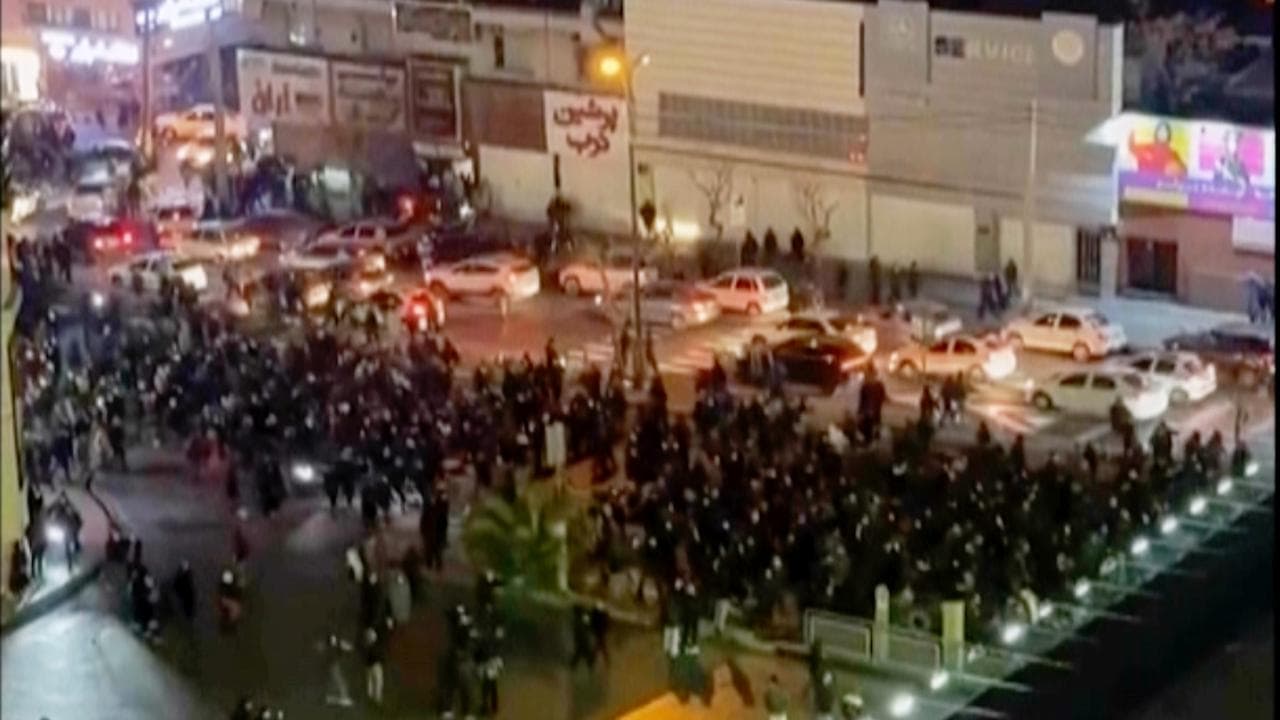
Iran has been largely cut off from the outside world after authorities blacked out the internet to curb growing unrest as video showed buildings ablaze in anti-government protests raging in several cities across the country.
Rights groups have already documented dozens of deaths of protesters in nearly two weeks and, with Iranian state TV showing clashes and fires, the Tasnim news agency reported that several police officers had been killed overnight.
In a televised address, Supreme Leader Ayatollah Ali Khamenei vowed not to back down, accusing demonstrators of acting on behalf of émigré opposition groups and the United States, and a public prosecutor threatened death sentences.
The unrest has not mobilised as many layers of society as other bouts of protest in recent years but the authorities look more vulnerable because of a dire economic situation and the aftermath of last year's war with Israel and the United States.
While the initial protests were focused on the economy, with the rial currency losing half its value against the US dollar last year and inflation topping 40 per cent in December, they have morphed to include slogans aimed directly at the authorities.
The internet blackout has sharply reduced the amount of information flowing out of the country.
Phone calls into Iran were not getting through.
At least 17 flights between Dubai and Iran were cancelled, Dubai Airport's website showed on Friday.
Protests began late last month with shopkeepers and bazaar merchants demonstrating over accelerating inflation and the rial's plunge but soon spread to universities and provincial cities, with young men clashing with security forces.
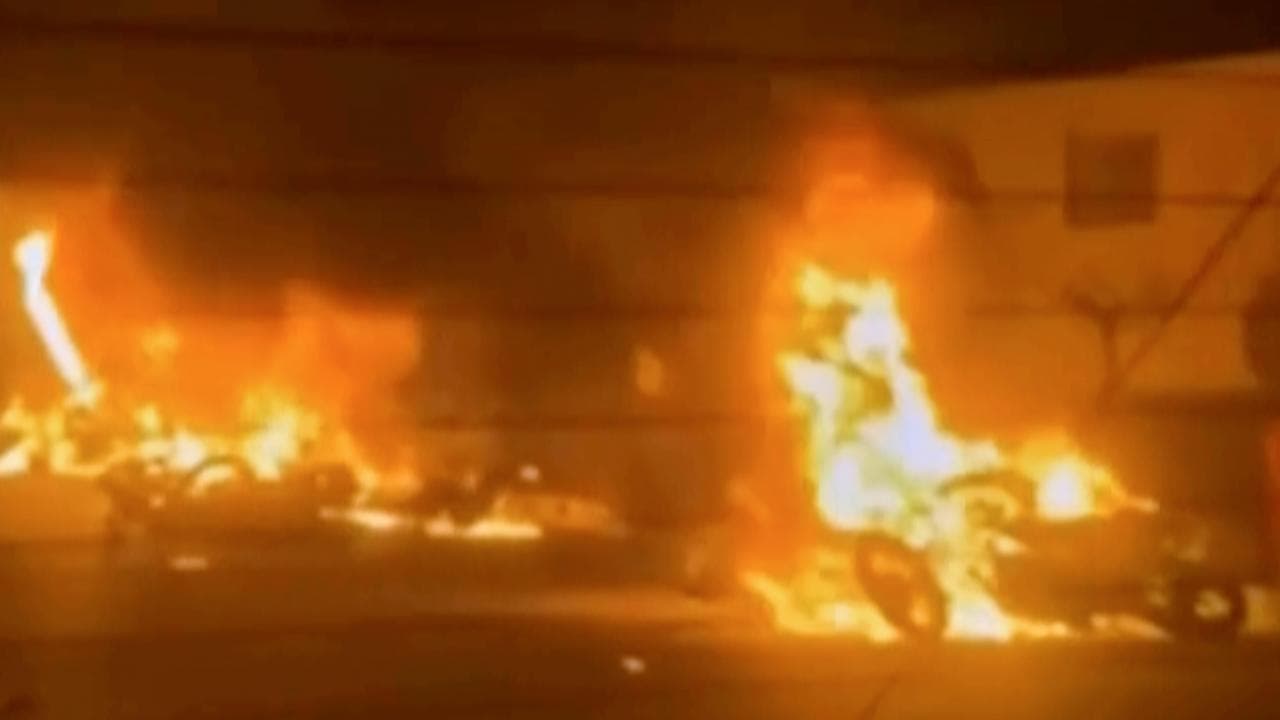
Images published by state television overnight showed what it said were burning buses, cars and motorbikes as well as fires at underground railway stations and banks.
It blamed the unrest on the People's Mujahedin Organisation, an opposition faction headquartered abroad that splintered off after the 1979 Islamic Revolution and is also known as the MKO or MEK.
A state TV journalist standing in front of fires on Shariati Street in the Caspian Sea port of Rasht said: "This looks like a war zone - all the shops have been destroyed."
Videos verified by Reuters as having been taken in the capital Tehran showed hundreds of people marching.
Authorities have tried a dual approach - describing protests over the economy as legitimate while condemning what they call violent rioters and cracking down with security forces.
Last week President Masoud Pezeshkian urged authorities to take a "kind and responsible approach" and the government offered modest financial incentives to help counter worsening impoverishment as inflation has soared.
But with unrest spreading and clashes appearing more violent, the Supreme Leader, the ultimate authority in Iran and above the elected president and parliament, used much tougher language on Friday.
"The Islamic Republic came to power through the blood of hundreds of thousands of honourable people. It will not back down in the face of vandals," he said, accusing those involved in unrest of seeking to please US President Donald Trump.
Tehran's public prosecutor said those committing sabotage, burning public property or engaging in clashes with security forces would face the death penalty.
Iran's fragmented external opposition factions called for more protests, and demonstrators have chanted slogans including "Death to the dictator!" and praising the monarchy that was overthrown in 1979.
Reza Pahlavi, exiled son of the late shah, told Iranians in a social media post: "The eyes of the world are upon you. Take to the streets."
However, the extent of support inside Iran for the monarchy or for the MKO, the most vocal of émigré opposition groups, is disputed.
Despite the increased pressure, Iranian Foreign Minister Abbas Araqchi said on Friday the chance of foreign military intervention in Iran was "very low".
He said the foreign minister of Oman, which has often interceded in negotiations between Iran and the United States, would visit on Saturday.
The Islamic Republic has weathered repeated bouts of major unrest across the decades, including student protests in 1999, mass demonstrations over a disputed election outcome in 2009, demonstrations over economic hardships in 2019 and the Woman, Life, Freedom protests in 2022.


