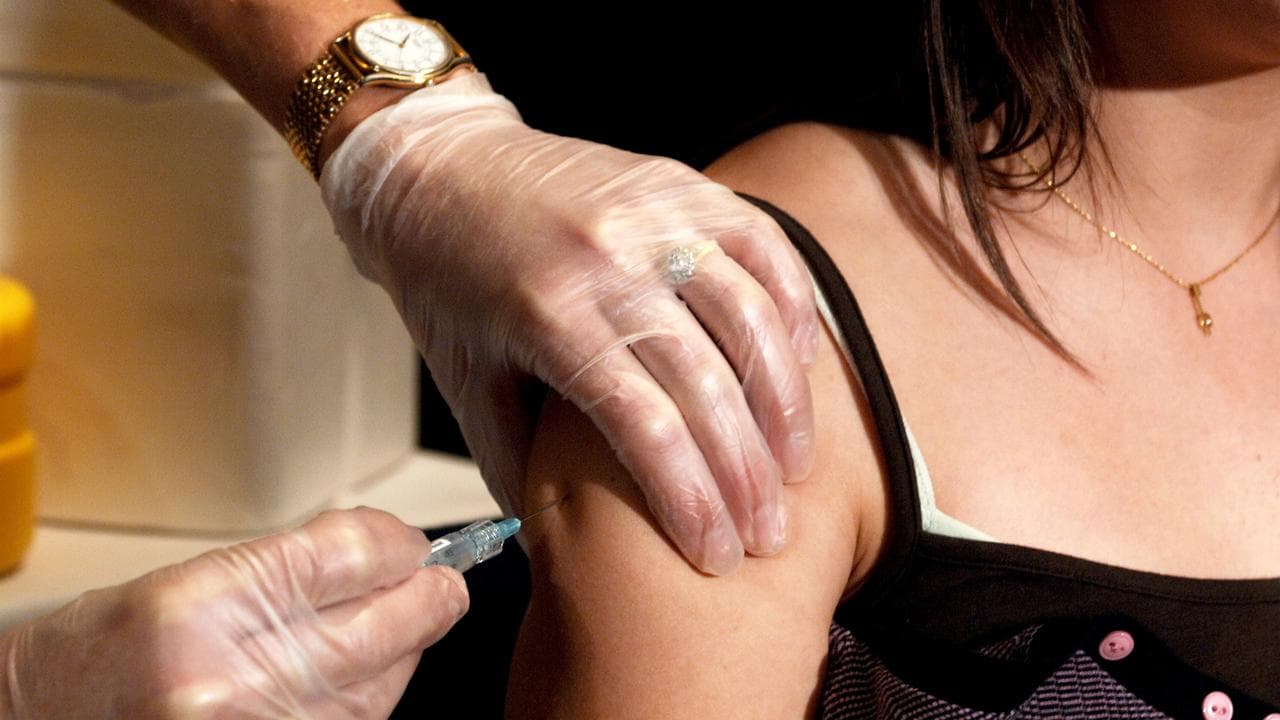
What was claimed
HPV infection is a common side effect of the HPV vaccine.
Our verdict
False. HPV infection is not a side effect of HPV vaccines, which do not contain live or inactivated viruses.
AAP FACTCHECK - A viral video that claims contracting an HPV infection is a common side effect of the HPV vaccine is "utterly ignorant of the science", experts say.
Unlike some vaccines, the HPV vaccine, which is recommended for all adolescents in Australia and New Zealand, does not contain a live or inactivated virus.
HPV infection is also not listed as a side effect of the jab.
The claim appears in a September 2 Facebook post by an Australian user that has been viewed more than 570,000 times.
“Do you know what one of the most common side effects listed on the package insert [of the HPV vaccine] is if you get that vaccine?" a man in the video asks.
"You will contract the HPV virus."
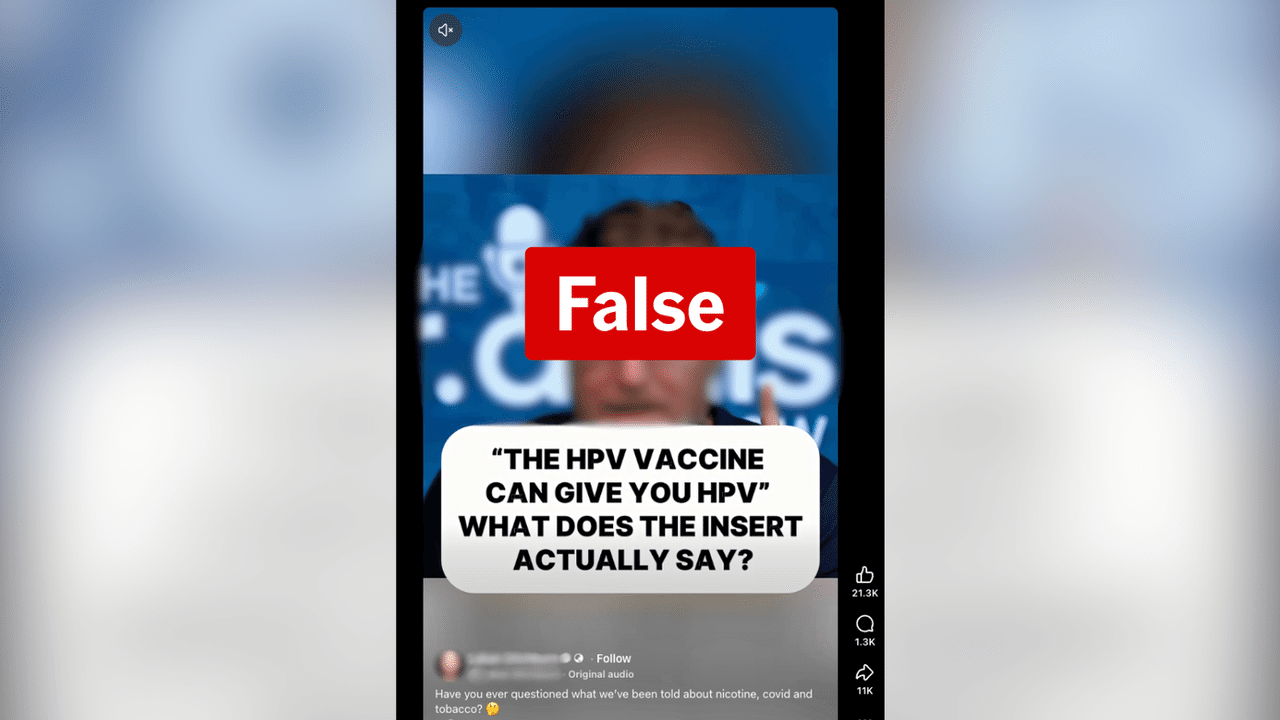
The Australian user also posted the same clip in both April 2026 and May 2026, gaining more than two million views in total across the three posts.
There's no evidence that the HPV vaccine causes the HPV virus, and experts told AAP FactCheck the claim is false.
The Human papillomavirus (HPV) is a common sexually transmitted infection.
Almost all cervical cancer cases are believed to be caused by HPV infection, as well as most anal and vaginal cancers, according to Cancer Council NSW.
The HPV vaccine was co-developed by Scottish-born Australian Ian Frazer, who was named Australian of the Year in 2006 after the vaccine was approved for use.
Professor Frazer and a colleague, Jian Zhou, made the key discoveries that led to the vaccine's commercial development and patented the HPV vaccine technology, according to a paper Prof Frazer wrote on the vaccine's history.
Australia became the first country to roll out a nationwide HPV vaccination program in 2007, and it is currently recommended for those aged 9 to 25, people with severely immunocompromising conditions and men who have sex with men.

The HPV vaccine approved for use in Australia and New Zealand is Gardasil 9.
HPV infection is not listed as a side effect of Gardasil 9 in information published by the Therapeutic Goods Administration, Australia’s medicine regulator.
The US package insert for the vaccine also doesn't list HPV infection as a side effect of Gardasil 9.
According to the US package insert, the most common adverse reactions are pain, swelling and redness around the injection site (page 5), fever, headache, dizziness, nausea, fatigue and diarrhoea (page 6).
Prof Frazer, who remains a professor at the University of Queensland, told AAP FactCheck "there is no possibility that the currently available vaccines will cause HPV infection".
While there have been rare cases of people becoming harmfully infected from vaccines that rely on attenuated (weakened) live viruses or inactivated (killed) viruses to invoke an immune response, the HPV vaccine contains neither.
Instead, it includes virus-like particles developed to mimic only the outer shell of the HPV virus, training the immune system to recognise it, Prof Frazer said.
"The vaccine comprises the shell of the virus, with no viral genetic material," he said.

"The shell has no capacity to infect, but rather induces an immune response (antibody) which will neutralise any HPV virus that the immunised person is exposed to through sexual or other activity."
Julia Brotherton, an expert in cervical cancer prevention at the University of Melbourne, said the video was "utterly ignorant of the science behind the vaccine".
"The vaccine is not a live vaccine and contains absolutely no virus," Professor Brotherton told AAP FactCheck.
"It contains no viral DNA and cannot possibly cause an infection."
Annika Antonsson, an HPV researcher at the University of Queensland, also confirmed HPV infection was not listed as a vaccine side-effect.
"No one will contract HPV from the vaccine," Associate Professor Antonsson told AAP FactCheck.
A 2022 World Health Organisation position paper on HPV vaccines stated all six HPV vaccines then licensed for use did not contain live viruses or DNA "and are therefore non-infectious" (page 653).
AAP FactCheck is an accredited member of the International Fact-Checking Network. To keep up with our latest fact checks, follow us on Facebook, Instagram, Threads, X, BlueSky, TikTok and YouTube.


