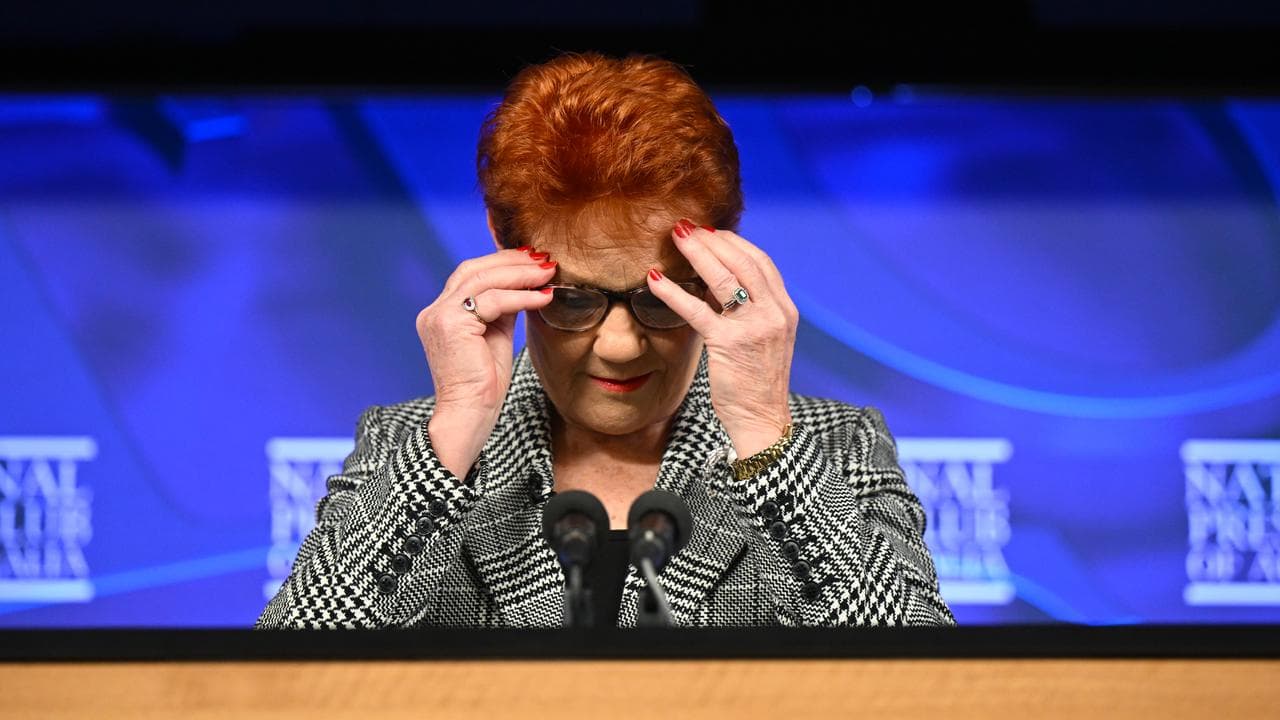
Pauline Hanson made several false and misleading claims in her first National Press Club speech, including on immigration, tax and homelessness.
The One Nation leader's remarks at the June 17, 2026, event were packed with statistics, and while many of the figures she cited were accurate, others were distorted or flat-out wrong.
Senator Hanson's office was asked for evidence for each of the assessed claims, but provided no response.
HOMELESSNESS
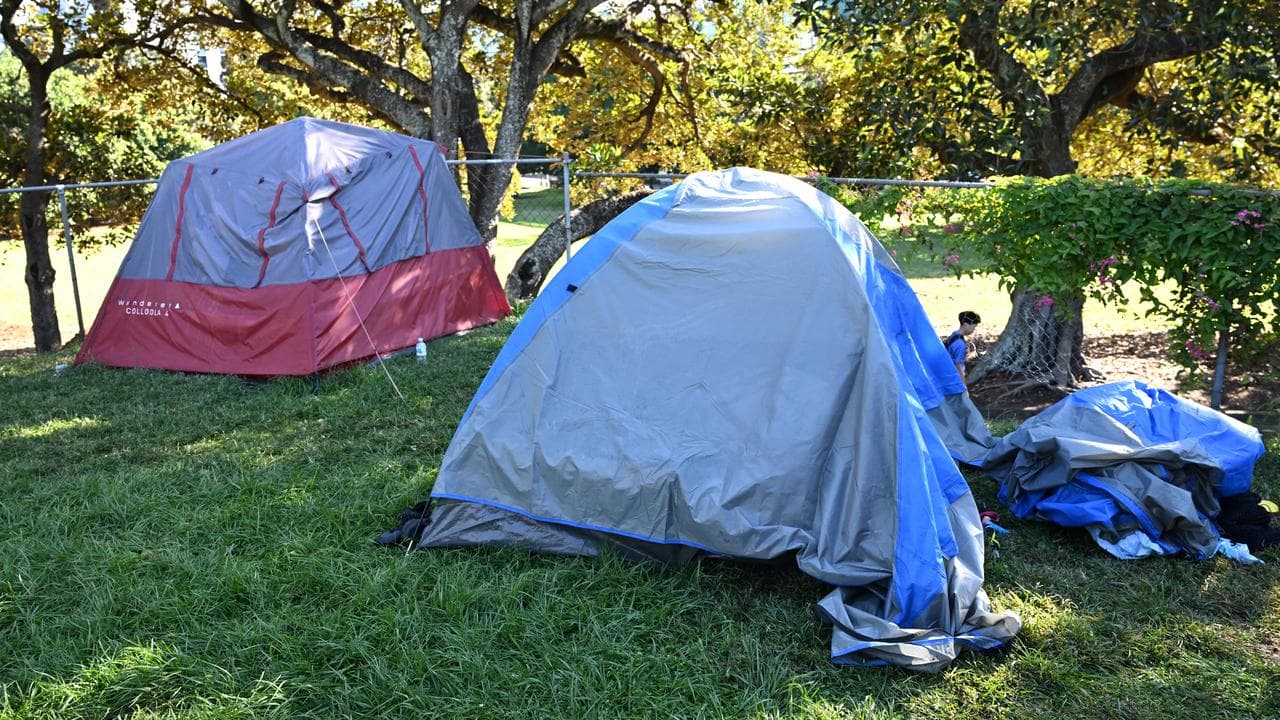
During a part about housing, Senator Hanson claimed "around 130,000 Australians are sleeping rough every night" (timestamp 14 minutes 22 seconds).
This is misleading, and appears to be a misinterpretation of census data showing 122,494 people in Australia were homeless in 2021.
However, only 7636 (six per cent) of those were categorised as “sleeping rough” (Table 1.1).
The rest were living in supported housing, temporary accommodation, boarding houses or severely overcrowded dwellings.
The Australian Bureau of Statistics (ABS), which runs Australia’s census every five years, defines homelessness as being in “inadequate” accommodation with limited or no tenure and no space for socialising.
Homelessness is not the same as “rooflessness”, the ABS says.
The ABS groups homelessness into six categories: People living in improvised dwellings, tents or sleeping out; people in supported accommodation for the homeless; people staying temporarily with other households; people living in boarding houses; people in other temporary lodgings; and people living in 'severely' crowded dwellings.
In its census methodology, the ABS says the first category is “also known as ‘people sleeping rough’”.
Hal Pawson, an expert on housing policy and homelessness at UNSW, said the census was generally accepted as the best source of data on rough sleepers.
Senator Hanson’s claim of around 130,000 rough sleepers was 17 times the ABS figure, Professor Pawson told AAP FactCheck.
The largest category of homelessness recorded in the 2021 census (47,895 people, or 39 per cent) was due to people living in “severely crowded dwellings”, which the ABS defines as dwellings that would need four or more additional bedrooms to suitably accommodate every person living there.
CAPITAL GAINS TAX
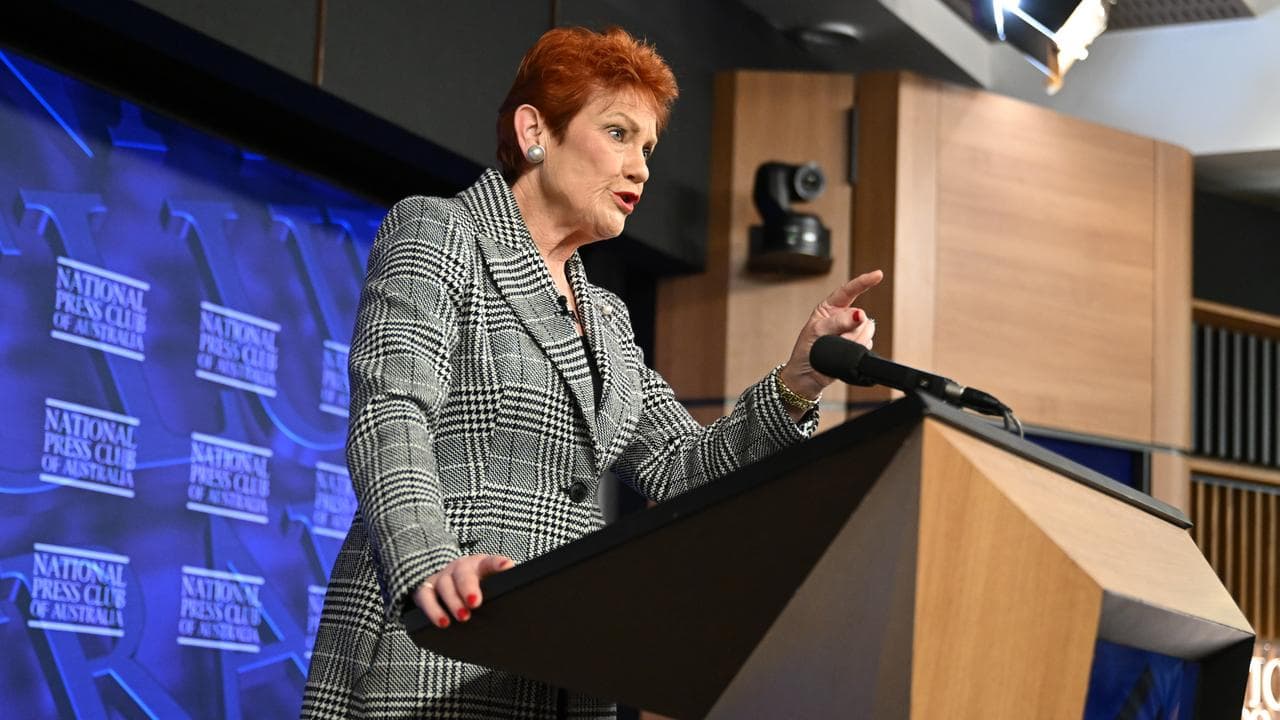
Senator Hanson said the largest age group affected by the Labor government's capital gains tax (CGT) changes were those aged under 35 (timestamp 32:14).
After citing various figures about the number of 18- to 34-year-olds reporting capital gains, she claimed, "The largest capital gains cohort is younger".
This is false. Far fewer people under 35 report a capital gain than those aged 35 and over.
Senator Hanson's claim appears to be based on an article in The Australian that analysed the impacts of the proposed changes using Australian Taxation Office (ATO) data for 2022/23.
The capital gains figures she used in her speech are identical to those in the article.
However, The Australian analysis does not say those under 35 are the largest cohort reporting capital gains, only that they are the "largest growth cohort in the past 10 years".
In other words, the number of people aged under 35 reporting capital gains is increasing faster than other age groups.
Older cohorts reporting capital gains far outnumber those aged under 35.
The ATO data shows 216,942 under-35s who had a tax bill in 2022/23 reported a net capital gain that year, compared with 286,870 people in the 35-49 age bracket (Table 3A, Column CQ).
In total, 717,658 people aged over 35 reported a net capital gain in 2022/23 - more than triple the number in the under-35 age bracket.
The five-year age bracket with the most people reporting a capital gain was the 35-39 group (100,512 people).
The figures used by The Australian appear to exclude those who paid no net tax after declaring a capital gain.
If this subgroup is included, the largest age bracket declaring a capital gain is those aged 75 and over (124,995 people).
ATO figures for 2023/24 similarly show the largest five-year age group declaring a net capital gain is 35- to 39-year-olds (123,246 people).
The dollar value of capital gains reported by under-35s is also significantly lower than that reported by older age groups.
The ATO data shows that in 2023/24, taxpayers aged 18-34 reported a net capital gain of $1.94 billion, while those aged 35-49 reported $9.78 billion (Table 3A, Column CR).
Those aged 18-34 paid a total of $612 million tax on those gains, while the 35-49 age group paid $3.58 billion in tax (Table 3A, Column CT).
Economist Saul Eslake said it was "unambiguous" that older age groups would be most affected by the proposed CGT changes, while younger age groups would be the least affected.
Younger age groups were proportionally less likely to report a capital gain, he said.
Only 5.2 per cent of 18- to 34-year-olds who filed a tax return reported capital gains income. By contrast, 15.4 per cent of tax filers aged over 65 reported a capital gain.
"Although there are more people in the 25-34 and 35-44 year age cohorts than in the older ones, they are much less likely to have capital gains in their income than older age groups," Mr Eslake told AAP FactCheck.
Younger age groups also accounted for a much smaller share of total reported capital gains.
Those aged 18-34 accounted for 4.9 per cent of the dollar value of capital gains reported in 2023/24, compared with 25.6 per cent of the total for those aged 55-64.
In dollar terms, the average capital gain reported by those aged 18-24 was $4,967 in 2023/24, and $7,285 for those aged 25-34. By contrast, the average capital gain reported by those aged 65+ was $42,193.
While Senator Hanson was correct that the number of younger people reporting a capital gain had grown significantly over the last decade, Mr Eslake said the average size of the capital gain being reported by those aged 18-34 had shrunk since 2018/19.
"Hence if you look at the changes in the dollar value of capital gains, rather than at the number of individuals reporting capital gains, it's clear that older individuals have been doing better."
The 2026 budget proposes that, from July 1, 2027, the 50 per cent discount on taxable capital gains will be replaced with a minimum tax rate of 30 per cent on capital gains.
The government has also proposed what's called cost base indexation, where capital gains liabilities are adjusted for inflation so only real gains are taxed.
ENGLISH PROFICIENCY
Senator Hanson also claimed that 872,000 people reported in the 2021 census that they have little or no English proficiency.
"The 2021 census showed that 1 in 4 people, 23 per cent, speak a language other than English at home," Senator Hanson claimed (timestamp 9:10).
"How can you generate social cohesion if people can’t speak the language?
"In that same census, 872,000 people self-reported, as speaking English 'not well' or 'not at all'."
This is misleading. While the ABS did find about 23 per cent of people reported speaking a language other than English at home, most said they spoke English either well or very well.
Only 15.1 per cent of this cohort said they spoke English "not well" or "not at all".
Additionally, while about 872,000 people nationwide reported speaking English either "not well" or "not at all", a proportion of this number were babies or toddlers.
Detailed census data analysed by AAP FactCheck showed 14.1 per cent (123,408) of those labelled as not speaking English well or at all were aged between 0 and 3.
An additional 829,214 children aged 0 to 3 didn't report on their English proficiency because they said only English was spoken at home.
The census figures are self-reported, with the ABS urging caution in how the results are interpreted, calling the language data indicative and not a "definitive measure".
DEMOGRAPHICS
Senator Hanson claimed that compared with the US, Australia had a far higher proportion of residents who were born overseas or had a parent born overseas.
"In the 2021 census, more than half of Australian residents, 51.5 per cent, were born overseas or had one parent born overseas - 51.5 per cent. Is that what's supported by the Australian electorate?" Senator Hanson said (timestamp 8:10).
"Is that what Australia wants? The comparable figure for the United States is 14 per cent."
Senator Hanson is correct that the 2021 census found 51.5 per cent of Australian residents were born overseas, or had a parent born overseas.
But the figure for the comparable measure in the US is wrong.
The US Census Bureau conducts an annual survey of around two million people and publishes estimates on the number of foreign-born residents.
The most recent figures available are for 2024 and estimate that 28 per cent of US residents were born overseas or had a parent born overseas.
This consisted of 15.4 per cent who were born overseas (first-generation residents), and 12.6 per cent who had a parent born overseas (second-generation residents).
The 14 per cent figure cited by Senator Hanson appears to only refer to the foreign-born population, which was 14.3 per cent in 2022.
MIGRATION
Senator Hanson incorrectly claimed Labor had been bringing in more than 1375 people per day for the past three years, as previously debunked by AAP FactCheck.
The claim appears to be an estimate of total population growth, which includes births in Australia, not only migration.
The average daily Net Overseas Migration (NOM) figure over the past three years is 1122, with a spike in rates after borders reopened following the COVID-19 pandemic.


