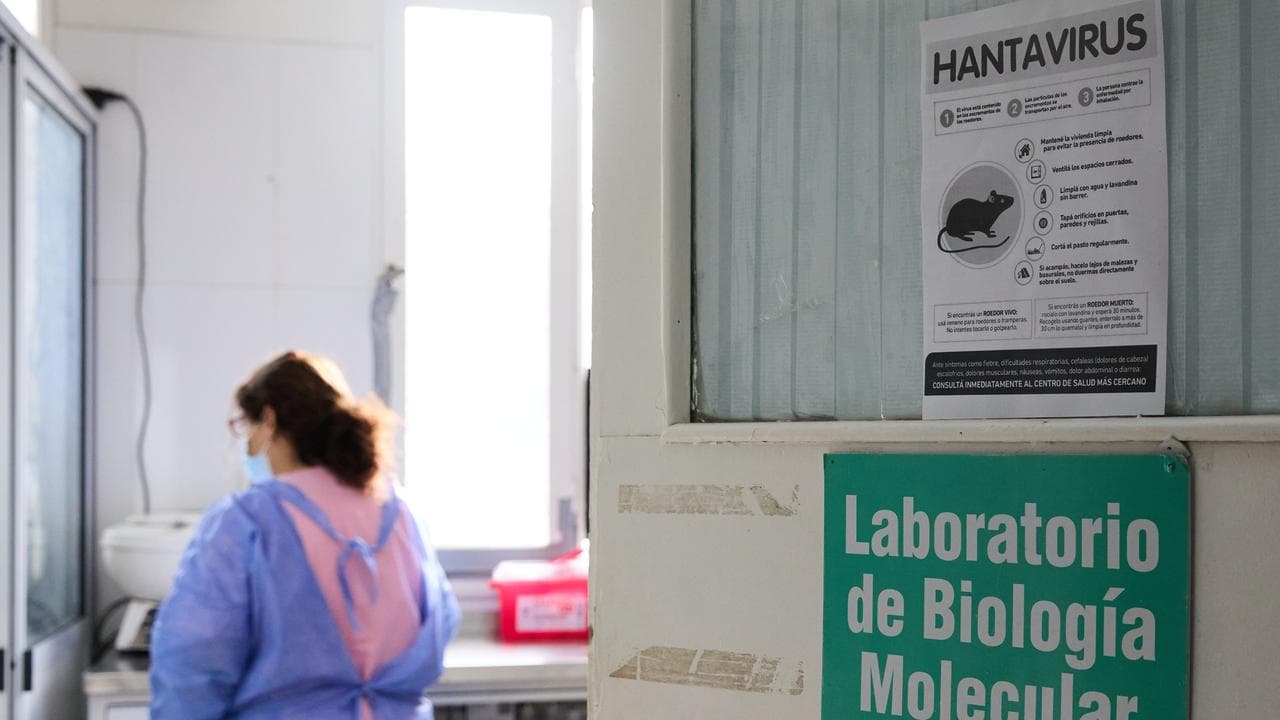
A World Health Organisation official says the United States has confirmed an individual who had an inconclusive test was later confirmed to be negative for hantavirus, bringing down the total global cases to 10 from 11.
Maria Van Kerkhove, director of the United Nations agency's department of epidemic and pandemic preparedness and prevention, said the earlier report "included one individual who had an inconclusive test ... we've had further confirmation from the United States that person was negative".
Three people - a Dutch couple and a German citizen - have died since the outbreak on the MV Hondius, a Dutch luxury cruise ship that departed Argentina on a polar expedition on April 1.
Crew, passengers and people in contact have been quarantined in several European countries.
US health officials said on Thursday there were no confirmed cases in the country, adding that 41 people, including 18 quarantined in Nebraska and Atlanta, are being monitored for possible infection.
The current outbreak involves the Andes virus, a rare hantavirus strain and the only one known to be capable of limited human-to-human transmission, typically after close and prolonged contact.
The strain has circulated in parts of Argentina and Chile for decades and the ship samples show no meaningful variation from that virus.
Van Kerkhove said WHO experts "haven't identified any changes ... in the virus to make it more transmissible, more severe".
The WHO has stressed that the outbreak was not comparable to COVID-19 and did not pose a pandemic threat.
Hantaviruses are rodent-borne viruses usually spread through contact with infected rodents' urine, droppings or saliva and can be transmitted between people in rare cases.
Incubation can last for one to six weeks before patients start presenting symptoms.
There are currently no approved vaccines or targeted antiviral treatments for hantavirus, and care is largely supportive.
The WHO recommends monitoring and quarantining high-risk contacts for 42 days after exposure, while advising low-risk contacts to self-monitor and seek medical care if symptoms develop.


