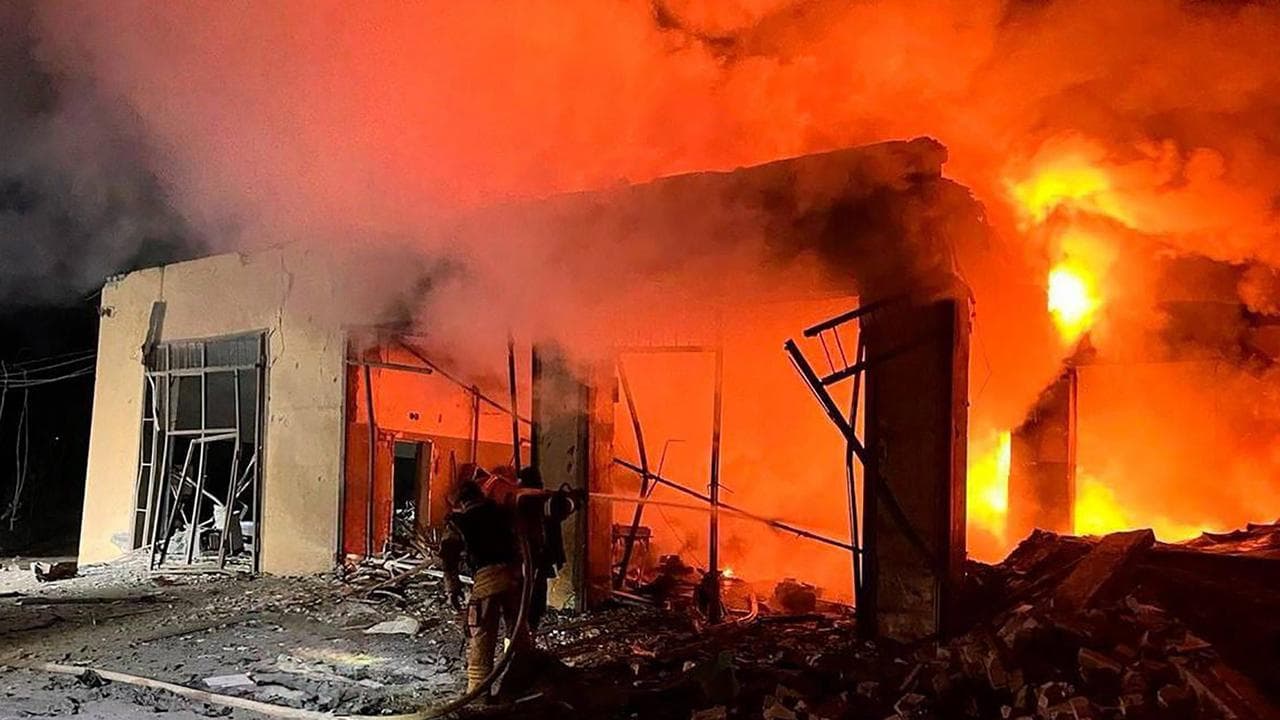
Russia has hammered Ukraine with missiles and drones in a new air attack, killing at least three people including a child and triggering emergency power cuts across the country as Ukrainians gear up to celebrate Christmas.
Moscow's latest combined strike hit energy facilities in western regions the hardest, said Prime Minister Yulia Svyrydenko, and came days after another round of US-led peace talks to end the nearly four-year-old war.
Tuesday's attack killed two people including a four-year-old in the central Zhytomyr region and one person outside the Ukrainian capital Kyiv, where local officials said at least five were also wounded.
"This Russian strike sends an extremely clear signal about Russia's priorities," President Volodymyr Zelenskiy wrote on X, adding that it involved more than 30 missiles and 650 drones across at least 13 regions.
"An attack ahead of Christmas, when people simply want to be with their families, at home, and safe."
Ukraine's grid operator said most regions were experiencing emergency power outages as a result of the attack.
Critical and energy infrastructure was damaged in the northern Chernihiv, western Lviv and southern Odesa regions, local authorities said.
Ukraine’s energy ministry said emergency power outages have been introduced in a number of regions, including Kyiv and the surrounding region, after Russia attacked energy facilities.
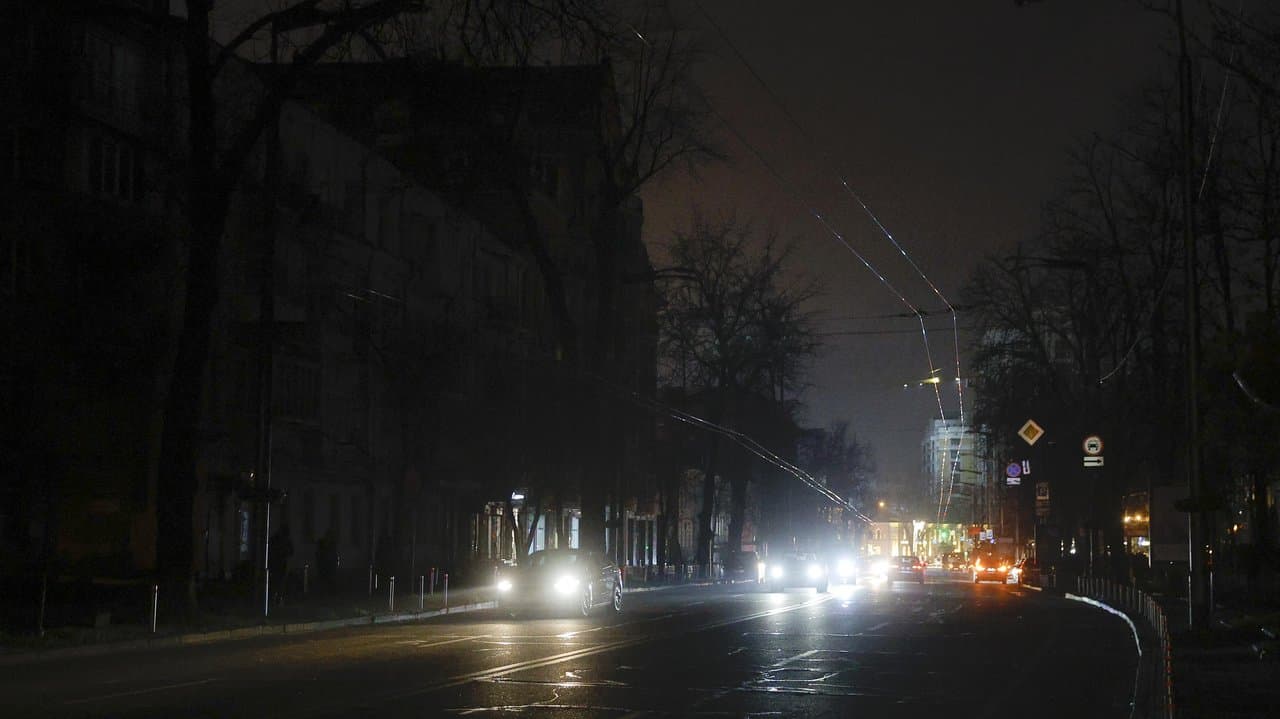
Russia has repeatedly hit Ukraine’s power grid and energy facilities during the nearly four-year war, intensifying strikes in winter to disrupt electricity and heating, strain logistics and the economy, and increase pressure on Kyiv.
Poland, a NATO member bordering western Ukraine, said Polish and allied aircraft were deployed to protect Polish airspace after Russian strikes targeted areas of western Ukraine near the border.
"These measures are preventive in nature and are aimed at securing and protecting the airspace,” Poland’s operational command said on X.
Poland scrambles jets during major Russian missile-and-drone barrages on western Ukraine, typically when strikes are assessed to pose a heightened risk near the Polish border.
Earlier Zelenskiy described negotiations on US proposals for a peace deal with Russia as "close to a real result".
However, Kremlin spokesman Dmitry Peskov played down any perception of progress, denying there had been a breakthrough, in a report from the Izvestia news outlet
"This is a working process," Peskov said, when asked whether the negotiations that took place in Miami on December 20-21 could be seen as a turning point.
Officials in both Ukraine and Russia said their teams were returning home on Monday to report on the outcome of the discussions.
"It all looks quite worthy ... And here it is important that this is the work of both us (Ukraine) and the United States of America. This suggests that we are very close to a real result," Zelenskiy told a gathering devoted to Ukrainian diplomats.
Zelenskiy said the negotiators had been working on a 20-point plan, put forward by US envoys, which has been under discussion for weeks after an initial draft was criticised by Ukrainians and Europeans as being too slanted towards Russia.
"Not everything is ideal with this, but the plan is there," he said.
Also under discussion were security guarantees Ukraine has been seeking to guard against any future Russian military action once the fighting stops, as well as a plan for Ukraine's economic recovery.
Zelenskiy said the key issue was to determine whether the US was able to "get a response from Russia, real readiness on the part of that country to focus on something other than aggression".
He said continued pressure on the Kremlin was vital to reduce Moscow's capacity to wage war.
"Lowering the price of Russian oil, strong global sanctions and continued other forms of pressure are what can persuade even a stubborn person," he said.
with AP


