The World Health Organization says there are 906 suspected cases of Ebola in the Democratic Republic of Congo, including 223 suspected deaths that are being investigated.
An outbreak of the Bundibugyo strain of Ebola is continuing in the Democratic Republic of the Congo, with cases also reported in Uganda.
There have been 125 confirmed cases of Ebola in the DRC, including 17 confirmed deaths in Ituri, North Kivu and South Kivu.
There have also been seven confirmed cases of Ebola in Uganda, three of which were imported from the DRC, and one death.
However, no community transmission has been reported, the WHO said.
The rate of people who died among those confirmed to have the infection ranges from 30 per cent to 50 per cent, said Anais Legand from the High Threat Pathogens Team which is part of WHO Health Emergencies Programme.
"It's huge. It means that up to five out of 10 people are likely to die," Legand said, adding, however, the data is preliminary and requires further investigation.
Early care could help drive down fatality rates, Legand said.
There are currently no approved vaccines or therapies specifically for the Bundibugyo virus disease, the WHO said.
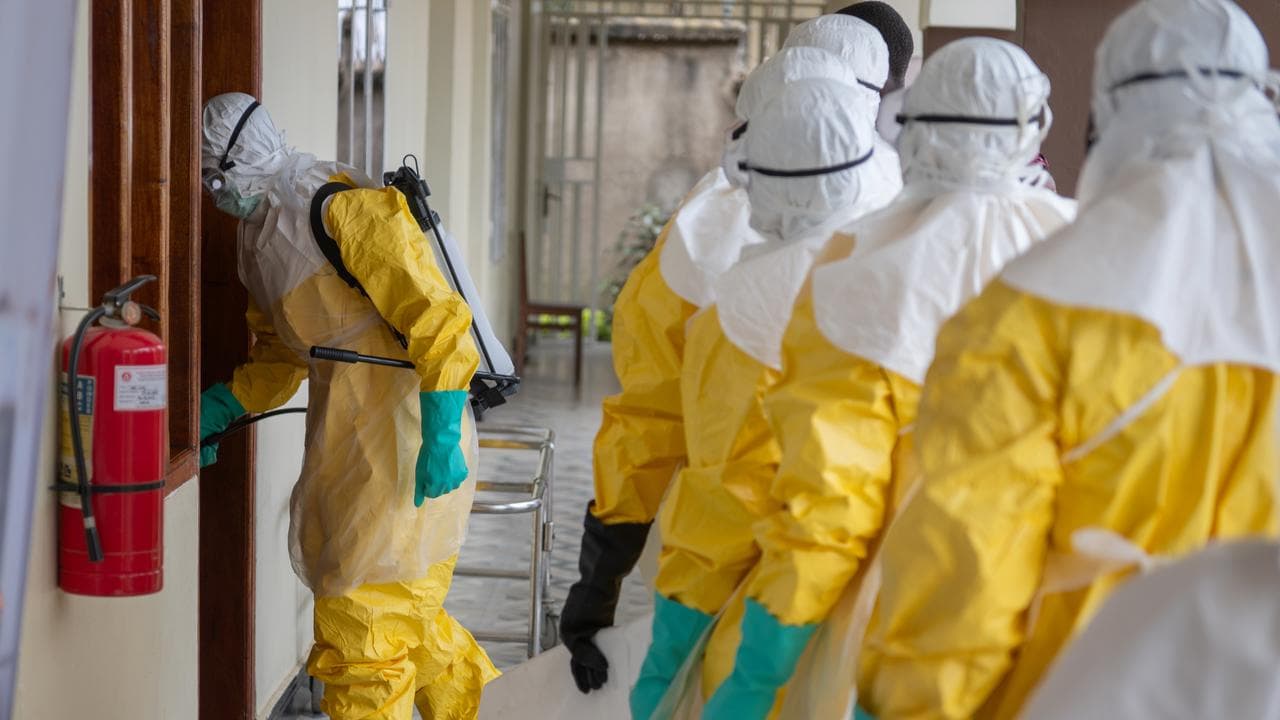
Aid workers are rushing supplies to the centre of the DR Congo's outbreak while beleaguered medical personnel struggle with a lack of equipment, a distrustful population and armed groups in a volatile region.
A cargo plane with aid donated by the European Union delivered masks, gloves, boots and medications - all of which are in short supply - to the northeastern town of Bunia at the heart of the outbreak in DR Congo's Ituri province.
United Nations-branded forklifts lifted several cases into trucks.
Health workers with scant supplies have been struggling to contain the Bundibugyo strain.
In some areas, doctors have resorted to wearing expired medical masks while treating suspected patients.
Dangers faced by health workers have been heightened by anger among residents over the stringent medical protocols for dealing with the bodies of victims, which clash with local burial rites.
Residents have launched at least three attacks against health centres in Ituri province.
Aid donated by the EU is expected to arrive in batches over the next eight days, Jérôme Kouachi, head of emergency operations at UNICEF in DR Congo, told the Associated Press.
WHO has declared the outbreak a public health emergency of international concern in the hope of ramping up aid.
The DR Congolese government has confirmed more than 1000 suspected cases, with at least 220 deaths, since it declared an outbreak on May 15.
with Reuters


