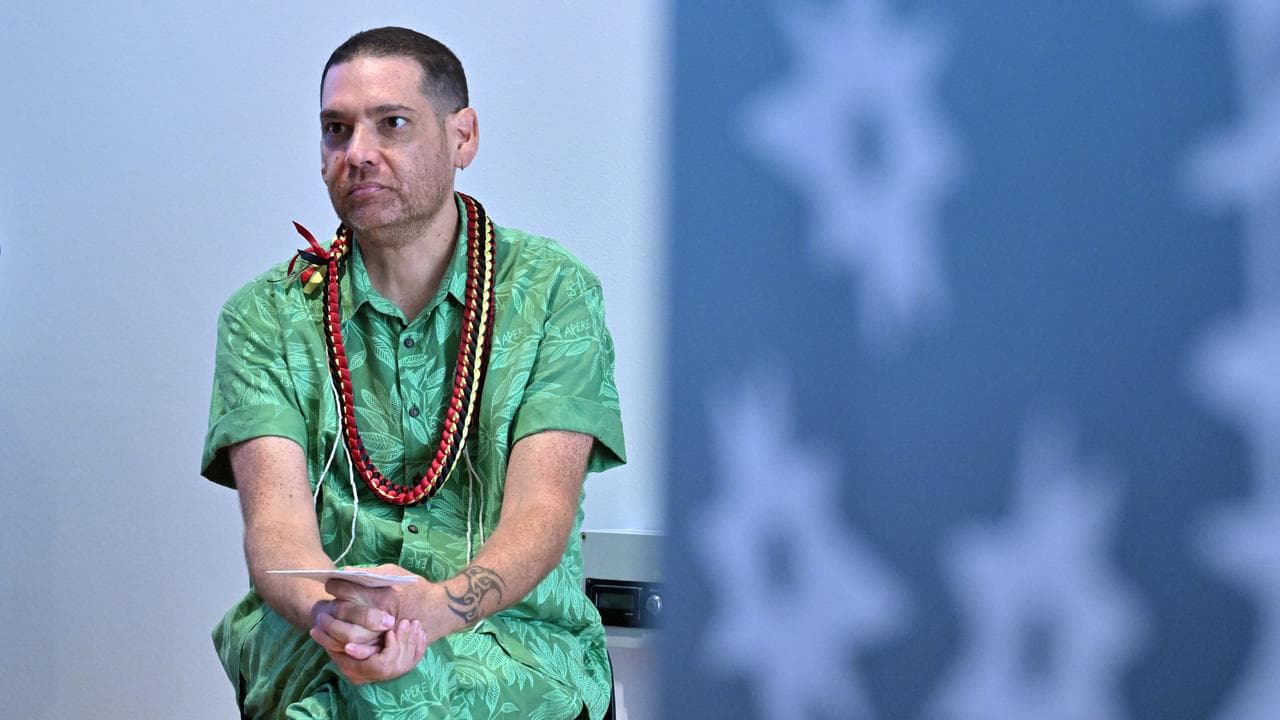
en Tony Albert took on the artistic direction of the 5th Indigenous Art Triennial, one of his first decisions was to pare back the number of artists involved in the exhibition.
The triennial, held at the National Gallery of Australia in Canberra, features just 10 works, each of them large-scale and immersive, from Aboriginal and Torres Strait Islander artists across the country.
"This was an opportunity to really give time, energy, resources to fewer projects for artists to make the most seminal work of their careers," Mr Albert, a Girramay, Yidinji and Kuku-Yalanji man, told AAP.
The triennial, titled After the Rain, reflects on renewal, resistance and rebirth.
Mr Albert said the theme offered a lot for artists to draw from, whether it be the physical concept of rain on the land or more political interpretations.
"After the rain is kind of a reset," he said.
"It's this rejuvenation, planting new seeds ... from artists working really directly on Country, to what does 'after the rain' mean after the referendum."
Each of the artists involved in the triennial is featured in a series of paintings by Vincent Namatjira.
His distinctive portraits welcome gallery-goers to the space.
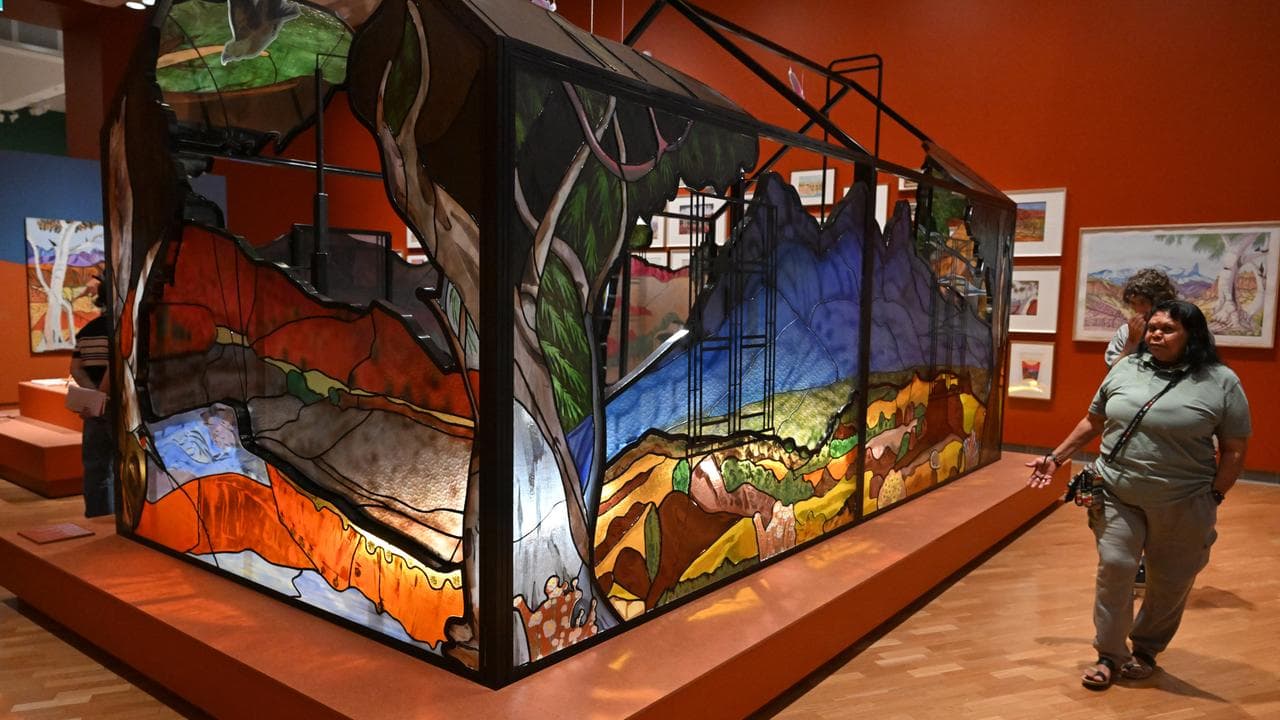
In the centre of the exhibition is The House of Namatjira.
The project brings together members of the Namatjira family and community, including the renowned Hermannsburg Potters, Iltja Ntjarra Art Centre and the artist's great-grandson, Vincent Namatjira.
"Looking at that legacy of Albert Namatjira was so incredible," Tony Albert said.
"We were able to replicate the house he made himself in the 1940s out of stained glass with the Canberra glassworks. We found materials from Albert's life that had never been displayed or exhibited before."
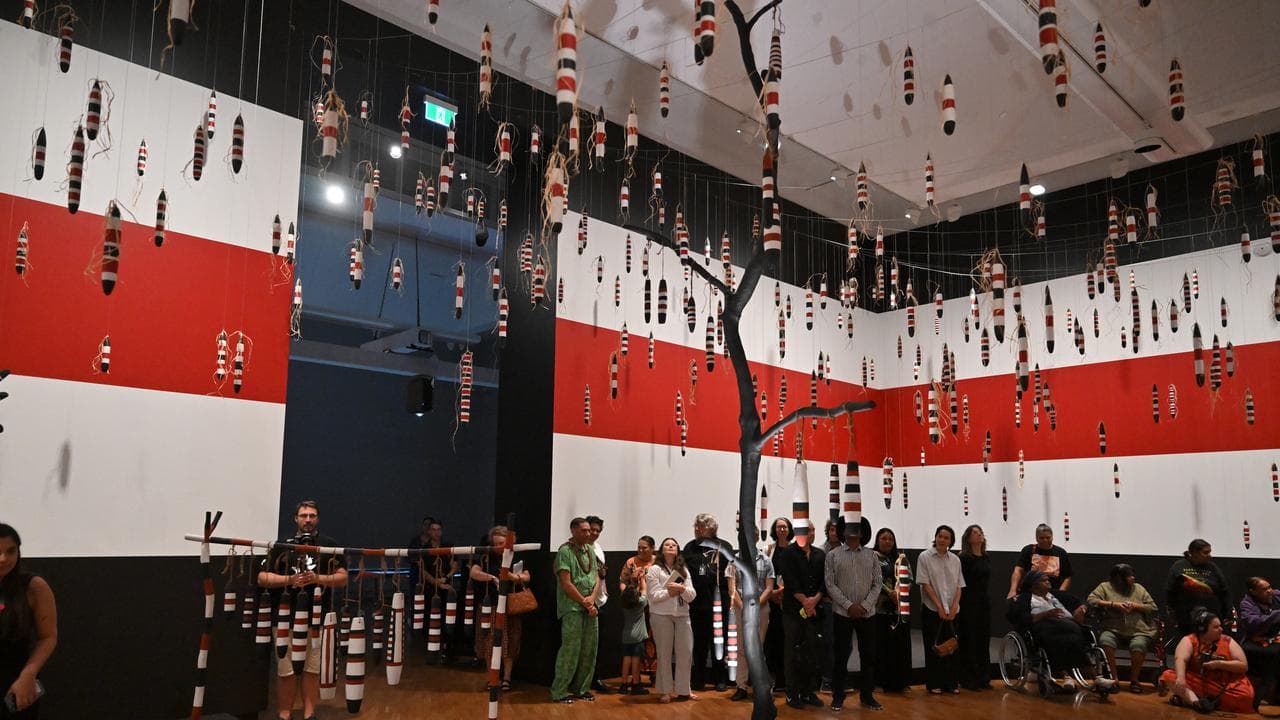
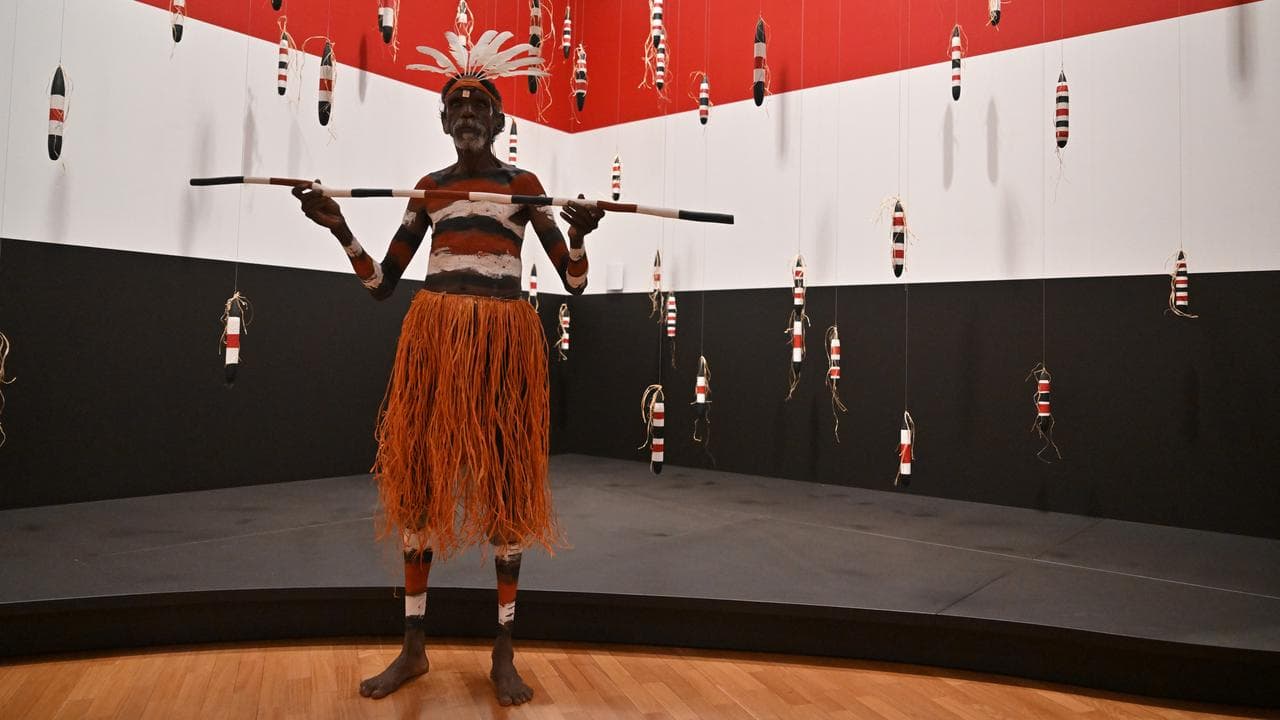
There are more than 500 flying foxes suspended above the exhibition space - the work of Alair Pambegan.
The distinctive red, white and black ochre from his Country in the northern part of Queensland's Cape York Peninsula features heavily across his installation.
"It's setting a real new precedent in terms of the calibre and quality of work that has been presented by artists," Mr Albert said.
Mr Albert said while there were still barriers between artistic institutions and artists in the communities they worked with, he was proud the 5th iteration of the triennial had placed artists firmly at the decision-making table.
He said it was time for Indigenous artists to be front and centre in the art world.
"There's a global shift, which is really coming out of Australia," Mr Albert said.
"All eyes are on us and it's an incredible moment in time to shine a spotlight on Indigenous art."
The triennial will run until April 2026.


