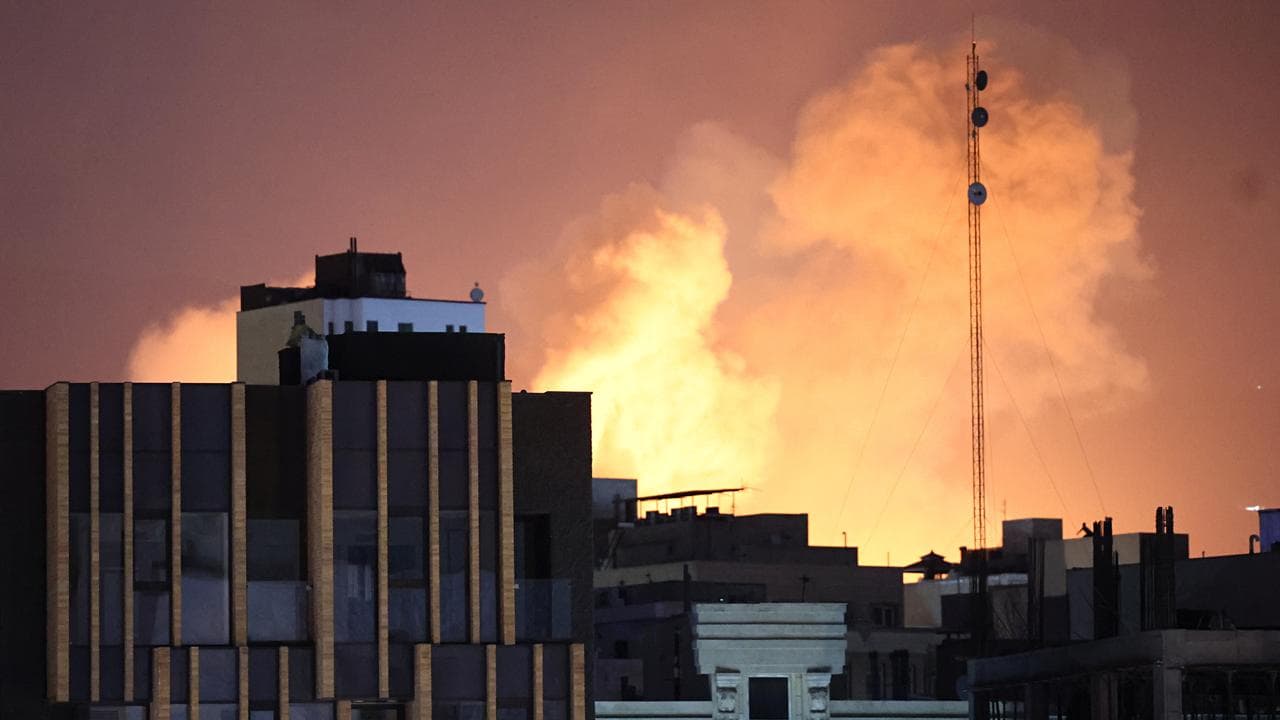
Australia's share market has clawed back early losses to scrape a record high as investors weigh the escalating conflict in the Middle East and markets tip hostilities will be "short and sharp".
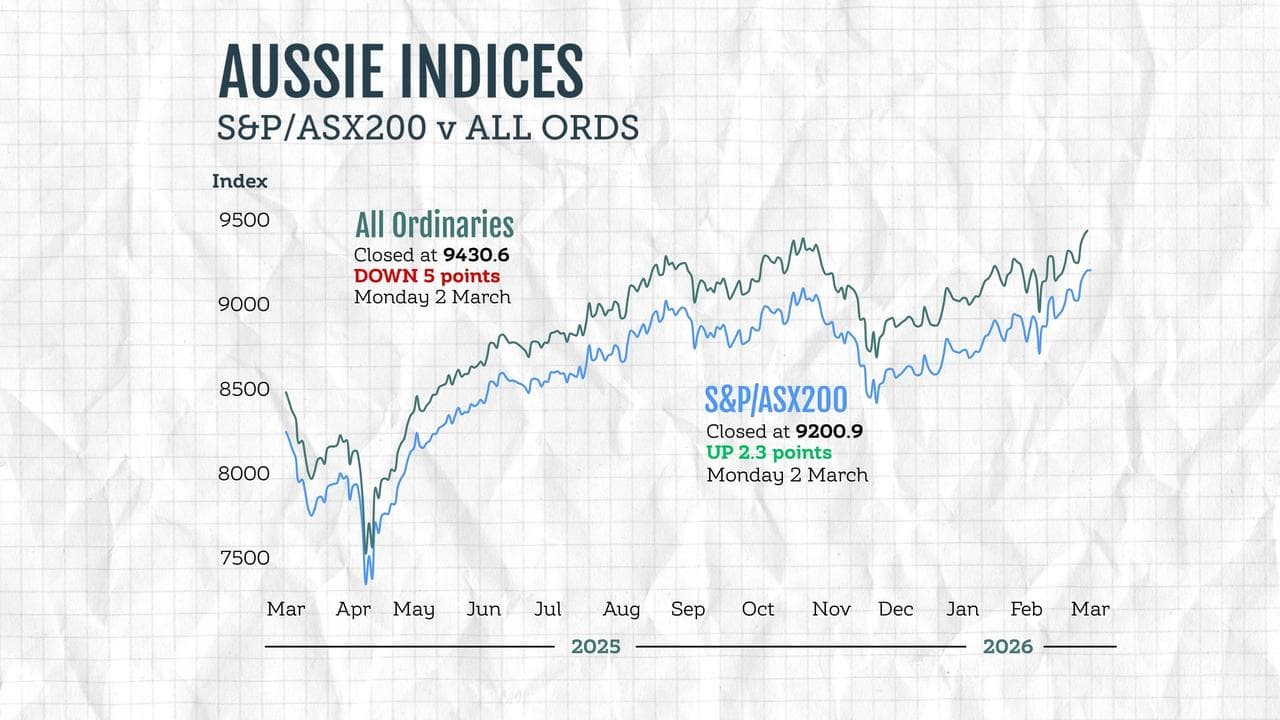
The S&P/ASX200 rose 2.3 per cent points on Monday, up 0.03 per cent to 9,200.9, as the broader All Ordinaries lost five points, or 0.05 per cent, to 9,430.6.
The meagre gain was enough to top Friday's record high close, the top-200 closing above 9,200 for the first time.
The bourse had dipped sharply - as the first major stock market to open after US and Israeli air strikes killed Iran's supreme leader, sparking a wave of retaliatory strikes from the Islamic republic and its proxies - before gradually wiping losses in the afternoon.
"It's a difficult one, because it really depends on how long this conflict goes on for, but I think the market is pricing in somewhat a short and sharp conflict," CommSec equities strategist James Gruber told AAP.
"But if the conflict drags on for longer, oil prices will stay higher, petrol prices will be hit quite hard, which is also potentially likely to impact the inflation outlook as well, already concerningly high for the Reserve Bank and could further impact the cost of living for ordinary Australians."
Energy stocks rallied on the back of a more than nine per cent surge in oil prices as the Straight of Hormuz - a thoroughfare for about a fifth of global oil supply and a quarter of LNG shipments - was effectively closed.
While no formal closure has been declared, Iranian Revolutionary Guard Corps has issued radio warnings to ships that Iran-backed Houthis in Yemen are prepared to resume their Red Sea attacks on shipping containers.
Gold stocks rallied as investors leaned into safe haven assets, sending the precious metal 1.5 per cent higher to $US5,359 ($A7,561) an ounce, boosting the All Ordinaries gold sub-industry 4.7 per cent.
Consumer staples stocks jumped more than two per cent as liquidity rotated into the defensive sector, with an outsized 3.8 per cent move higher for Coles, as it rebounded from Friday's heavy post-earnings sell off.
Economists at financial services group AMP believed an extended conflict in Iran was possible, but limited action was more likely and a 60 per cent probability, chief economist Shane Oliver said.
"There are few examples of successful regime change from US interventions in recent decades," Dr Oliver said.
"Overall, we see the outbreak of war with Iran as negative for shares, but positive for oil and energy prices, gold and government bonds."
Australia's heavily-weighted financial sector dragged on the bourse, tumbling 1.8 per cent as all big four banks ticked lower.
IT stocks were hit hard as risk sentiment plummeted, the sector tumbling more than three per cent and compounding a weak lead from US tech stocks on Friday.
The Australian dollar is buying 70.77 US cents, slipping from 71.26 US cents on Friday at 5pm, tracking with major currencies as the greenback benefited from its safe-haven status.
Ultimately, the road ahead for markets was unclear, IG market analyst Tony Sycamore said.
"While assessing the precise path of the conflict ahead is impossible, it is important to recognise the significant risks, particularly if the regime were to lose command and control over the unpredictable Iranian Revolutionary Guard Corps," Mr Sycamore said.
ON THE ASX:
* The S&P/ASX200 gained 2.3 points, or 0.03 per cent, to 9,200.9
* The broader All Ordinaries fell five points, or 0.05 per cent, to 9,430.6
CURRENCY SNAPSHOT:
One Australian dollar trades for:
* 70.77 US cents, from 71.26 US cents at 5pm AEDT on Friday
* 111.04 Japanese yen, from 111.05 Japanese yen
* 60.16 euro cents, from 60.35 euro cents
* 52.76 British pence, from 52.83 British pence
* 118.77 NZ cents, from 118.97 NZ cents


