
A baby's death could have been avoided if a mother was transferred to hospital at the first sign of distress during her home birth.
Victorian coroner Dimitra Dubrow made the finding for the boy, known as Baby R, on Friday following an inquest into his death.
The infant died from perinatal hypoxia on August 25, 2022, six days after he was born via an emergency Caesarean at Bendigo Health in central Victoria.
His mother had chosen to have a vaginal birth at home after experiencing a traumatic emergency Caesarean for her first child three years earlier.
But about 12 hours into the labour on August 19, the woman experienced a gush of meconium liquor which could have been a sign Baby R was distressed.
Instead of taking steps to bring the mother to hospital, midwives Elizabeth Murphy and Marie-Louise Lapeyre instead decided to increase monitoring of the fetal heart rate.
The woman continued to labour at home for another four hours and it was only at 7.30pm when the baby's heart rate dropped and then accelerated that they decided to go to hospital.
The baby was born via an emergency Caesarean but he had to be intubated and started experiencing seizures so was transferred to Melbourne's Royal Women's Hospital.
He was taken off life support and died at 11.37pm on August 25.
Ms Dubrow found the first sign of distress at the 12-hour mark should have prompted the midwives to take action and contact Bendigo Health.
"I am satisfied that had transfer occurred at around or soon after 3.30pm ... Baby R's death would likely have been avoided," the coroner said.
Ms Dubrow found Ms Murphy and Ms Lapeyre's care had been "deficient" during the labour and did not accord with reasonable midwifery care.
The coroner was also critical of the advice given to the mother during her pregnancy.
Health guidelines recommend a woman seeking to have a vaginal birth after a Caesarean should only do so in a hospital setting.
The coroner found Baby R's mother was not suitable for a home birth and the potential risks were not sufficiently discussed with her.
Ms Dubrow accepted they would have been "complex and challenging" conversations, given the mother was also a trained midwife who had "cocooned" herself from anti-home birth opinions.
But Ms Murphy, who the mother trusted as her primary care provider, should have better explained the risks from the outset, the coroner said.
"Ms Murphy had an obligation to inform Baby R's mother that a home birth ... was against recommended care," Ms Dubrow said.
"Instead, Ms Murphy assured Baby R's mother ... that she was suitable."
Baby R's parents said they would carefully consider the findings.
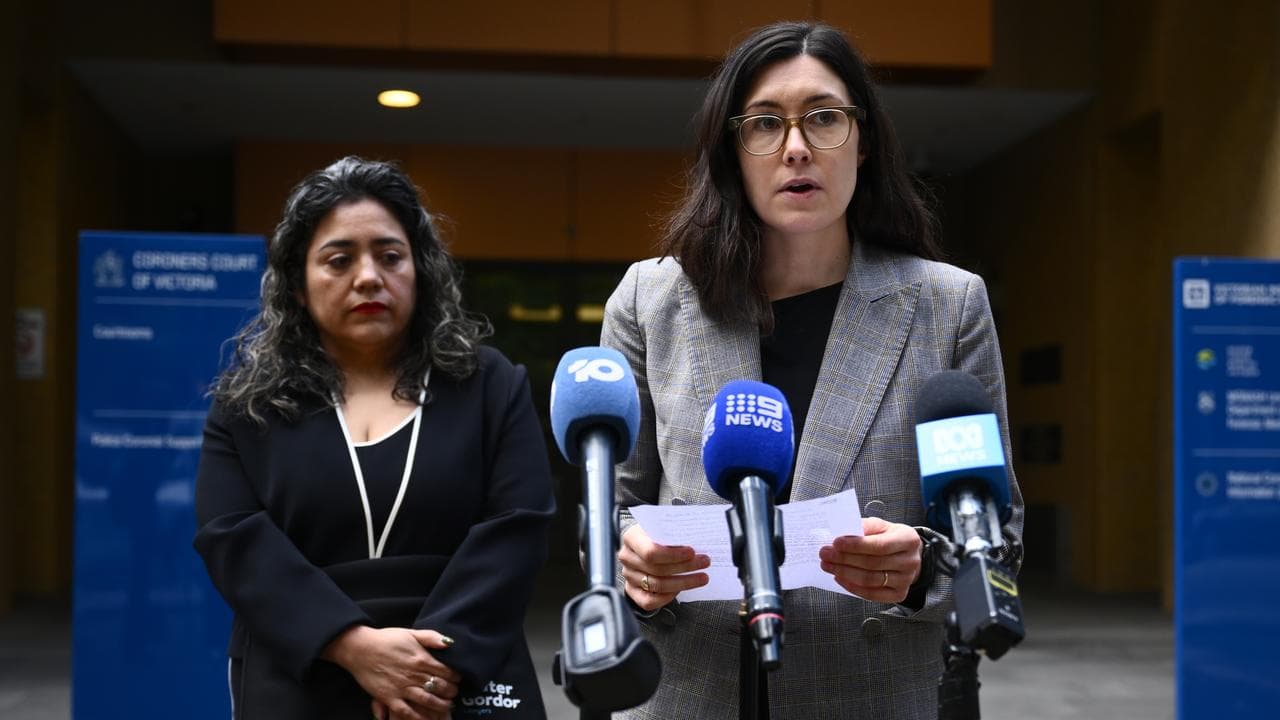
"This inquest ... has involved revisiting our most painful and traumatic experiences," the statement read by Slater and Gordon's Isabelle McCombe said.
"We thank the coroner and her team for taking the time to understand our baby and the life he never had."


