Brazilians are voting for a president, with progressive incumbent Luiz Inácio Lula da Silva and conservative Senator Flávio Bolsonaro, the son of former president Jair Bolsonaro, locked in a tight race in the polarised country.
About 159 million people are eligible to cast ballots in South America's largest country.
Polling stations are due to close at 5pm on Sunday (7am on Monday AEDT), with the first provisional results expected later in the day.
Some pre-election polls have suggested both have a chance of winning outright but if neither gets a majority of the vote, considered a likely scenario, a run-off between the two will be held on October 25.
Lula, 80, is seeking a fourth term as president, while Bolsonaro is running for the country's top office for the first time.
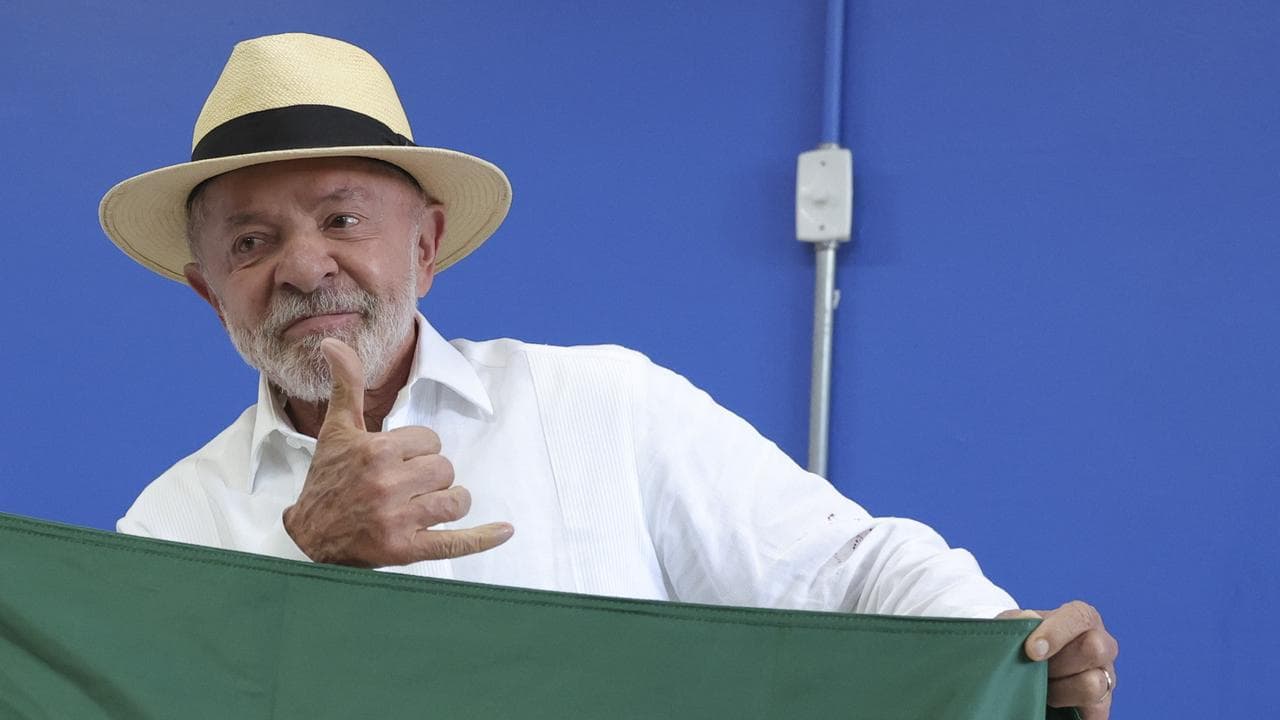
Lula voted after 9am in a school in Sao Bernardo do Campo, outside Sao Paulo.
He said that he was confident that he could get his first outright victory in seven runs for the presidency.
He also urged Brazilians above age 70, who are not legally required to vote, to show up and cast their ballots.
Wearing a hat to protect his head after a skin cancer diagnosis, Lula told reporters that he needs "to do double what we have done" if re-elected.
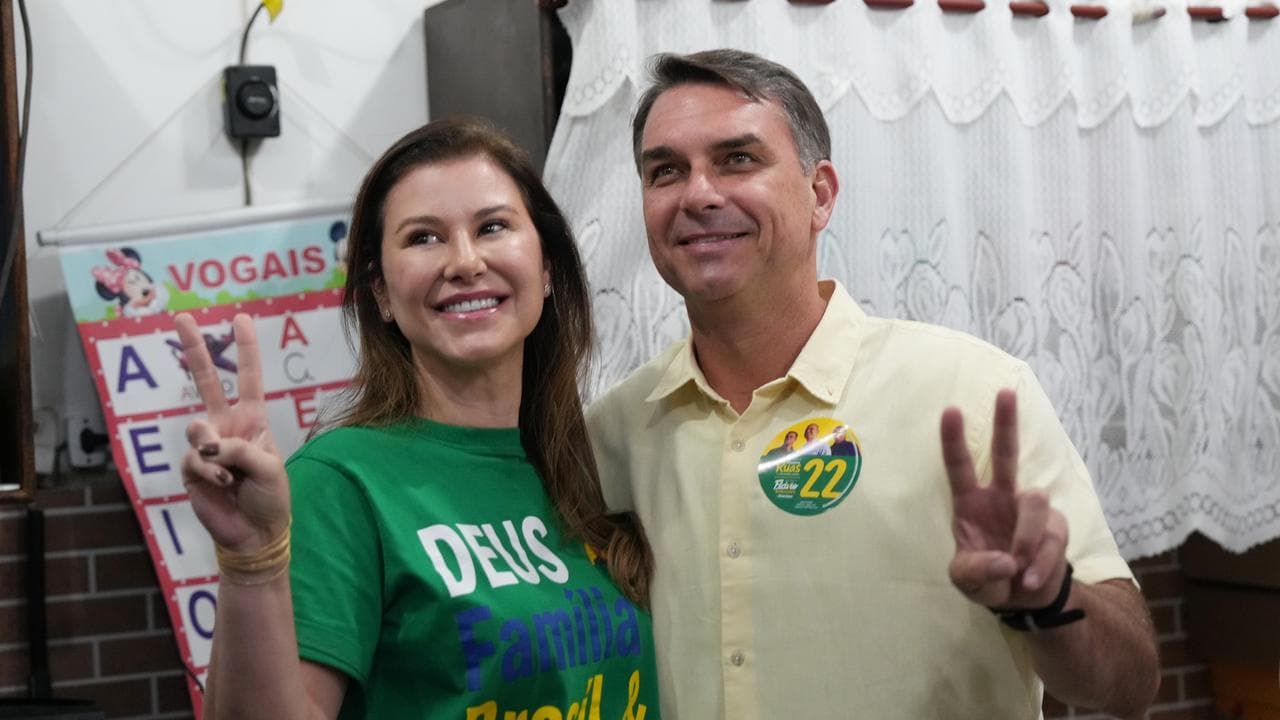
"I am more than ready to lead this country and restore to Brazilian families the right to dream again," Bolsonaro said after casting his ballot at a polling site in Rio de Janeiro.
"Brazil needs change, Brazil can't stand so much suffering," said Bolsonaro, who arrived at 8.10am to vote in a school.
He was dressed in a light yellow shirt featuring a "22" sticker, corresponding to the number that Brazilians must punch in to electronic voting machines if voting for him.
“I am more than prepared to preside this country to give back to Brazilians the right to dream,” he told journalists.
The campaign has focused heavily on crime, as well as the role of the state, the independence of the Supreme Court and relations with the United States.
Bolsonaro's Liberal Party (PL) is campaigning on reducing state services and taking a tougher approach to crime.
Lula's Workers' Party (PT) is seeking to continue his government's social programs and public investment while maintaining a strong role for the state.
Lula returned to the presidency in 2023 after previously serving from 2003 to 2010.
Flávio Bolsonaro has served as a senator since 2019.
His father narrowly lost the 2022 presidential election to Lula and was later sentenced by the Supreme Court to more than 27 years in prison for an attempted coup following his election defeat.
Jair Bolsonaro is currently serving his sentence under house arrest due to health problems.
Twelve candidates are running for president.
Alongside Lula and Bolsonaro, they include governors Ronaldo Caiado and Romeu Zema as well as psychiatrist and author Augusto Cury.
The other candidates are polling well behind the two frontrunners.
Alongside the president and vice president, Brazilians are electing two-thirds of the 81-member Senate and all 513 members of the Chamber of Deputies.
Voters are also choosing governors in the country's 26 states and the Federal District as well as members of state legislatures.
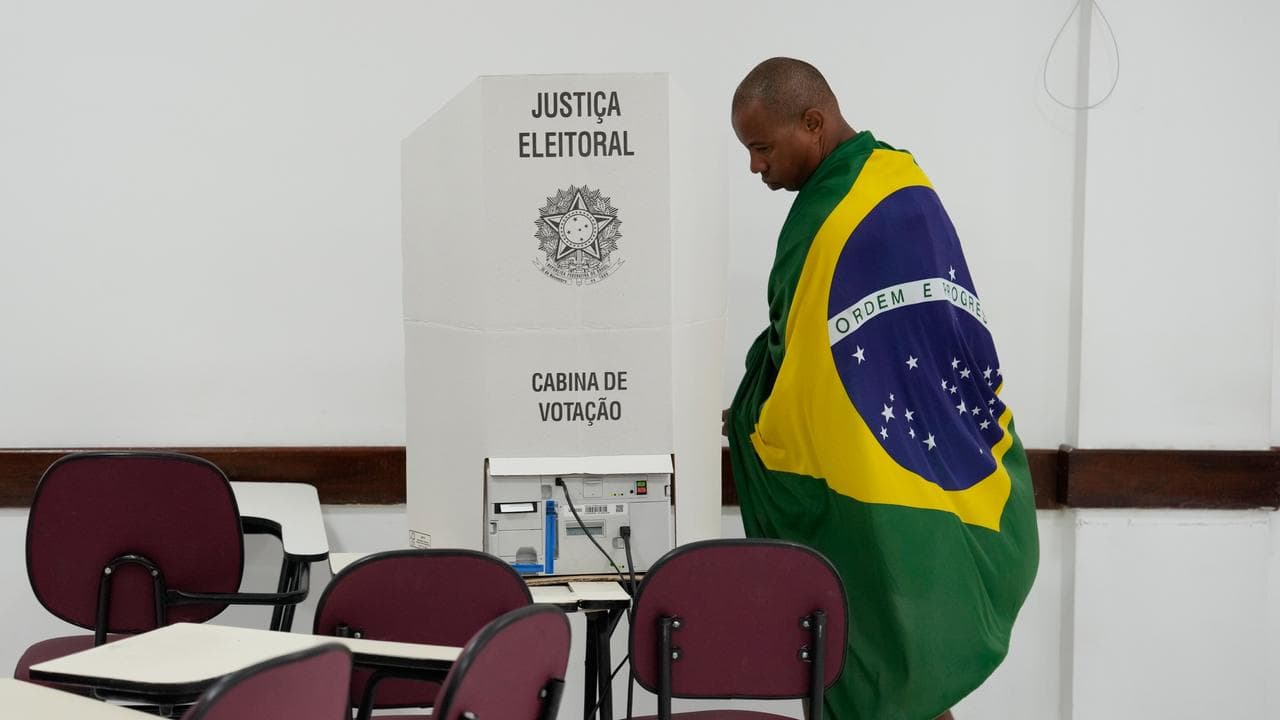
Voting is compulsory in Brazil except for over the age of 70.
with AP and Reuters


