
A rural town celebrated for space exploration, an eccentric Elvis festival and fresh food production fears it will soon be known as nothing but a rubbish dump.
Parkes, in central western NSW, has been earmarked for a garbage incinerator that would process 732,000 tonnes of Sydney's waste annually and convert it into heat, steam and electricity.
The developer's planning documents say the technology is state-of-the-art that will minimise carbon emissions and prioritise human and environmental health.
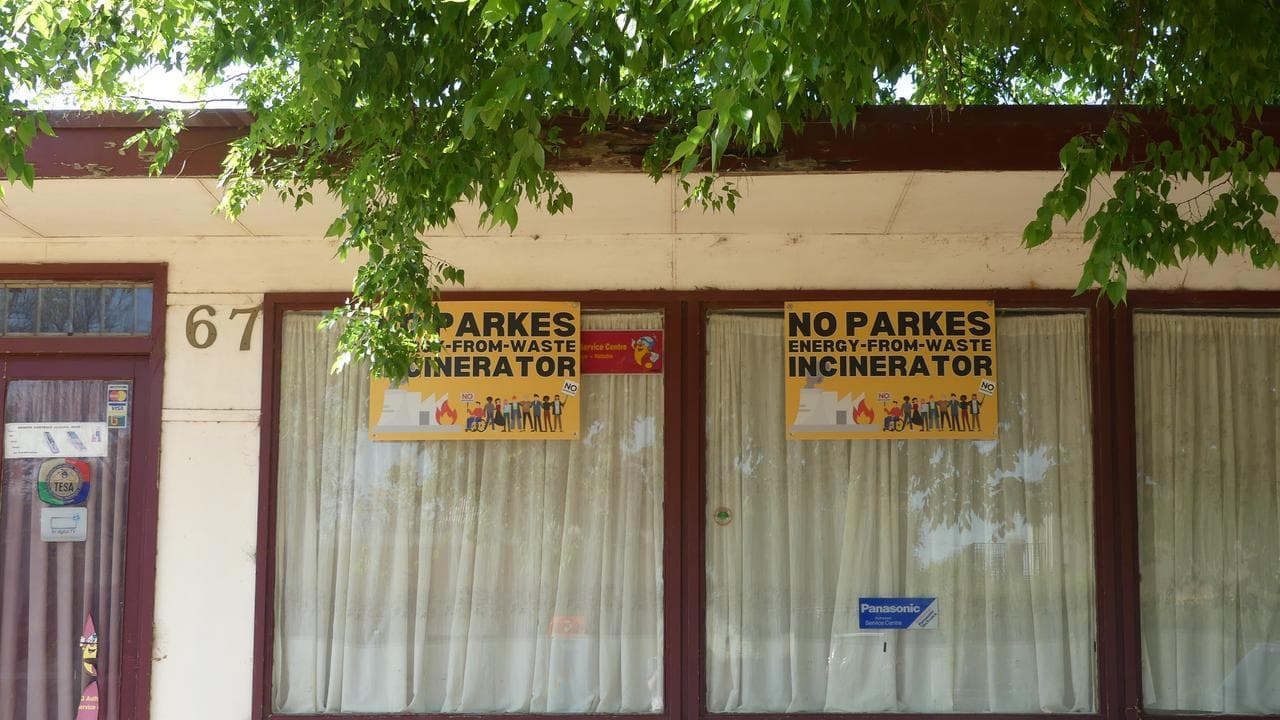
But the vast farming region, which has also made its name as home to an annual Elvis festival and a significant radio telescope involved in the 1969 moon landing, is overwhelmingly opposed to the plant.
Several local polls have shown up to 80 per cent of residents do not want the incinerator, with the council, Indigenous groups and farmers against it, a parliamentary inquiry was told on Tuesday.
Town spirit has been dampened by the proposal and bonds between neighbours and friends have fractured, councillor Joy Paddison said.
"We are proud to be recognised globally for our clean, green reputation, and we have worked hard to build a regional economy based on agriculture, tourism and science," Cr Paddison told the inquiry sitting in Parkes.
"The idea that Parkes could instead become known globally as a destination for hundreds of thousands of tonnes of metropolitan waste transported 580km from the source to be incinerated is devastating."
Energy-from-waste facilities have been touted as a sustainable solution to Sydney's waste problem, with the city's landfill capacity likely to run out by 2030.
The plants can only be built in four designated regional NSW areas, after the state government amended planning laws in 2022 to ban their development in greater Sydney.
That left the Parkes region feeling "abandoned and betrayed" by the government, which had failed to meaningfully engage with the community, Mayor Neil Westcott said.
The council had called for clarity from the state's chief scientist, including access to peer-reviewed research on energy-from-waste technology.
"Those answers have not been provided and, in that absence, fear has filled the void," Mr Westcott said.
Karryn Schaefer, the chair of the Peak Hill Bogan River Aboriginal Advisory Committee, said the incinerator site was a catchment area that likely had Aboriginal occupational sites.

"It's going to be detrimental to our river systems, to our fauna and flora, to our pollinators," Ms Schaefer said.
"If it goes here it's going to have a massive impact ... not just for the Aboriginal people and their community ... the whole region."
Another proposed facility is slated for Tarago, 70km from the nation's capital, with more than 350,000 tonnes of waste to be processed each year.
The inquiry, which will examine both proposed projects, has received more than 1400 written submissions.


