Governments have agreed to a compromise climate deal at the COP30 conference in Brazil that will boost finance for poor countries coping with global warming but omits any mention of the fossil fuels driving it.
In securing the accord, countries attempted to demonstrate global unity in addressing the effects of climate change after the United States declined to send an official delegation.
But the agreement, which landed in overtime after two weeks of contentious negotiations in the Amazon city of Belem, also exposed rifts between wealthy and developing countries, as well as between those governments with opposing views on oil, gas and coal.
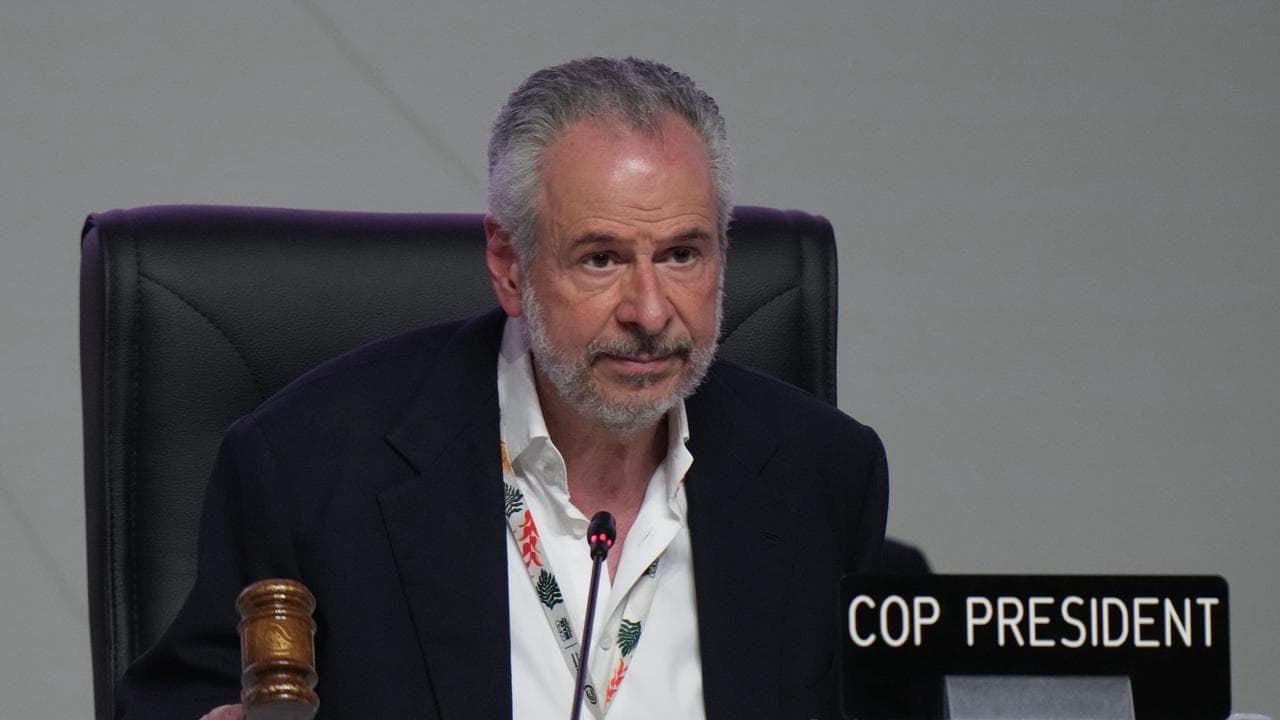
After gavelling the deal through, COP30 President Andre Correa do Lago acknowledged the talks had been tough.
"We know some of you had greater ambitions for some of the issues at hand," he said.

Looking ahead, Do Lago said tough discussions started in Belem will continue under Brazil's leadership until the next annual conference "even if they are not reflected in this text we just approved".
The European Union had been the main holdout for language on a transition away from fossil fuels, but ultimately agreed to drop it after a coalition of countries including top oil exporter Saudi Arabia said it was off-limits.
"We should support it because at least it is going in the right direction," EU climate commissioner Wopke Hoekstra told reporters before the deal was gavelled through.
Some countries had harsher words.
"A climate decision that cannot even say fossil fuels is not neutrality, it is complicity. And what is happening here transcends incompetence," Panama's climate negotiator Juan Carlos Monterrey said.
The Belem deal launches a voluntary initiative to speed up climate action to help countries meet their existing pledges to reduce emissions, and calls for rich countries to at least triple the amount of money they provide to help developing ones adapt to a warming world by 2035.
Scientists have said existing national commitments to cut emissions have cut projected warming significantly, but are not enough to keep world temperatures from breaching 1.5C above industrial levels, a threshold that could unleash the worst impacts of climate change.
Developing countries have argued in the meantime that they urgently need funds to adapt to effects that are already hitting, like rising sea levels and worsening heat waves, droughts, floods and storms.
Saturday's agreement also launches a process for climate bodies to review how to align international trade with climate action, according to the deal text, amid concerns that rising trade barriers are limiting the adoption of clean technology.
Avinash Persaud, special advisor to the president of the Inter-American Development Bank, a multilateral lender focused on Latin America and the Carribean, said the accord’s focus on finance was important as climate effects mount.
"But I fear the world still fell short on more rapid-release grants for developing countries responding to loss and damage. That goal is as urgent as it is hard," he said.
The European Union had been pressing for language in the official deal on the move away from fossil fuels but had come up against stiff resistance from the Arab Group of countries including top oil exporter Saudi Arabia.
That impasse was resolved after all-night negotiations on Friday led to an agreement that the issue could be left out of the accord and included in a side text put forward by COP30 host Brazil.
with AP


