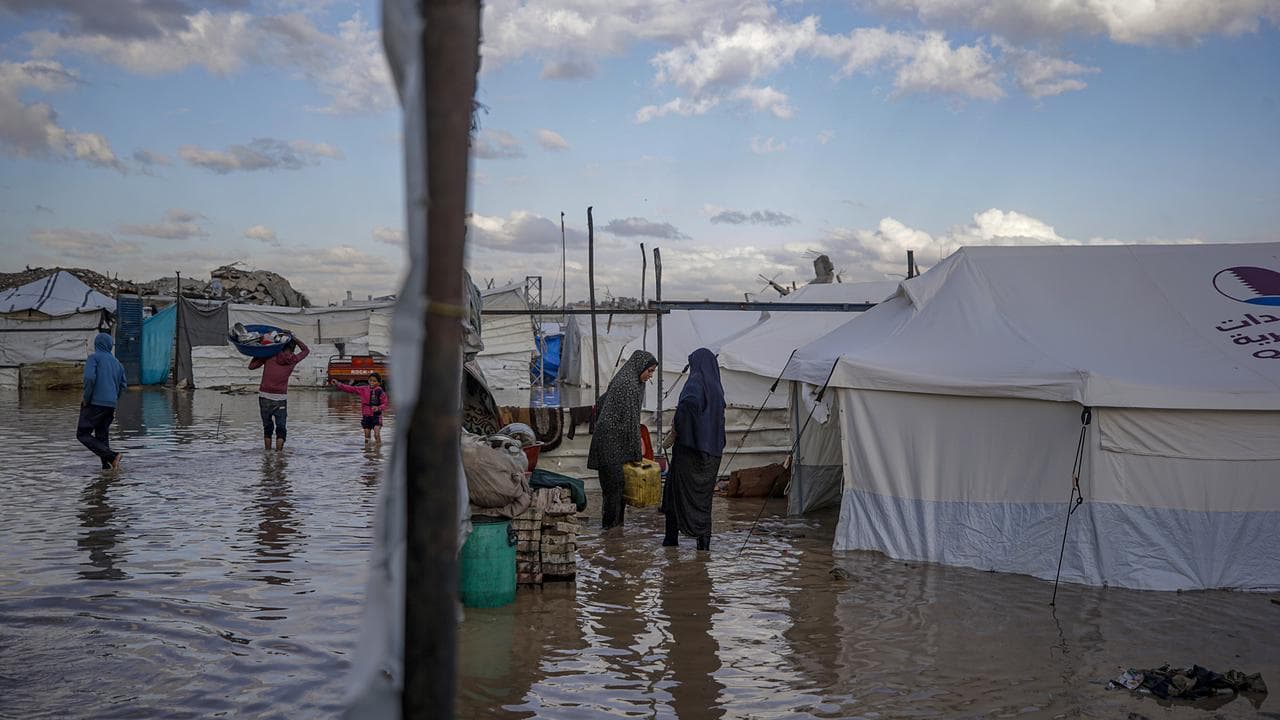
Australia has joined close allies in urging Israel to remove barriers to humanitarian aid entering Gaza after severe flooding hit the already war-ravaged region.
The foreign ministers of Australia, Canada, Italy and the United Kingdom signed a joint statement urging immediate intervention before the change in seasons.
"As winter takes hold in Gaza, the humanitarian situation on the ground is dire," the joint statement said as the local population continues clean-up efforts after a flooding event.
The United Nations reported five people were killed and thousands of families lost their shelters after heavy rains hit the region in recent days.
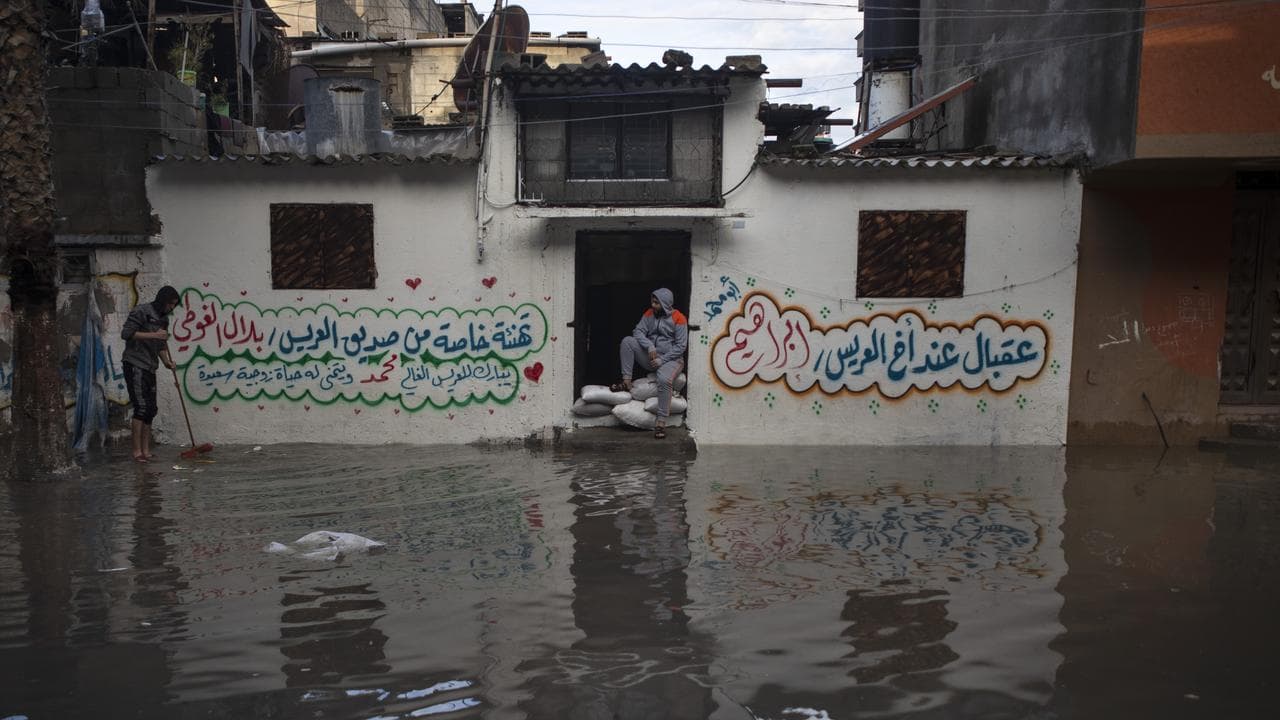
Floodwaters rose to 1.5m in some locations with local authorities unable to respond to the thousands of calls for help.
More than 700km of the city's sewage network has been destroyed.
Nearly two-thirds of Gaza's population live in tents or temporary shelters.
"People in Gaza desperately need shelter and humanitarian assistance," the foreign ministers statement continued.
"Yet 150,000 tents and other vital supplies are being held at the border and prevented from entering Gaza.
"This situation is entirely reversible - and there is still time to act before the winter fully sets in."
The ministers have urged Israel to stop delays at the border and allow immediate and unimpeded humanitarian access throughout Gaza.
"Dual use items necessary for humanitarian operations and early recovery must be granted entry before it is too late," the foreign ministers said.
"And all parties must implement the Comprehensive Plan for Gaza, respecting the ceasefire and their obligations under international humanitarian law, and allowing aid to reach the people who need it."
The statement follows a similar affirmation from the European Union, which called on Israel to open up access to Gaza for humanitarian assistance on Saturday.
Meanwhile, Israel remains in the grips of a tight leadership competition following a general election in October.
Incumbent Benjamin Netanyahu's coalition was unable to secure a majority with pressure mounting on opposition leader Gadi Eisenkot to strike a deal with the Arab parties to form government.
Mr Eisenkot has about a month to build a coalition.


