The Democratic Republic of the Congo has raised the number of confirmed Ebola cases to 389, including 63 deaths.
DR Congo Health Minister Samuel Roger Kamba said Ebola infections had now spread across 17 out of 36 health zones in Ituri province.
Ituri remains the epicentre of the outbreak declared in the eastern part of the country on May 15, accounting for approximately 95 per cent of reported cases.
North Kivu has reported 19 infections, and South Kivu has reported three.
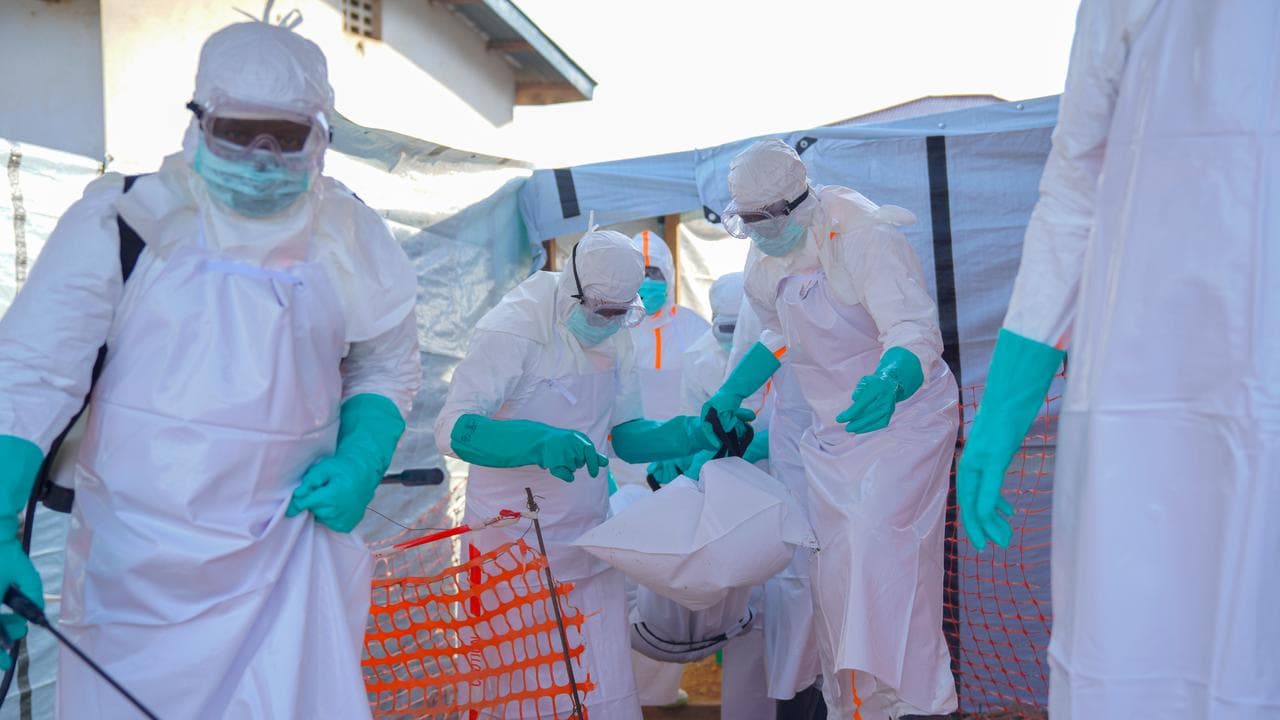
The steady increase of confirmed cases come after residents attacked an Ebola burial team in eastern Democratic Republic of Congo's South Kivu province this week, forcing responders to abandon a coffin and raising fears of further transmission, the health ministry said.
The assault took place on Monday in Katana, a town controlled by AFC/M23 rebels some 30km north of the provincial capital Bukavu, according to the ministry and the head of a local hospital reached by Reuters.
It targeted a "safe and dignified burial team" - specialised responders trained to handle highly infectious bodies under strict protocols to prevent contagion.
The body was subsequently handled by members of the community, a high-risk practice that can fuel new chains of infection, according to a situation report published.
The health ministry and the hospital official did not specify what triggered the attack.
The incident underscores mistrust and resistance that continue to hamper response efforts as officials try to control the spread of the Bundibugyo strain of Ebola. In recent weeks, burial teams and health workers have been targeted, including by relatives of victims who have questioned the cause of death.
In a similar incident on Monday in Bunia, the capital of Ituri province where the first cases of the Bundibugyo strain were confirmed, residents assaulted a response team at a cemetery, leaving at least four people injured, according to the situation report and a local aid worker.
The International Organization for Migration is helping set up 30 health control posts across the three Ebola-affected provinces to monitor people’s health and stop the sick spreading the virus further, the UN agency's regional head Frantz Celestin told Reuters.
The IOM warned about the unintended consequences of border closures in central Africa, citing their role in undermining efforts to manage the outbreak.
DR Congo's health ministry noted some progress, highlighting 32 contact cases in Ituri's Rwampara who had been monitored for 21 days and were determined not to have Ebola.
The ministry also said officials in the city of Goma, North Kivu, were preparing on Wednesday to discharge a patient who had recovered.
International supplies continue to stream into eastern Congo. Enough kits for 300 safe and dignified burials arrived in Bunia on June 3, the International Federation of Red Cross and Red Crescent Societies said on Thursday.
with EFE


