What was claimed
50 per cent of Australia's population is now on welfare.
Our verdict
Misleading. Between 20-25 per cent of the population is on income support.
AAP FACTCHECK - An anti-immigration video is misleadingly claiming that half of Australia's population is on welfare.
Experts say data indicates between 20-25 per cent of the population receives some form of direct government income support, with the majority of those receiving the aged pension.
The claim is in a Facebook video featuring an AI-generated woman calling for an "end to mass immigration" and making several claims about the impact of migration on Australia.
"And 50 per cent of our population are now on welfare," she says (timestamp 44 seconds).

AAP FactCheck contacted the Facebook page's administrator for evidence to support the claim but did not receive a response.
It's unclear what the claim is based on; however, it may be linked to the headline of an Australian Financial Review article in July that read: "More than half of voters now rely on governments for most of their income".
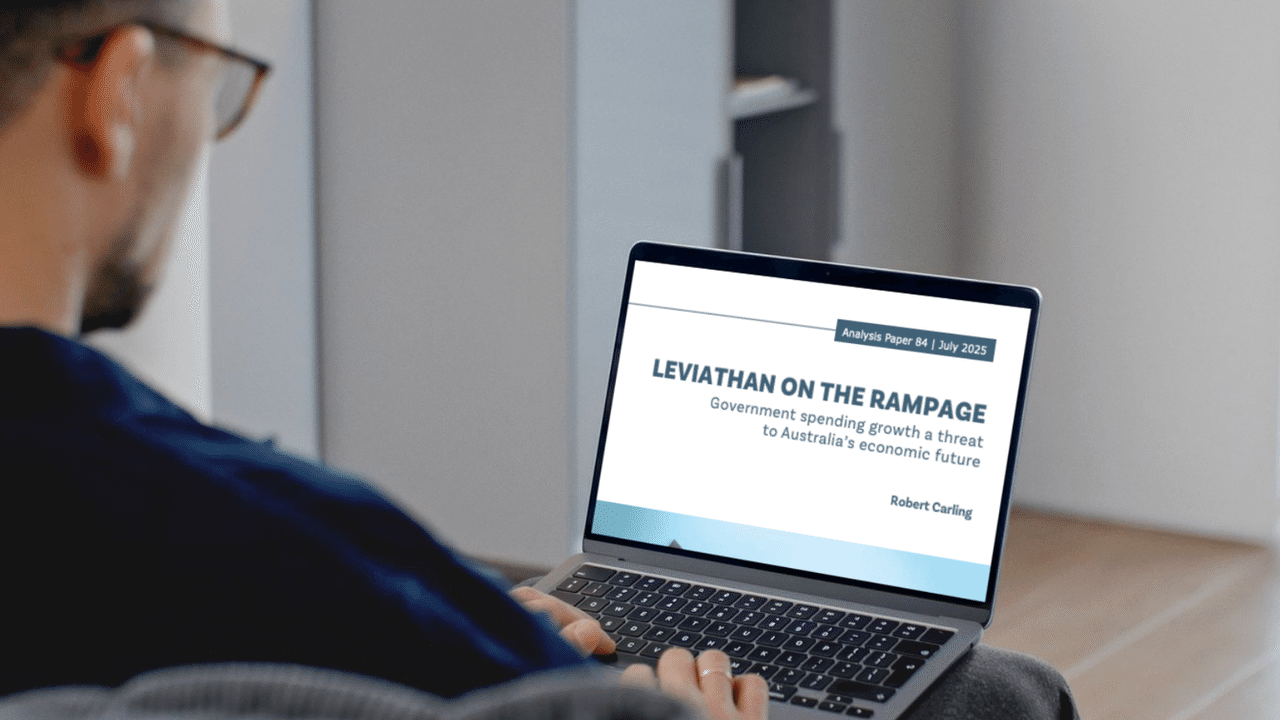
This was based on a paper published by the Centre for Independent Studies think tank that said it was "likely that more than half of voters rely on government for most of their income" (page 5).
The report arrived at this estimate by adding the number of employees across three industry categories that the author said reflect direct government employment or sectors heavily supported by government funding.
According to the paper, those industries - public administration and safety, education and training, and health care and social assistance (page 17) - together account for about 31.3 per cent of the workforce.
The report then adds these workers to what it calls "the substantial part of the population that relies heavily on government welfare payments for their income".
The report did not specify the proportions of welfare recipients, or of workers in those sectors who relied on the government for "most of their income".
Experts say the 50 per cent claim in the Facebook video is incorrect and the proportion of the population on welfare was closer to 20 per cent.
However, there is no formal definition for "welfare" and the Facebook post does not define what it means by the term.
Bruce Bradbury, an associate professor at UNSW's Social Policy Research Centre, said 'welfare' usually refers to people on income support payments.
Using Department of Social Services (DSS) data from June 2025, he calculated that just over 5.4 million people, or 19.7 per cent of the population, received direct income support payments, such as study allowances, JobSeeker or pensions.
That includes about 2.66 million people receiving the age pension.
Another 148,594 people received a veteran pension or compensation in June 2025, according to Department of Veterans' Affairs data.
Although some of those recipients also received another form of income support and may be being double-counted.
Together, this means about 5.56 million people in total, or 20.2 per cent of the population, were receiving a government income support payment.
This does not account for children who live in a household that receives government income support - 18.7 per cent of the population is under 16.
Jenni Mays, an expert on basic income and social policy at Queensland University of Technology, said the claim appeared to be an over-estimate of the proportion of the population on income support.
She recommended using data collated by the government's Australian Institute of Health and Welfare.
This showed there were about 5.3 million people aged 16 and over, or 19.2 per cent of Australia's total population, receiving income support payments as at March 2025.
More than half (55 per cent) of those on income support were aged 65 or over.
Among people aged 16 to 64, 14 per cent received income support.
The proportion of Australians receiving income support has declined since 2012, although it had increased since 2023, the report found.
Other data sources also show the proportion of the country on income support is well below 50 per cent.
Peter Whiteford, a public policy expert at the Australian National University, said the claim in the Facebook video is "rubbish".
DSS data only captures the number of income support recipients at a single point in time, he said, but an alternative estimate can be made using household income distribution data from the Australian Bureau of Statistics.
The most recent data (2019-2020) showed that 22 per cent of households had government pensions or allowances as their main source of income.
Those pensions and allowances include the Newborn Supplement, Newborn Upfront Payment, Paid Parental Leave, Family Tax Benefit, Energy Supplement and cash transfer payments, such as income support, according to the report's methodology.
However, household income distribution data would undercount people receiving social security, Prof Whiteford said, because it does not include visitors to private dwellings, such as couch surfers, or those living in non-private dwellings, such as hotels, hospitals, nursing homes and caravan parks.

He said another way to estimate the number of people receiving welfare is through the Household, Income and Labour Dynamics in Australia Survey conducted by University of Melbourne researchers.
The long-term survey follows Australians over time, and its latest report covers the year ending June 30, 2023.
Of almost 16,000 interviewees, 14.7 per cent of those aged 18 to 64 received income support payments at some point during the year (figure 3.13, p76).
A quarter of this age group lived in households that received income support at some stage during the year (p75).
Over the same period, 60.9 per cent of people aged 65 and over received an income support payment (p79) and 41.8 per cent were living in a household where the majority of income came from benefits (figure 3.17, p80).
In total, 25.4 per cent of survey respondents aged 18 or over received some form of income support.
AAP FactCheck is an accredited member of the International Fact-Checking Network. To keep up with our latest fact checks, follow us on Facebook, Instagram, Threads, X, BlueSky, TikTok and YouTube.


