A record flood that devastated Merrepen Arts hasn't stopped the centre mounting a special exhibition at one of Australia's biggest Aboriginal arts events.
The community of Nauiyu, 220 kilometres south of Darwin, was inundated by major floods in March and about 400 people were evacuated.
Nauiyu's Merrepen Arts is renowned for its printmaking, but its print workshop flooded to a depth of 170cm, and months later is still some way from restoration.
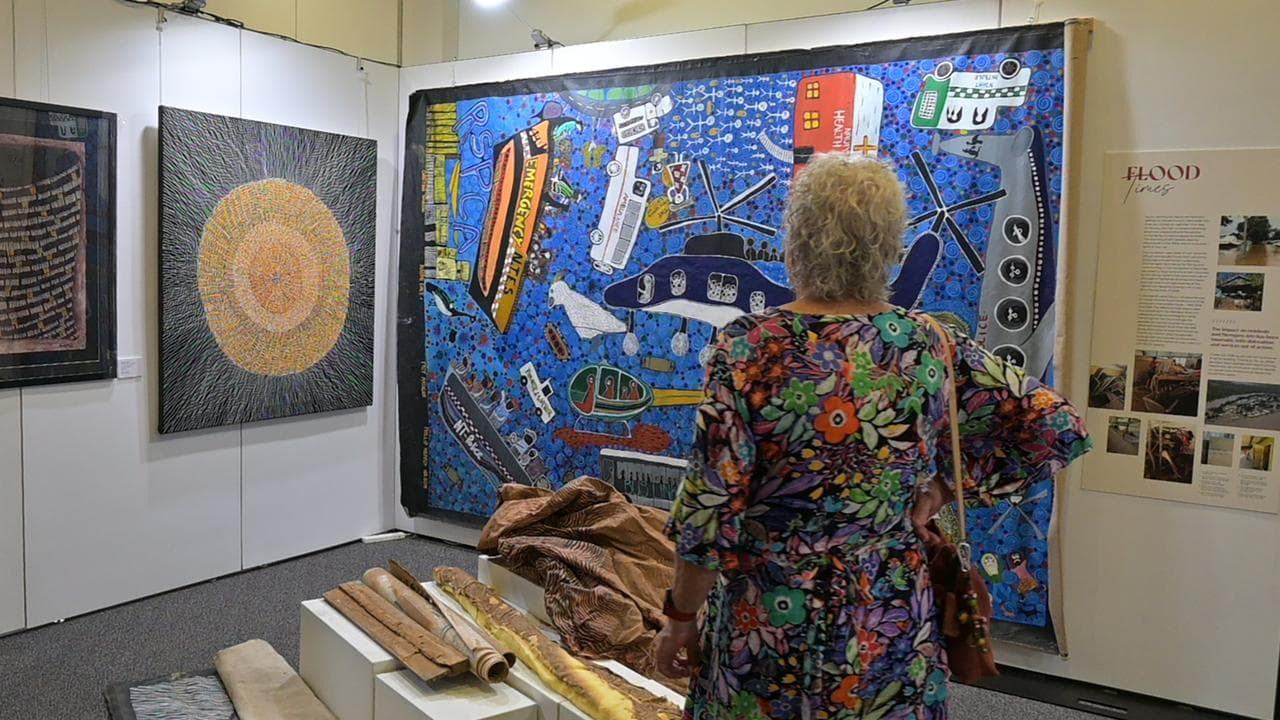
All this hasn't stopped Merrepen Arts marking its 40th anniversary with an exhibition of painting and textile prints at the Darwin Aboriginal Art Fair.
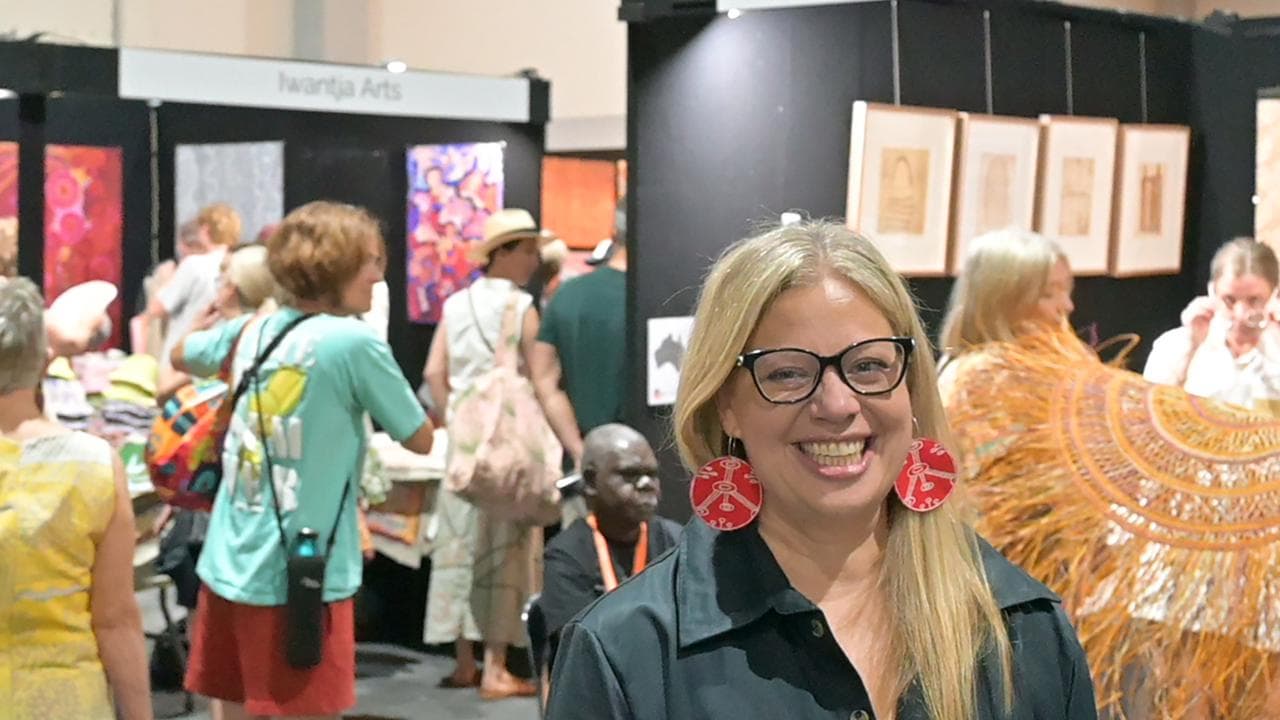
"There were a couple of weeks of being completely underwater, yet their resilience means they have made it here to celebrate their anniversary with this incredible exhibition," said the fair's executive director Claire Summers.
It's also the 20th year of the fair itself, with more than 75 art centres on show in 2026, representing over 1800 artists and arts workers.
One of many participating artists, Regina Pilawuk-Wilson's fish net designs are featured on the carpets of Australia's US embassy.
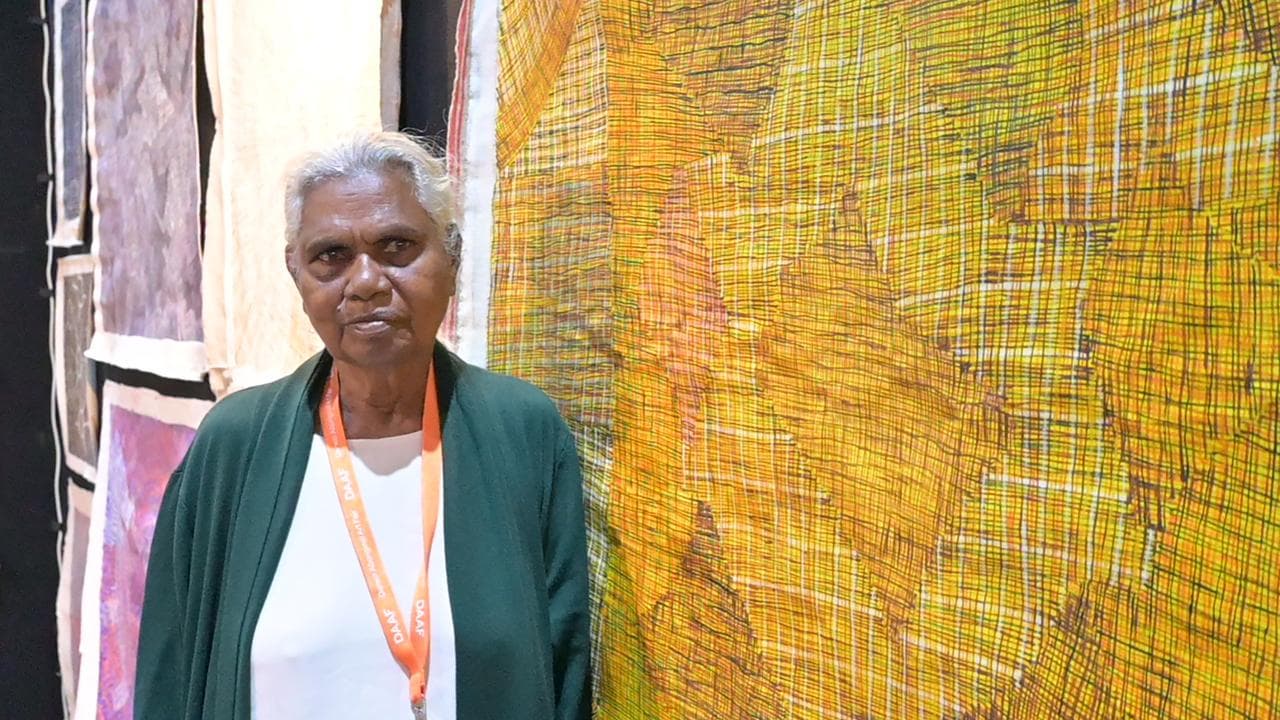
The Ngan’gikurrungurr artist works out of the Durrumu Arts centre at Peppimenarti in the Northern Territory, a community she founded with her husband in the 1970s.
"My idea was to put my weaving onto the canvas, so when I pass away, my children and grandchildren can see what I've done," said Pilawuk-Wilson.
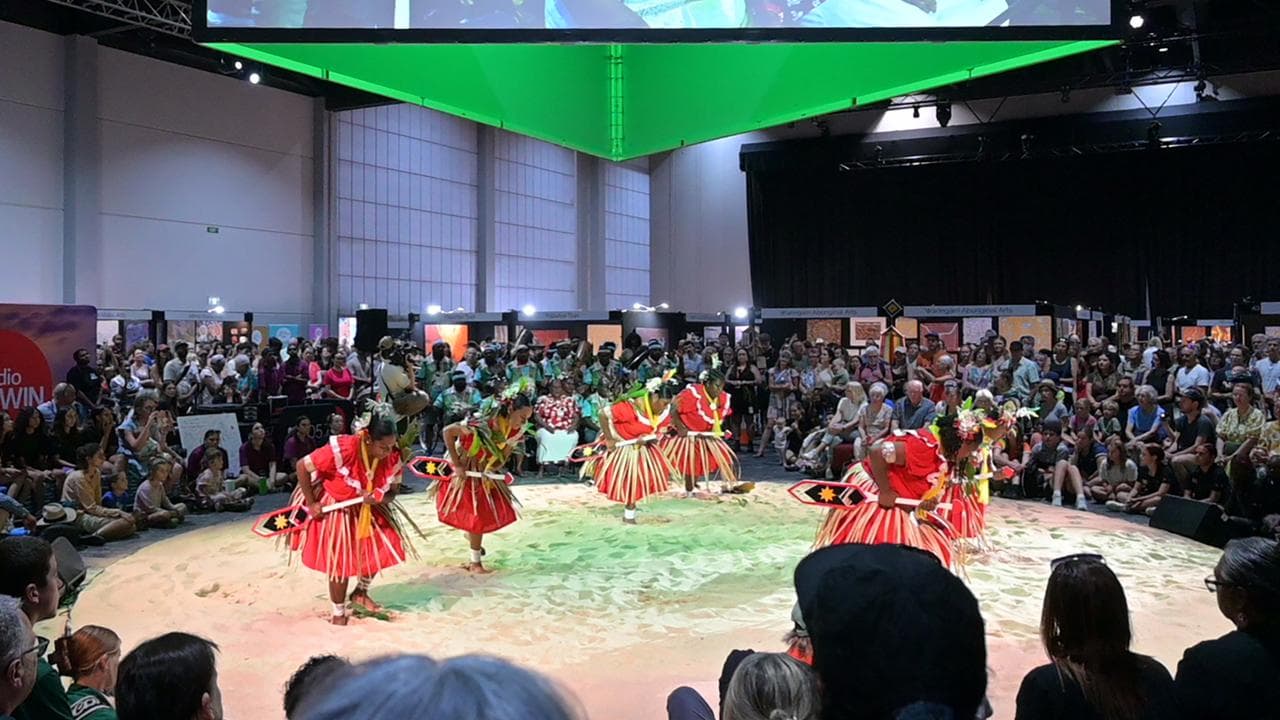
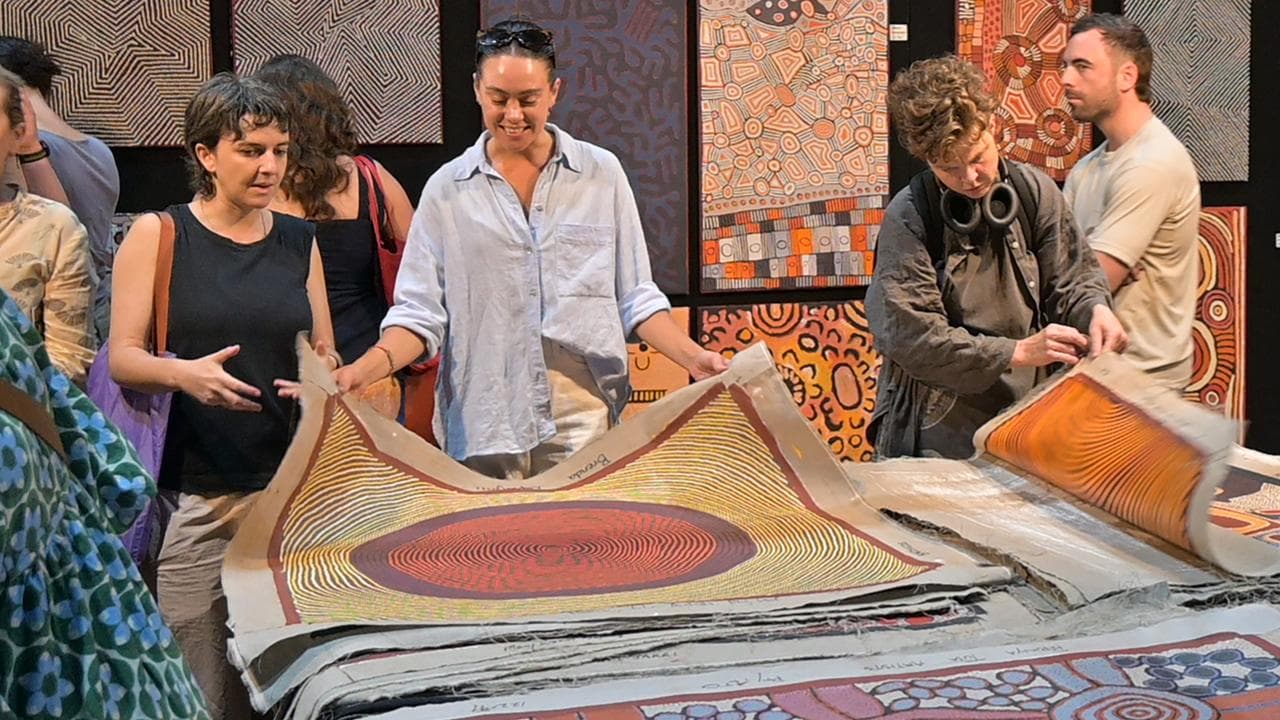
Crowds descended on the four-day fair at the city's convention centre with queues to enter on Friday, before a performance by the Kerkar Kus Dance Team from Erub Island.
Inflation and the effects of the fuel crisis have hit remote communities especially hard ahead of the 2026 fair, said Summers.
"What we're actually seeing is people rallying behind our art centres because if we don't get behind them they are going to really suffer, and they are suffering at the moment."
A handful of centres had to withdraw from the fair at the last minute, including Mangkaja Arts from Fitzroy Crossing in the NT.
The 2026 event has attracted art institutions from the US, the UK and Germany, with some artworks priced at more than $25,000.
"The art centres are very savvy ... they would have secret squirrel works so when they meet a collector, they can actually take them behind the scenes and show them," said Summers.
But most artworks are a fraction of that price, with the proceeds going directly to art centres, which for many remote communities provide the only source of non-government income.
On Friday buyers picked out punu wood carvings from Ngaruwanajirri at Wurrumiyanga on Bathurst Island, and fibre art sculptures from the renowned Tjanpi Desert Weavers were also popular.
The market for Indigenous style art is worth at least $250 million according to a 2022 report by the Productivity Commission, with merchandise and consumer products making up $80 million of that figure.
It's estimated two-thirds of Indigenous-style souvenirs are not authentic, and some art centres are exploring the production of legitimate goods for this lucrative market.
At the Djilpin Arts booth there was a queue to order throw rugs, with designs by Frankie (Tango) Lane, Janice Cameron, and Evangeline Wilson.
"It doesn't matter if you walk away with a $25,000 piece of art or a coffee mug, when you buy a piece of art First Nations people are offering us their stories, their heritage," said Summers.
The fair runs until Sunday.


