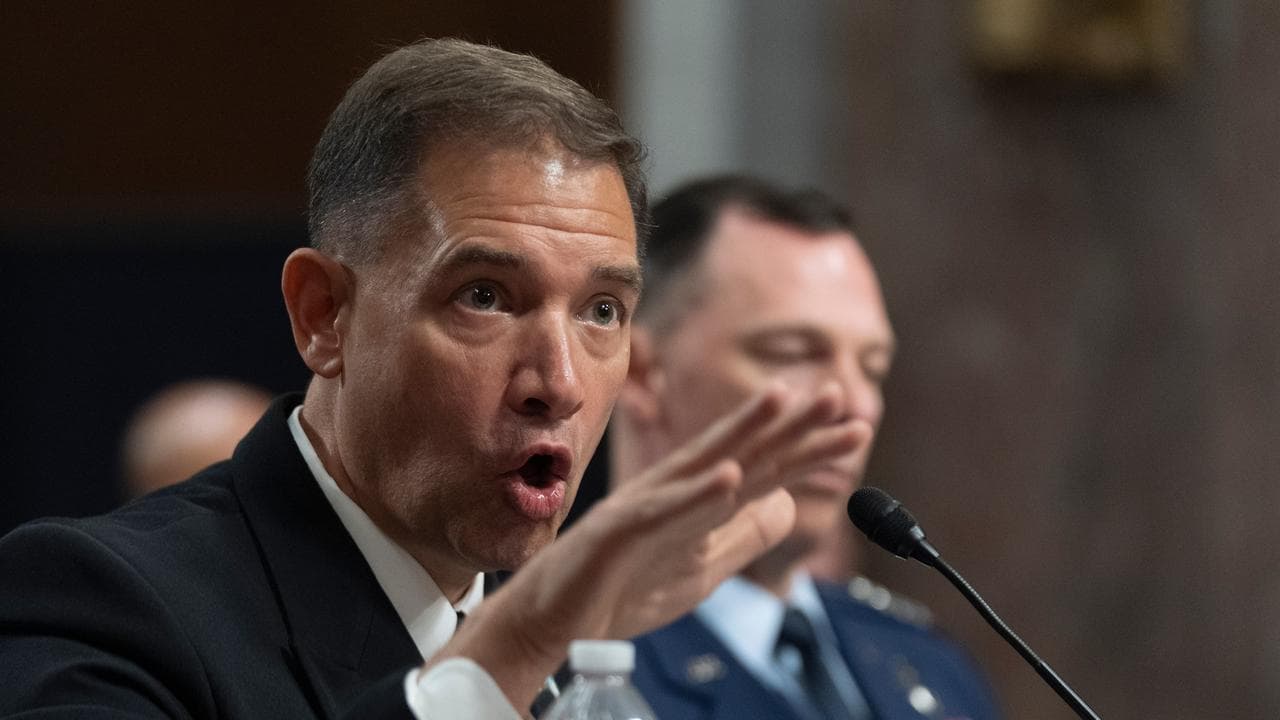
Iran's ability to threaten its neighbours and American interests has been dramatically reduced by US bombings and the country's defence industry has been set back by 90 per cent, a senior US admiral says.
Admiral Charles "Brad" Cooper, head of US Central Command, sought to underscore the tactical successes of the military campaign against Iran that he oversaw and said the war had dramatically reduced the danger posed by that country to the broader Middle East.
Cooper on Thursday declined to directly address reports by Reuters and other news organisations that Iran, which stockpiled arms in underground facilities, had retained significant missile and drone capabilities.
Those reports cited US intelligence sources.
"Iran has a significantly degraded threat, and they no longer threaten regional partners, or the United States, in ways that they were able to do before, across every domain," Cooper told a US Senate committee.
"They've been significantly degraded."
Cooper also said Iran was no longer able to transfer arms and other resources to its main allies in the region: Hezbollah in Lebanon, the Houthi militia in Yemen and Hamas in the Gaza Strip.
"Those transfer paths and methods have been cut off," he said.
A ship was reported seized off the coast of the United Arab Emirates and was heading for Iranian waters on Thursday, a United Kingdom navy agency said.
Also on Thursday, an Indian cargo vessel carrying livestock from Africa to the UAE was sunk in waters off the coast of Oman.
India condemned the attack and said all 14 crew members had been rescued by the Omani coastguard.
Vanguard, a British maritime security advisory firm, said the vessel was believed to have been hit by a missile or drone which caused an explosion.
Separately, maritime security agency UKMTO reported on Thursday that "unauthorised personnel" had boarded a ship anchored off the coast of the United Arab Emirates port of Fujairah and were steering it towards Iran.
"The company security officer reported that the vessel was taken by Iranian personnel while at anchor," Vanguard said.
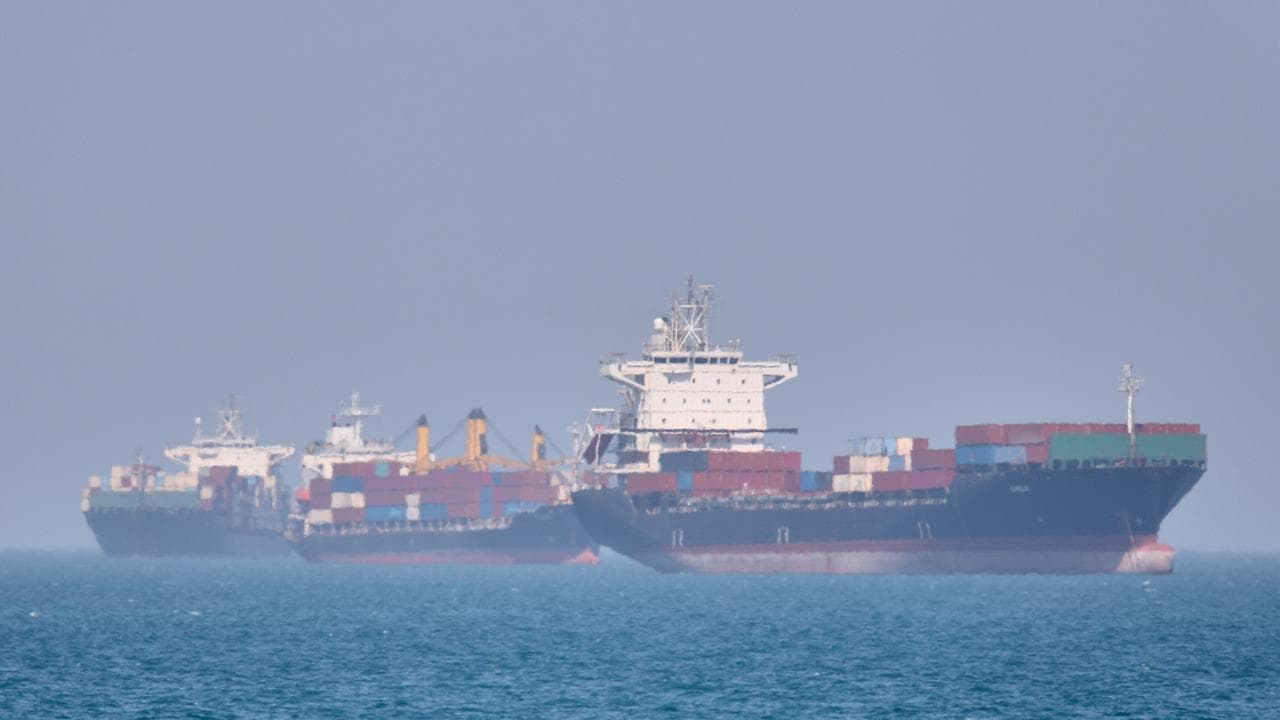
Security in that area is particularly sensitive, as Fujairah is the UAE's sole oil port on the far side of the strait, allowing some exports to reach markets without passing through it.
Iran included that part of the coast on an expanded map it released last week of waters it claimed were under its control.
Thirty ships passed through the Strait of Hormuz since Wednesday night, a commander of Iran's Islamic Revolutionary Guard Corps (IRGC) said on Thursday.
The commander stressed vessels linked to "an enemy state" continued to be barred from transiting the waterway, according to comments carried by the Fars news agency.
According to the Tasnim news agency, which is linked to the IRGC, Chinese vessels were among the ships that made it through the Strait overnight.
with AP and DPA


