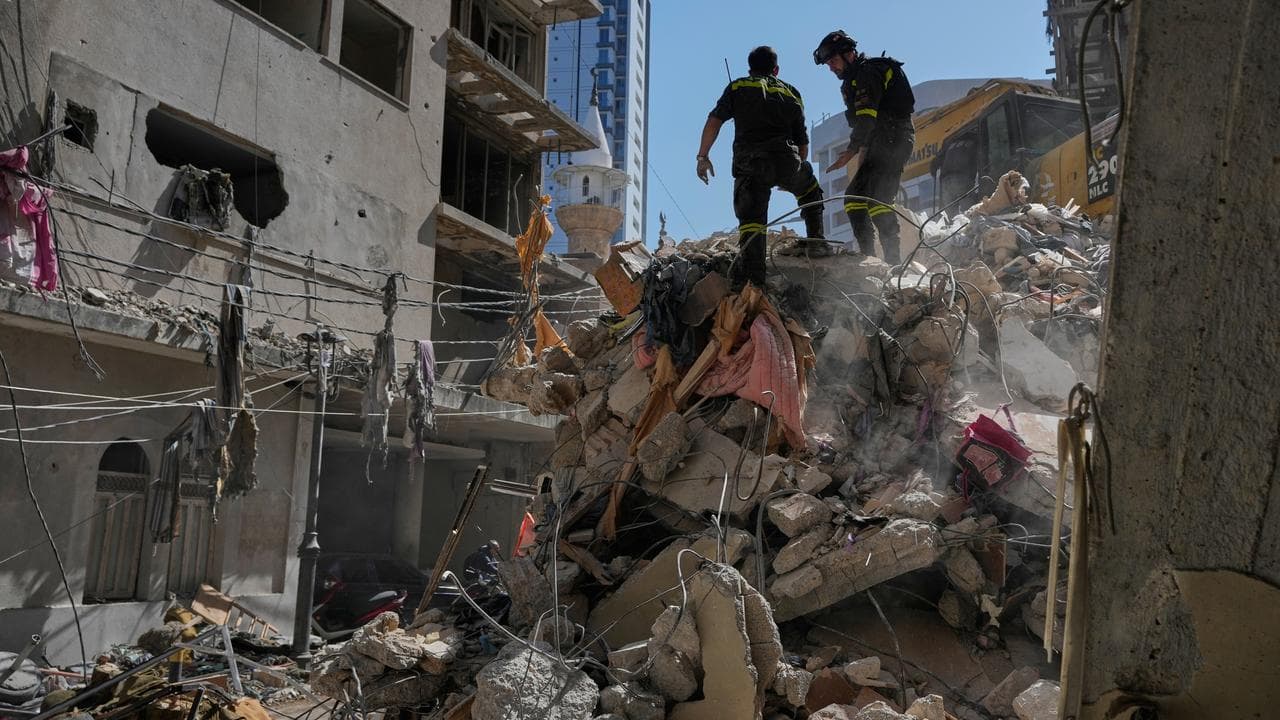
Israel has bombed more targets in Lebanon, putting the Middle East ceasefire in further jeopardy after its biggest attacks of the war on its neighbour killed more than 250 people and threatened to torpedo Donald Trump's truce from the outset.
Iranian negotiators were expected to set off on Thursday for Pakistan for the first peace talks of the war, where they are due to meet a delegation led by US Vice President JD Vance on Saturday.
But there was no sign Iran had lifted its blockade of the Strait of Hormuz, which has caused the worst disruption to global energy supplies in history, and Tehran said there would be no deal as long as Israel was striking Lebanon.
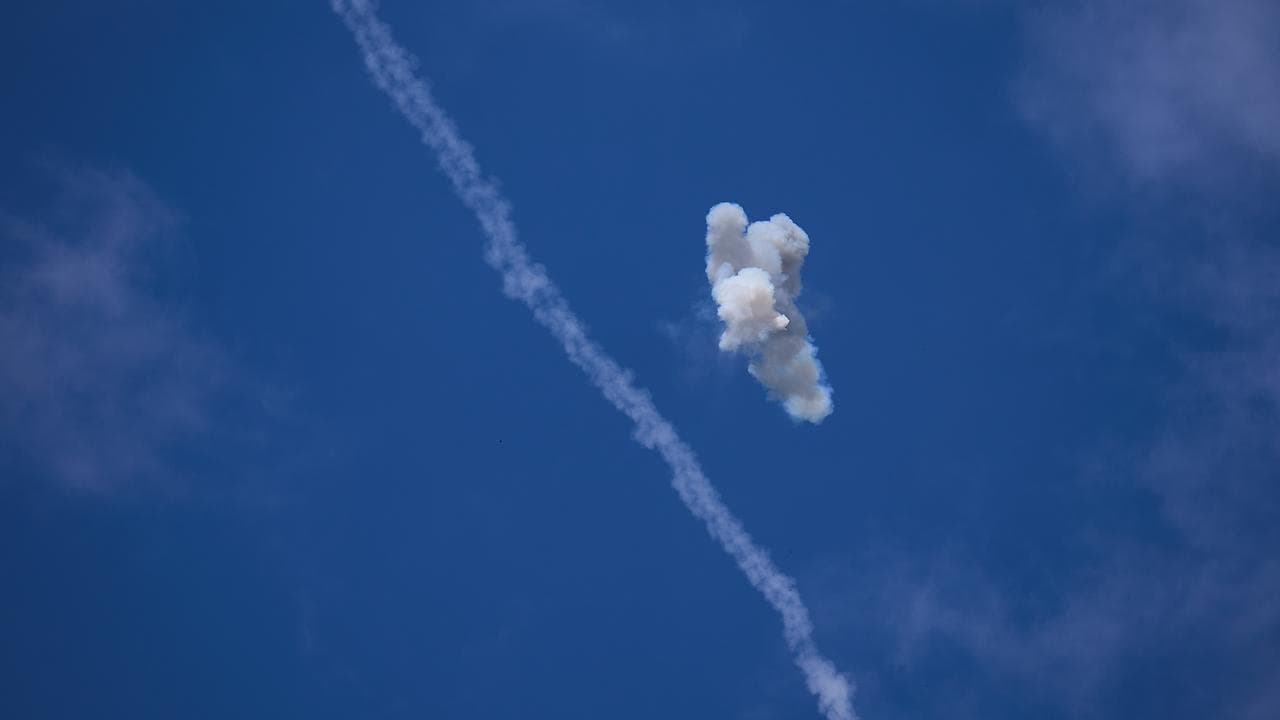
Israel, which invaded Lebanon in March in parallel with the war on Iran to root out Iran-linked militants Hezbollah, says its actions there are not covered by the ceasefire announced late on Tuesday by US President Donald Trump.
Washington has also said Lebanon is not covered by the truce, but Iran and Pakistan, which acted as mediator, say it was explicitly part of the deal.
A host of countries, including prominent US allies Britain and France, said the truce should extend to Lebanon and condemned Israel's attacks on the country.
The Israeli military said on Thursday it had killed the nephew of Hezbollah secretary-general Naim Qassem, who had served as his personal secretary, and had struck river crossings used by the group overnight.
Israel struck Beirut's southern suburbs just before midnight and at dawn, and hit towns across the south on Thursday morning, Lebanese state media said.
For its part, Hezbollah, which had initially said it would pause attacks on Israel in line with the ceasefire, said it was resuming them and had fired once across the border into Israel and twice at Israeli forces in southern Lebanon.
"What happened yesterday was grave violation," Iranian deputy foreign minister Saeed Khatibzadeh told BBC Radio of Israel's attacks on Lebanon.
"It was a catastrophe, could actually end in more catastrophe, and this is the nature of this rogue behaviour that we are seeing from Israel in the whole Middle East."
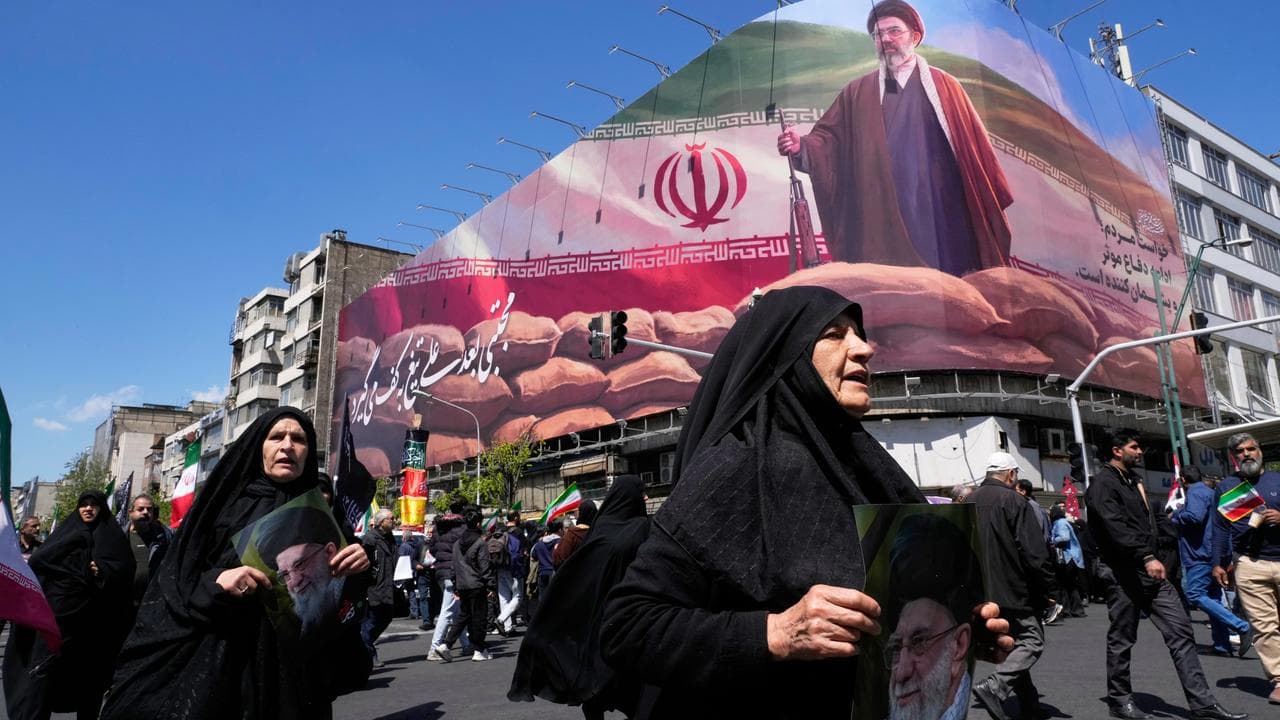
Inside Iran, where the halt to six weeks of US and Iranian air strikes has been portrayed as victory for the clerical rulers, huge crowds turned out for a commemoration to mark 40 days of mourning for supreme leader Ayatollah Ali Khamenei, killed on the war's first day and who was succeeded by his son Mojtaba.
The futures contracts for delivery of oil in May or June have eased since Trump announced the ceasefire on expectations that deliveries of blocked Gulf oil would quickly resume.
But the price of physical oil for delivery now has shot up to record levels as refiners struggle to meet demand with a fifth of the global supply knocked out for a month and a half.
Trump, who announced the truce on Tuesday just before a deadline he had set to destroy Iran's "whole civilisation" unless it unblocked the strait, threatened more attacks.
If Iran did not comply, then "the 'Shootin’ Starts,' bigger, and better, and stronger than anyone has ever seen before", he posted on social media.
Though Trump has declared victory, Washington did not achieve the aims he had announced to justify the war at its outset: to eliminate Iran's ability to attack its neighbours, destroy its nuclear program and create conditions that would make it easier for Iranians to topple their government.
Iran still possesses missiles and drones capable of targeting its neighbours and a stockpile of highly enriched uranium.
Its rulers, who had faced a mass uprising just months ago, survived the superpower onslaught with no sign of organised opposition.
And they have demonstrated their ability to exert control of the strait.
The core disputes remain unresolved, with each side sticking to competing demands for a deal that could shape the Middle East for generations.


