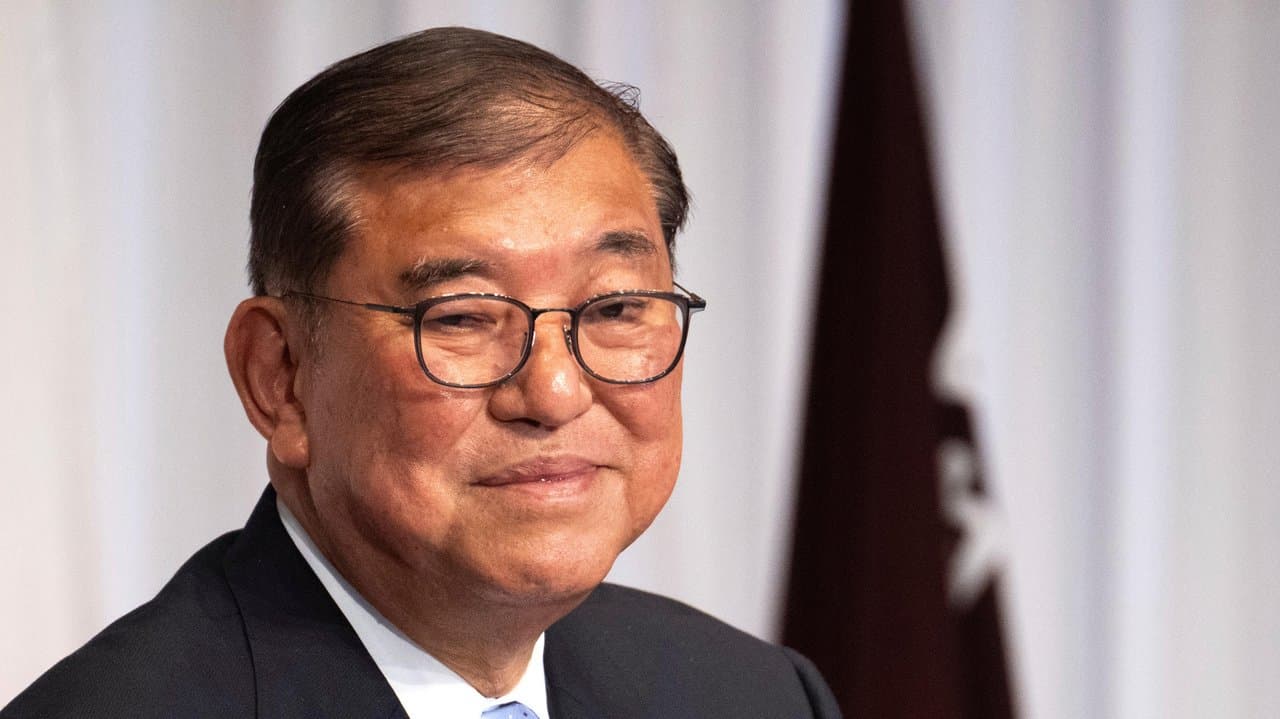
Japanese Prime Minister Shigeru Ishiba has vowed to remain in office after his ruling coalition suffered a bruising defeat in upper house elections, prompting some of his own party to deliberate his future.
The embattled leader told a news conference he would remain in office to oversee tariff talks with the United States and other pressing matters such as rising consumer prices that are straining the world's fourth largest economy.
"The political situation has become fluid and could lead to a leadership change or the reshuffling of the coalition in coming months, but Prime Minister Shigeru Ishiba will likely stay to complete the tariff negotiations with the US for now," said Oxford Economics' lead Japan economist Norihiro Yamaguchi.
Ishiba's Liberal Democratic Party (LDP) and coalition partner Komeito returned 47 seats, short of the 50 seats it needed to ensure a majority in the 248-seat upper chamber in an election where half the seats were up for grabs.
That comes on top of its worst showing in 15 years in October's lower house election, a vote that has left Ishiba's administration vulnerable to no-confidence motions and calls from within his own party for leadership change.
Speaking after exit polls closed, Ishiba told NHK he "solemnly" accepted the "harsh result".
"We are engaged in extremely critical tariff negotiations with the United States ... we must never ruin these negotiations. It is only natural to devote our complete dedication and energy to realising our national interests," he later told TV Tokyo.
Asked whether he intended to stay on as premier, he said, "that's right".
Japan, the world's fourth-largest economy, faces a deadline of August 1 to strike a trade deal with the United States or face punishing tariffs in its largest export market.
The main opposition Constitutional Democratic Party finished second with 22 seats.
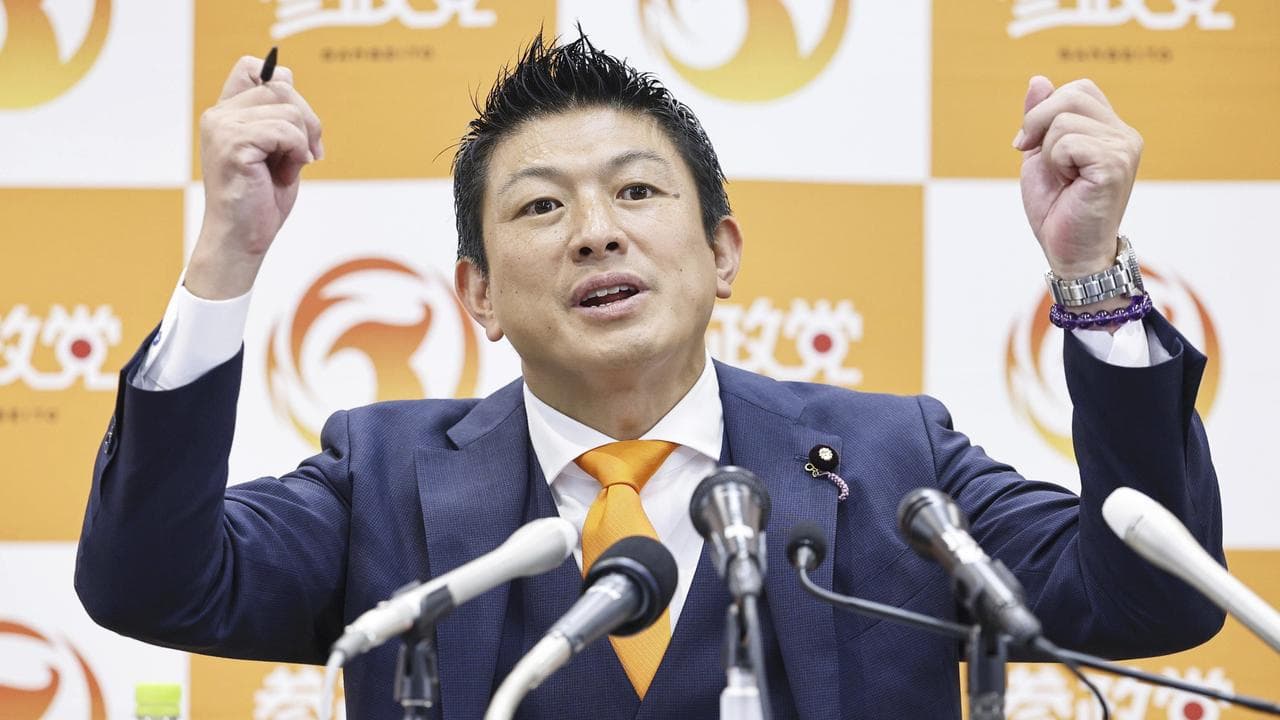
Meanwhile, the far-right Sanseito party announced its arrival in mainstream politics, adding 14 seats to one elected previously.
Launched on YouTube a few years ago, the populist party found wider appeal with its "Japanese First" campaign and warnings about a "silent invasion" of foreigners.
Opposition parties advocating for tax cuts and welfare spending struck a chord with voters, as rising consumer prices - particularly a jump in the cost of rice - have sowed frustration at the government's response.
The LDP has been urging fiscal restraint, with one eye on a very jittery government bond market, as investors worry about Japan's ability to refinance the world's largest debt pile.
Any concessions the LDP must now strike with opposition parties to pass policy will only further elevate those nerves, analysts say.
"The ruling party will have to compromise in order to gain the co-operation of the opposition, and the budget will continue to expand," said Yu Uchiyama, a politics professor at the University of Tokyo.
"Overseas investors' evaluation of the Japan economy will also be quite harsh."


