
New Zealand's pre-election books are rosier than first thought, giving parties more space for campaign spend-ups on the road to the November 7 election.
However, the governing National party won't be taking up that option, instead promising to keep a tight fiscal leash to return to surplus next term.
On Tuesday, Finance Minister Nicola Willis unveiled the pre-election economic and fiscal outlook (PREFU), which showed clear improvement on the May budget.
Last year's $NZ11.9 billion budget deficit has instead been banked at $NZ8.6 billion ($A7 billion), and next year's forecast deficit of $11.4 billion has been revised to $NZ6.8 billion.
As was signposted in May, a return to surplus is slated for 2028/29, but now is predicted to hit $NZ4 billion.
Ms Willis, whose National-led coalition is in a tough fight with the Labour-led left for a second term, called the fiscal improvement "welcome news".
"The amount New Zealand spends servicing our debt each year is significant, equivalent to the cost of building more than four Dunedin Hospitals every single year," she said.
"This frees up more money for the things New Zealanders care about and ensures we are in a stronger position to weather the next global conflict or major weather event."
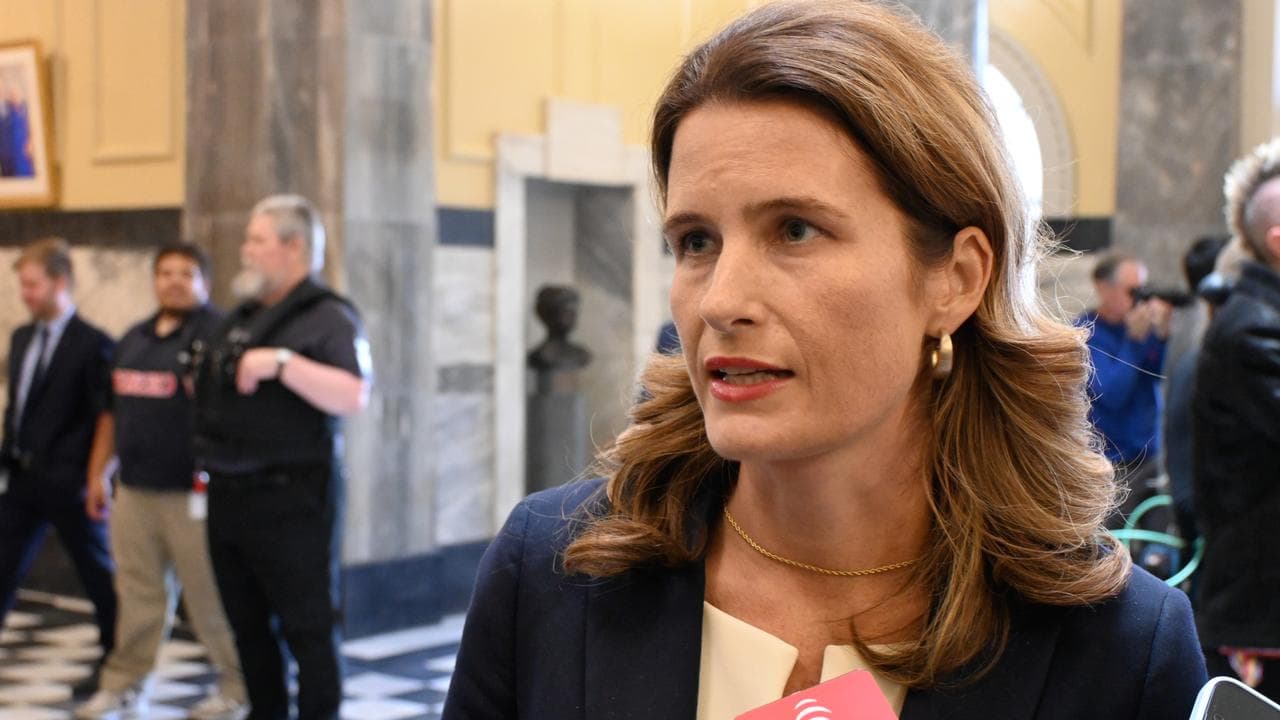
She said the extra cash should not be "treated as a green light to open the chequebook, because Kiwis know from bitter experience that things can always change and global instability is not going away".
The release of PREFU puts the ball in Labour's court this election campaign, as it has delayed issuing election policy costings until it saw the state of the books.
National alleges Labour has $18 billion in unfunded promises and is campaigning on being a lower-spending government than a possible Labour-Greens grouping.
Opposition finance spokeswoman Barbara Edmonds promised also to publish a fiscal plan which included a first surplus since 2018/19.
“Labour will be fiscally responsible, ambitious for the economy and focused on the future. We will return the books to surplus, bring debt down over time and invest in what matters," she said.

Kiwis know the economic impact from global instability well: in recent years, the COVID-19 pandemic, US tariffs and the oil price shock have deeply shaken the trade-exposed nation.
National, and many Kiwis, blame the last Labour government for high spending through the pandemic which has delayed a return to surplus.
Right now though, the biggest impact is the ongoing US-Iran conflict, which is delaying New Zealand's long-sought economic recovery.
While growth forecasts point to an end to the gloom, unemployment is higher than at any point during the COVID-19 era, and, led by fuel costs, inflation is again on the march.
A briefing note on PREFU issued by Commonwealth Bank-owned Kiwi retail bank ASB said forecasts of an improved economy had an "aspirational" feel.
"The global environment is considerably more challenging, and it would be prudent to be wary," senior economist Mark Smith said, echoing the call for fiscal restraint.
"New Zealand faces significant longer-term fiscal challenges posed by population ageing, climate change and infrastructure requirements. Generous fiscal pledges that are not fiscally sustainable will have consequences."


