What was claimed
The number of nurses has increased by 2100 since the National-led coalition government was elected.
Our verdict
Misleading. Many of the nurses were recruited under the previous Labour government and the number has flatlined over the past two years.
AAP FACTCHECK - New Zealand’s Labour and National parties are both claiming credit for a boom in the number of nurses, despite it leading to a budgeting crisis at the national health agency.
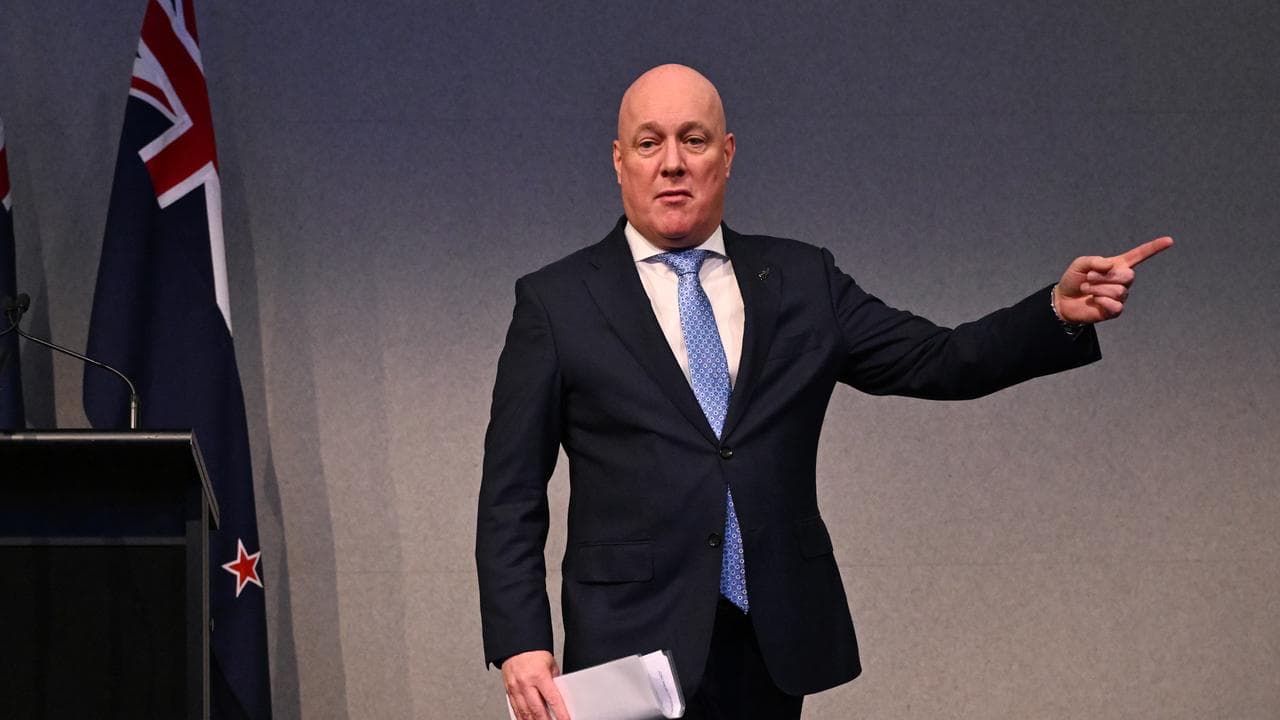
During the TVNZ Leaders Debate on October 6, Prime Minister Christopher Luxon repeatedly claimed "2100 extra nurses have been hired during my time in government".
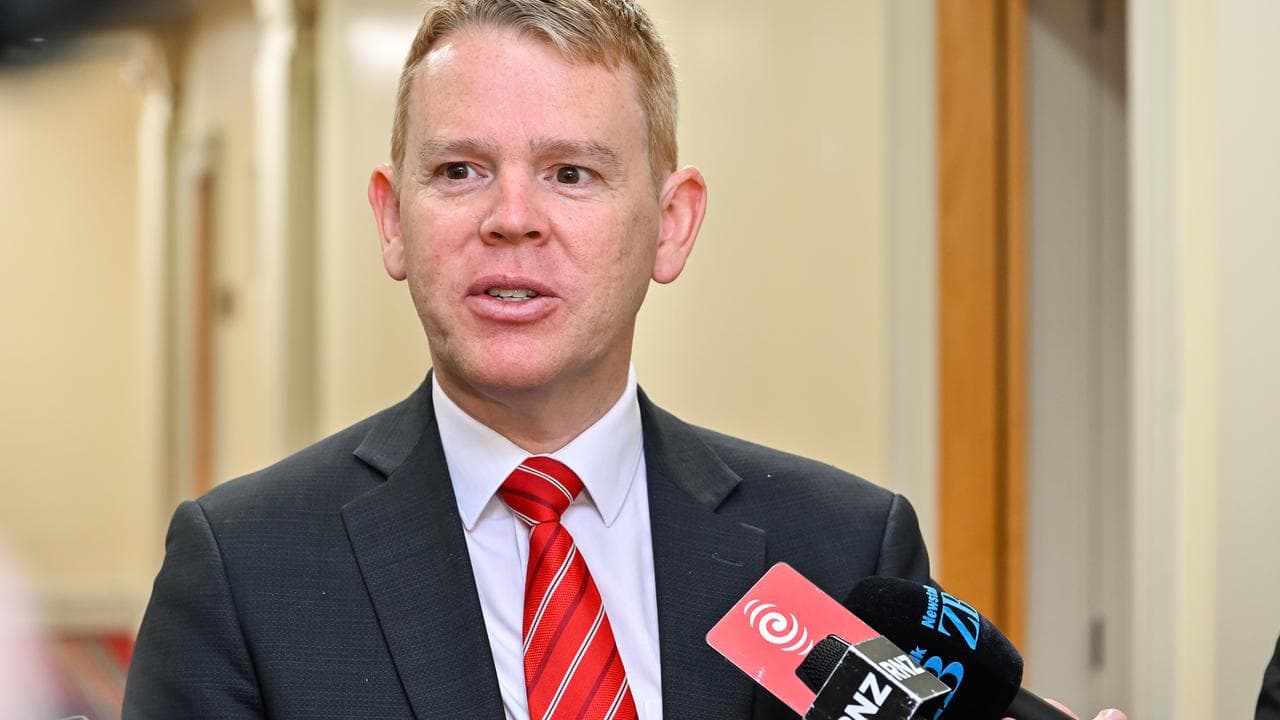
Labour Party leader Chris Hipkins responded that these nurses were "employed at the end of Labour's time in government" and only 54 nurses had been hired in the past two years.
An expert told AAP FactCheck, and government reports indicate, that many of the 2100 nurses were recruited under the previous Labour government.
Government documents and a Deloitte review found that the additional nursing positions were not adequately funded due to errors at Health NZ, the country’s public health agency.
This unbudgeted growth in the nursing workforce ultimately led to a $100 million-a-month budget shortfall in mid 2024, contributing to a $722 million deficit at the agency in 2023/24.
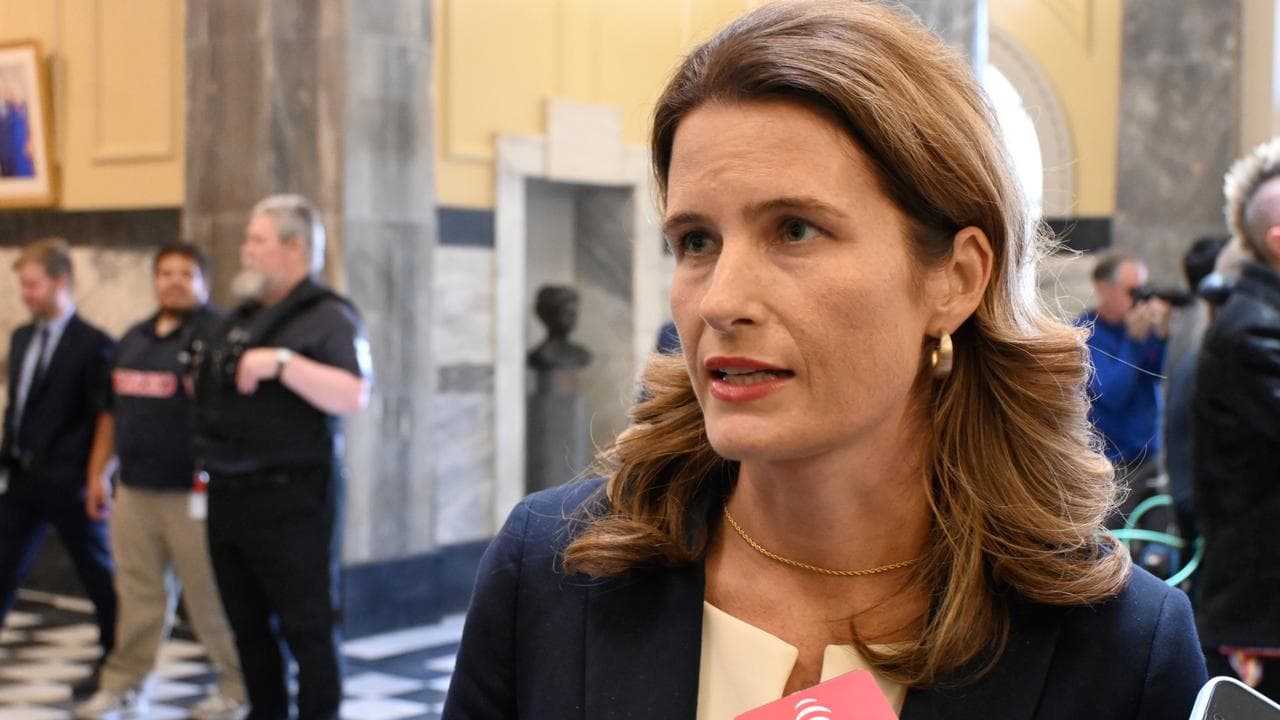
Multiple senior National politicians have made the "2100 extra nurses" claim, including health minister Simeon Brown in an August 2026 interview on the Q+A TV show and finance minister Nicola Willis on RNZ's Morning Report on September 16 (timestamp 10 mins 58 seconds).
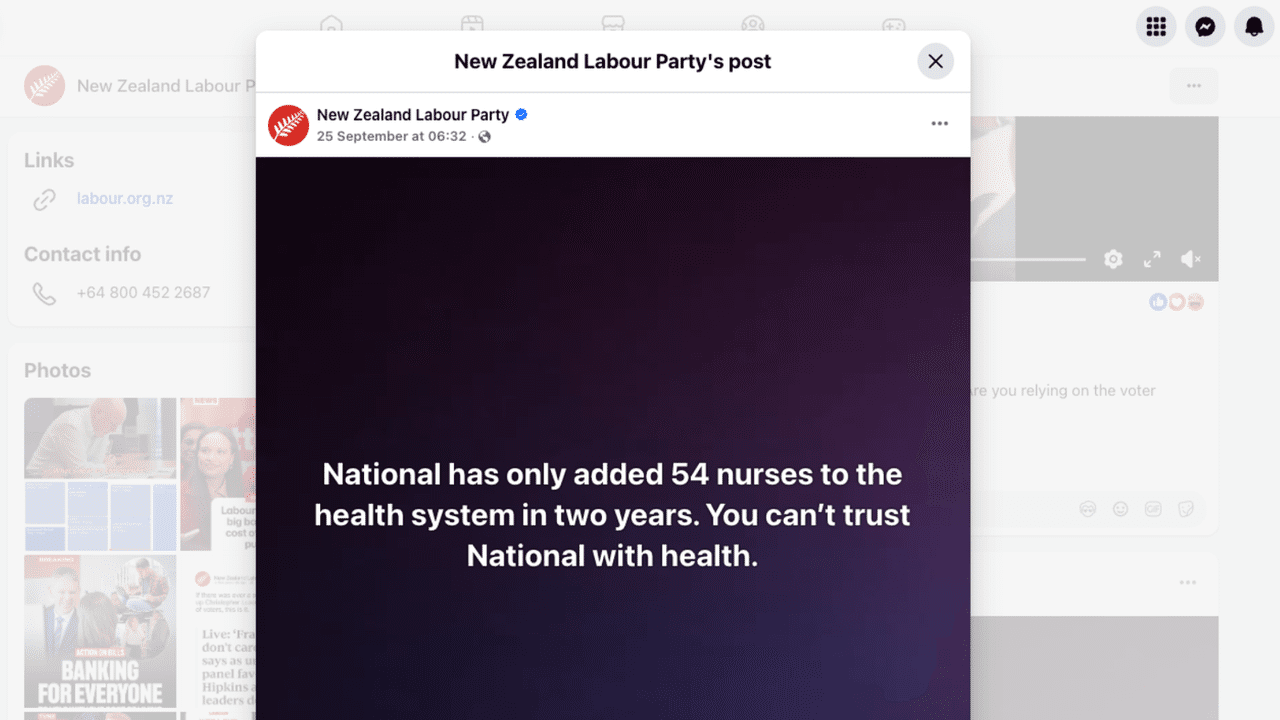
Labour has also repeatedly claimed only 54 full-time equivalent (FTE) nurse jobs were added between March 2024 and March 2026, including on Facebook.
When asked for the evidence for its claim about 2100 additional nurses, a National Party spokesperson told AAP FactCheck it was based on Health NZ's quarterly workforce reports.
The September 2023 report (Table 2, page 7) and March 2026 report (Table 2, p11), the latest available, show the number of nurses increased by 2162 in this period.
"The September 2023 data set is used as it is the last full data set that reflects the previous Labour Government," the National Party spokesperson said.
The Health NZ figures represent an employee headcount that includes both part-time and full-time nurses. The number of FTE nurses increased by 1640 during the same period.
This period also includes nearly two months before the coalition government came to power on November 27, 2023, and the growth occurred almost entirely in the six months between September 30, 2023, and March 31, 2024.
The figures also show 53.8 additional FTE nurses, or 279 employees, were added between April 2024 and March 2026.
Mr Brown conceded in parliament in August that only 54 FTE nurses were added in that period.
Jenny Carryer, a professor of nursing at Massey University, said the nurses hired between September 2023 and March 2024 would have been recruited under the Labour government.
She noted Labour had undertaken a "rigorous recruitment drive" in 2022 to increase the number of nurses during the COVID-19 pandemic after reports of a shortage.
That year the government announced measures including $5000 payments for former nurses to return to the workforce and an "immediate pathway to residence" for nurses from overseas.
"National cannot claim any responsibility for hires in at least the first year [of its term] and possibly longer," Prof Carryer told AAP FactCheck.
Graduate nurses are also interviewed to fill positions between September and October each year, but aren't appointed to new roles until between December and March, Prof Carryer said.
This is supported by a 454-page proactive release of official documents related to Health NZ's financial difficulties.
A briefing to the health minister on March 21, 2024, stated that "the recent nursing FTE growth is attributed to new graduate nurses" (p155).
Another briefing two days later states that more than 1200 new graduate nurses were employed in December 2023 and January 2024 (p173).
A briefing the following month stated that the increase in nursing numbers also reflected strong recruitment "supported by immigration settings and pay equity" and lower turnover (p232).
The document also notes that fewer nurses left the workforce due to a recent pay rise, a weaker economy and job satisfaction increasing as staffing levels improved (p232).
However, the documents show that the unbudgeted growth in the nursing workforce caused a major financial crisis at Health NZ, after administrative and management failures allowed staffing costs to grow far beyond budget.
Health NZ's financial statements in the proactive release show a significant unbudgeted growth in the nursing workforce in late 2023.
This rose from 631 unbudgeted nurses in October 2023 to 1040 in December, before reaching 3522 in April 2024 (Table 2, p243).
A briefing to the health minister the following month said Health NZ was overspending by $100 million a month "due to additional hours being paid for largely additional nursing FTE" (p238).
In a financial update to ministers in July 2024, Health NZ said it was expecting a $742 million deficit in 2023/24 "due to over expenditure in personnel (primarily nursing)" (p409).
"Driver of costs increases is people - Increase in nursing FTEs was multi-factored - large intake of graduate nurses, good results from international recruitment, disconnect of rostering from budget on the ground," the update said (p409).
One solution was to reduce the number of nurses hired.
A June 2024 Health NZ briefing said, due to the increase in the nursing workforce, "little to no growth is affordable for 2024/25, and in some areas reductions will be needed" (p298).
Another Health NZ briefing states: "Our intention is to manage back to budget through attrition" (p311).
But while the quarterly workforce reports show the nursing workforce largely flatlined after March 2024, the coalition government and Health NZ have denied that a hiring freeze was in place.
The budgeting issues ultimately led the coalition government to sack Health NZ's board in July 2024 and replace it with a government-appointed commissioner after warning it was on track for a $1.4 billion deficit.
A Deloitte review of Health NZ's financial difficulties found the deficit was driven by management issues, and the Labour government's decision to merge the country's district health boards into a new centralised agency, Health NZ, was a key factor.
"There were many factors at play that gave rise to the growth in expenditure beyond Health NZ’s revenue, but the key factor was the inability to identify and respond to the disconnect between expenditure and revenue," it said.
One reason for the unbudgeted boom in nurse numbers was that nurses were hired based on recommendations from a model called the Care Capacity Demand Management program (CCDM), the report stated.
The model determines how many nurses are needed to safely care for the number of patients at a facility, but there wasn't enough money to hire the required nurses.

Hospitals recruited new nurses based on the model "under the mistaken belief that there were centrally held funds available to cover the increase in staff costs", the Deloitte review said (p50).
"The disconnect between CCDM and budget availability, coupled with the loss of local, regional, and national internal monitoring controls, led to recruitment approvals being based on service needs without budget consideration," the report found (p50).
Health NZ commissioner Lester Levy also said the over-recruitment of nurses was due to fruitful international recruitment and a previous lack of internal oversight, RNZ reported in October 2024.
Despite nurse recruitment being over budget, concerns about a lack of nurses to safely staff hospitals persisted through 2024.
While National politicians have claimed credit for the nurse workforce, the government does not appear to have been briefed about the surge in nursing FTEs until after it had occurred.
Because of slow reporting at Health NZ, the health minister wasn't briefed on the unbudgeted workforce growth until March 21, 2024, the proactive release documents suggest (p155).
The Deloitte review said Health NZ appeared unaware of the cause of the unbudgeted rise in nursing FTEs for some time.
It said the chief executive launched an internal audit between February and April 2024 to review nursing costs and recruitment "to understand why these costs had increased significantly in excess of budget" (p23).
AAP FactCheck is an accredited member of the International Fact-Checking Network. To keep up with our latest fact checks, follow us on Facebook, Instagram, Threads, X, BlueSky, TikTok and YouTube.


