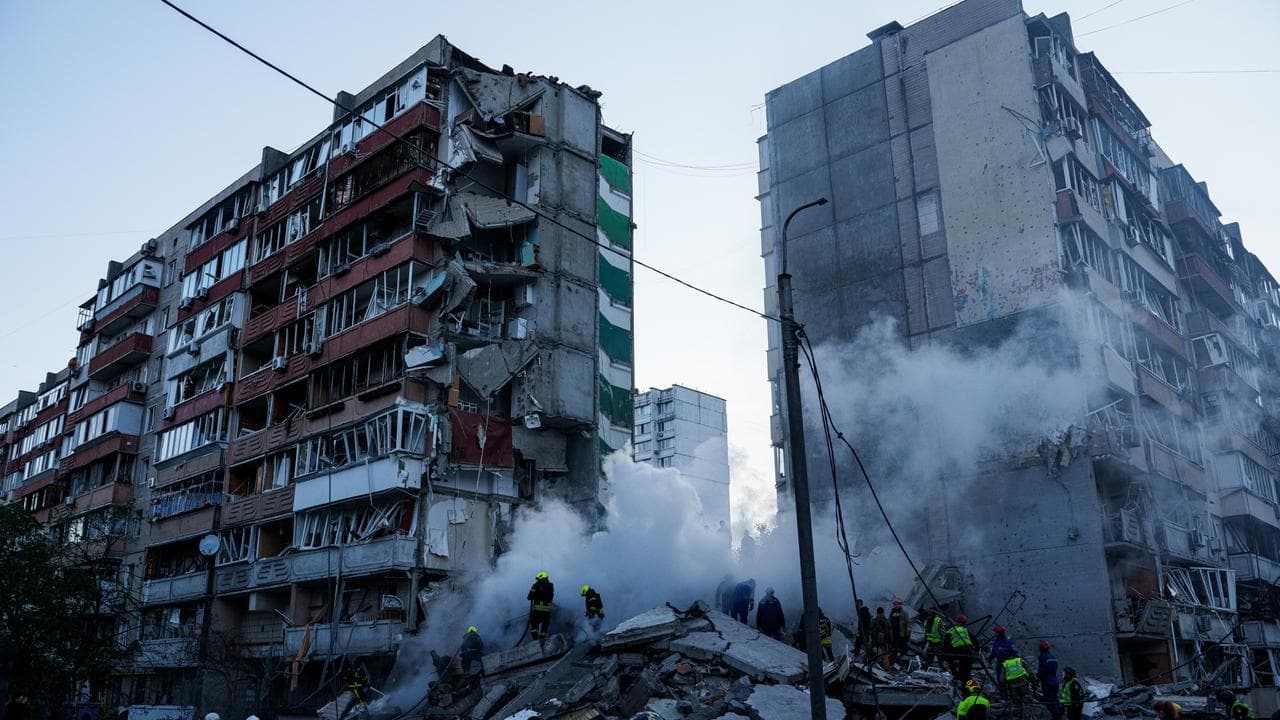
Russia has attacked Ukraine's capital with a mass drone and missile attack that killed at least one and injured 31 people, local authorities say.
The attack early on Thursday struck civilian infrastructure and residential buildings across multiple cities, Ukrainian Prime Minister Yuliia Svyrydenko said, with Kyiv enduring the heaviest losses.
Damage was recorded across six districts of the capital, according to head of Kyiv's Military Administration Tymur Tkachenko.
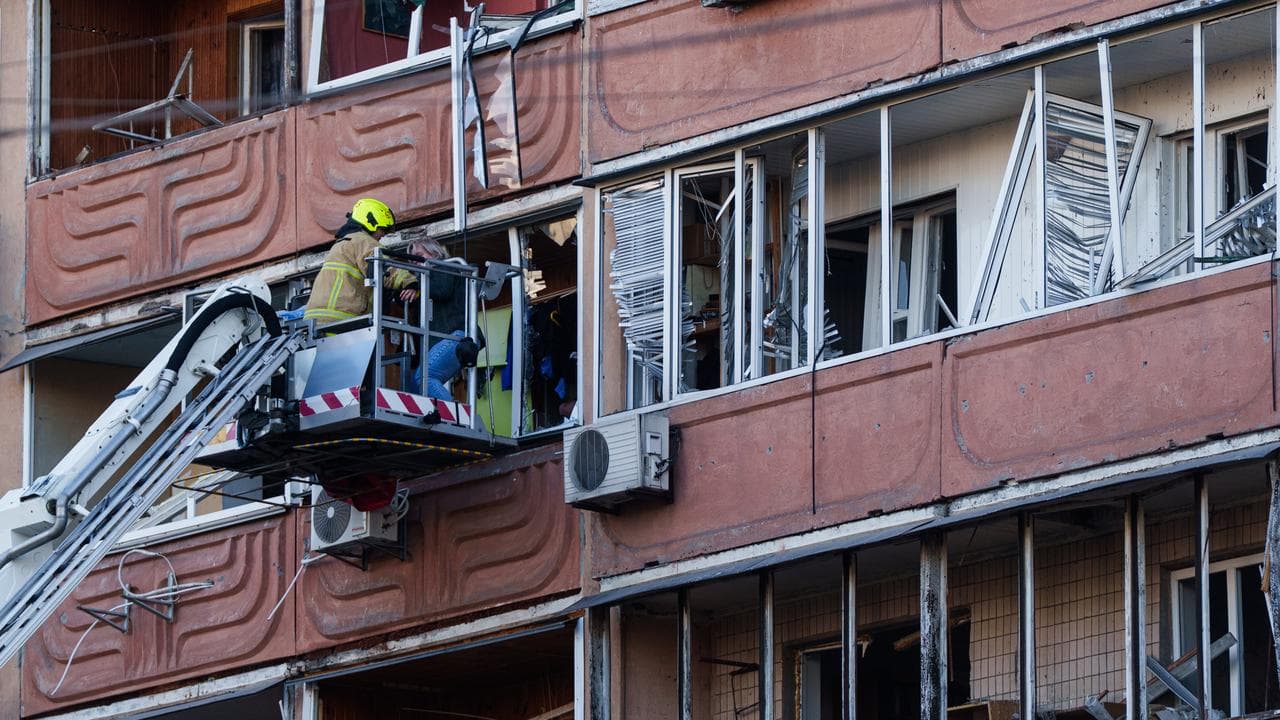
Residential buildings and civilian infrastructure was damaged.
The cities of Kremenchuk, Bila Tserkva, Kharkiv, Sumy and Odesa also were targeted in the attack, which involved both ballistic and cruise missiles, she said.
In the Darnytsia district of Kyiv, a residential building partially collapsed, burying people under the rubble.
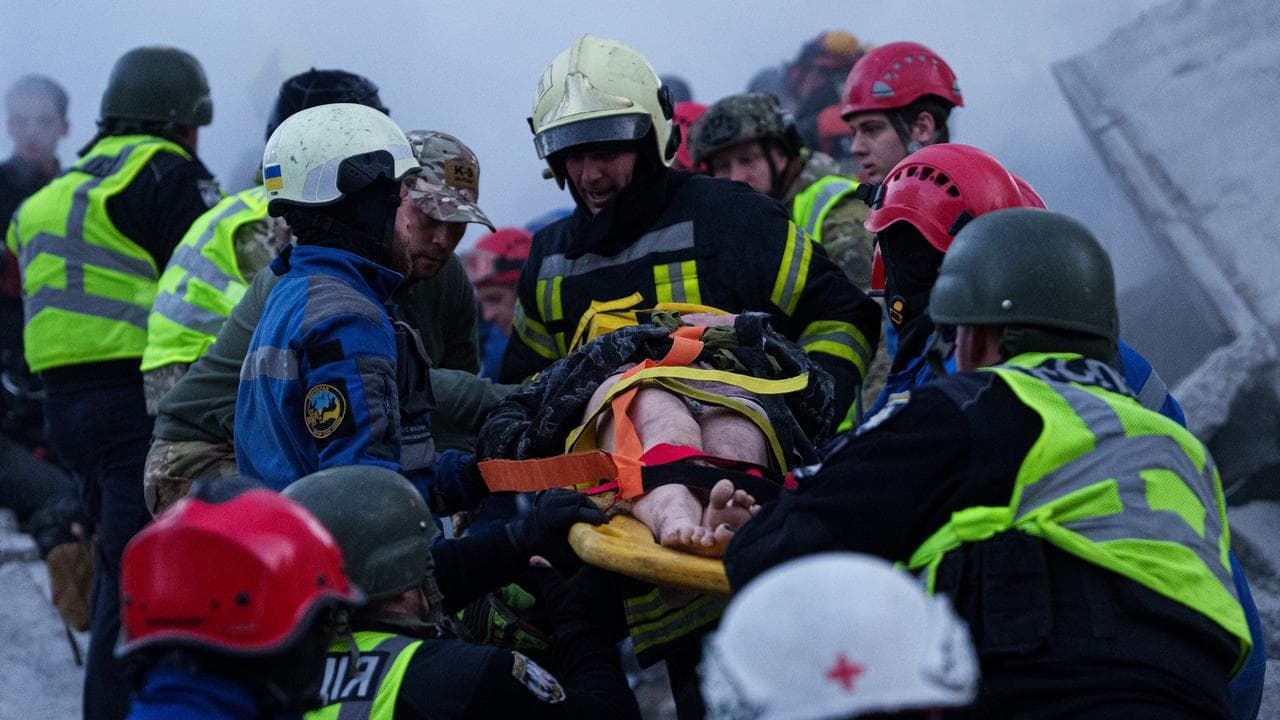
At least 27 people were rescued from the rubble, according to Ukraine's Emergency Service.
Kyiv mayor Vitali Klitschko said 18 apartments were destroyed.
He said there were problems with water supply on the left bank of Kyiv as a result of the attack.
At the scene, emergency workers searched for survivors as smoke from the attack continued to smoulder beneath the pile of rubble.
Emergency operations also were ongoing in the Obolonskyi and Holosiivskyi districts of Kyiv, the service said.
In the Dnieper district, a drone hit the roof of a five-storey residential building, Tkachenko said, and a building in the Dniprovskyi district was also damaged.
The attack came hours after a rare daytime attack on Kyiv that killed at least six people, according to Ukrainian President Volodymyr Zelenskiy.
The assault, which involved 800 drones, struck about 20 regions of Ukraine and was among the longest such attacks during the war.
Zelenskiy said the attack that lasted hours on Wednesday aimed to cause as much “pain and grief” as possible.
The attack came after US President Donald Trump said on Tuesday he believed Moscow and Kyiv would soon reach a deal to end fighting.
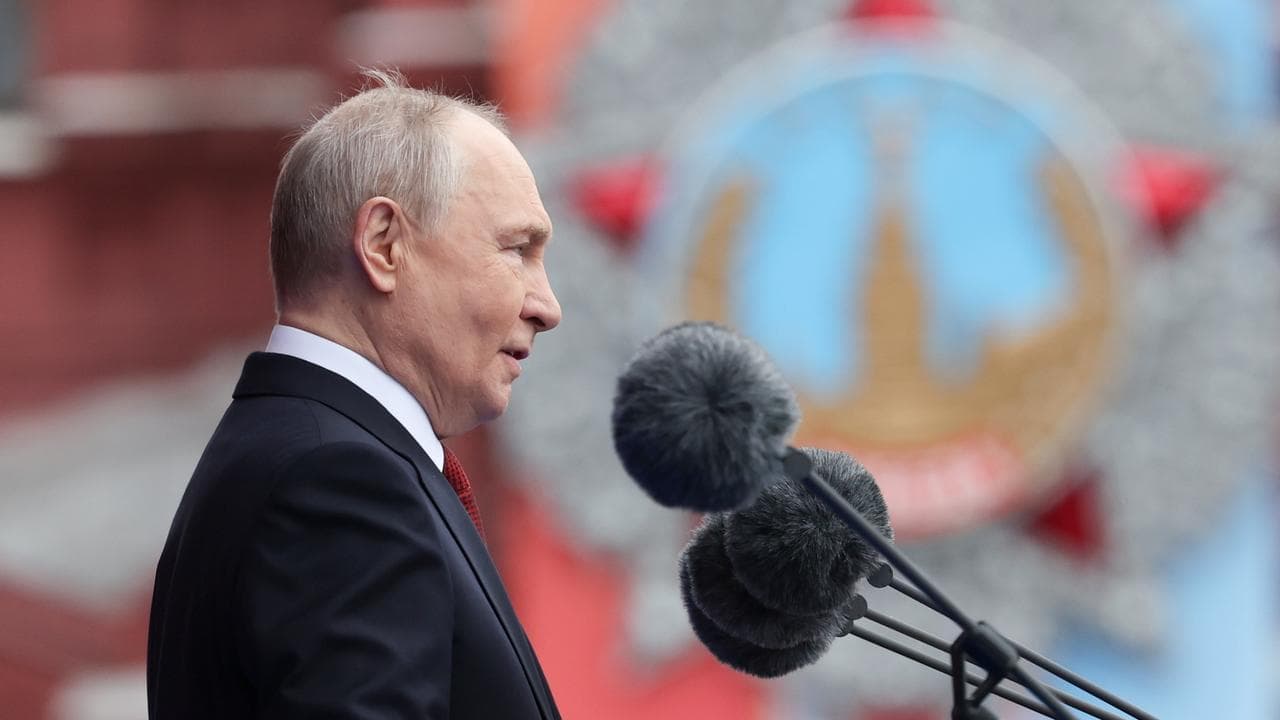
Putin said in a speech on May 9 that his invasion of Ukraine was possibly “coming to an end”.
Ukrainian Foreign Minister Andrii Sybiha tied the overnight attack to Trump's meeting with Chinese President Xi Jinping, saying Russia’s assault proved it posed a threat to international security.
“At the very time when leaders of the most powerful countries are meeting in Beijing, and the world hopes for peace, predictability and cooperation, Putin launched hundreds of drones, ballistic and cruise missiles at the capital of Ukraine,” Sybiha said on social media.
He said there should be “no illusions” about ending the war.
“Only pressure on Moscow can make him stop,” Sybiha said of Putin, adding that US and Chinese leaders had sufficient leverage to compel Russia to end the war.
Neither Putin or Trump have provided details about what has changed to make a peace deal in the Russia-Ukraine conflict possible.
Moscow and Kyiv maintain mutually exclusive demands.
US-led diplomatic efforts in the past year to end the war have fizzled after making no progress on key issues, such as whether Russia gets to keep Ukrainian land it has seized and what can be done to deter Moscow from invading again.


