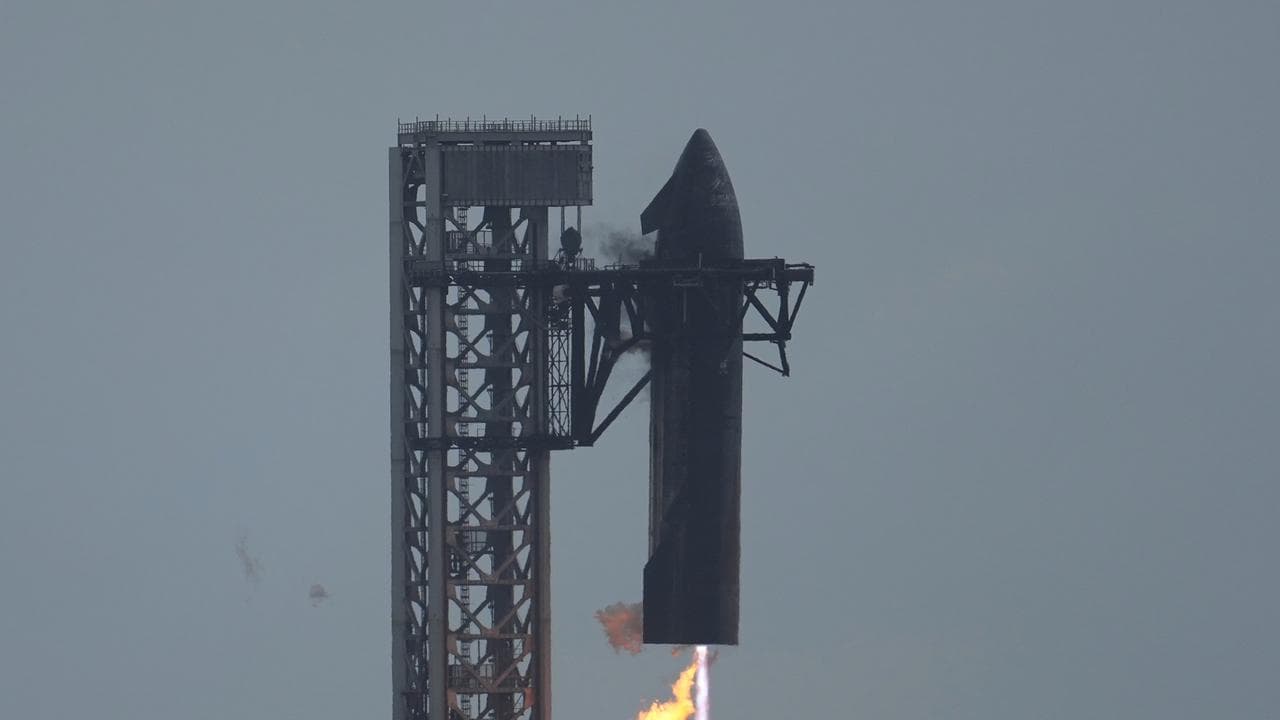
SpaceX's Starship spacecraft has returned from a 22-hour voyage in orbit and descended for the first time into the grasp of giant mechanical arms at the Texas tower it was launched from a day earlier.
The catch is essential to the company's decade-long effort to develop a fully reusable rocket.
Standing around 120 metres tall, Starship fell out of thick clouds over SpaceX's Starbase launch site on Saturday, reignited engines to flip itself vertical and slowly descended into the tower's "Mechazilla" arms, engines still roaring.
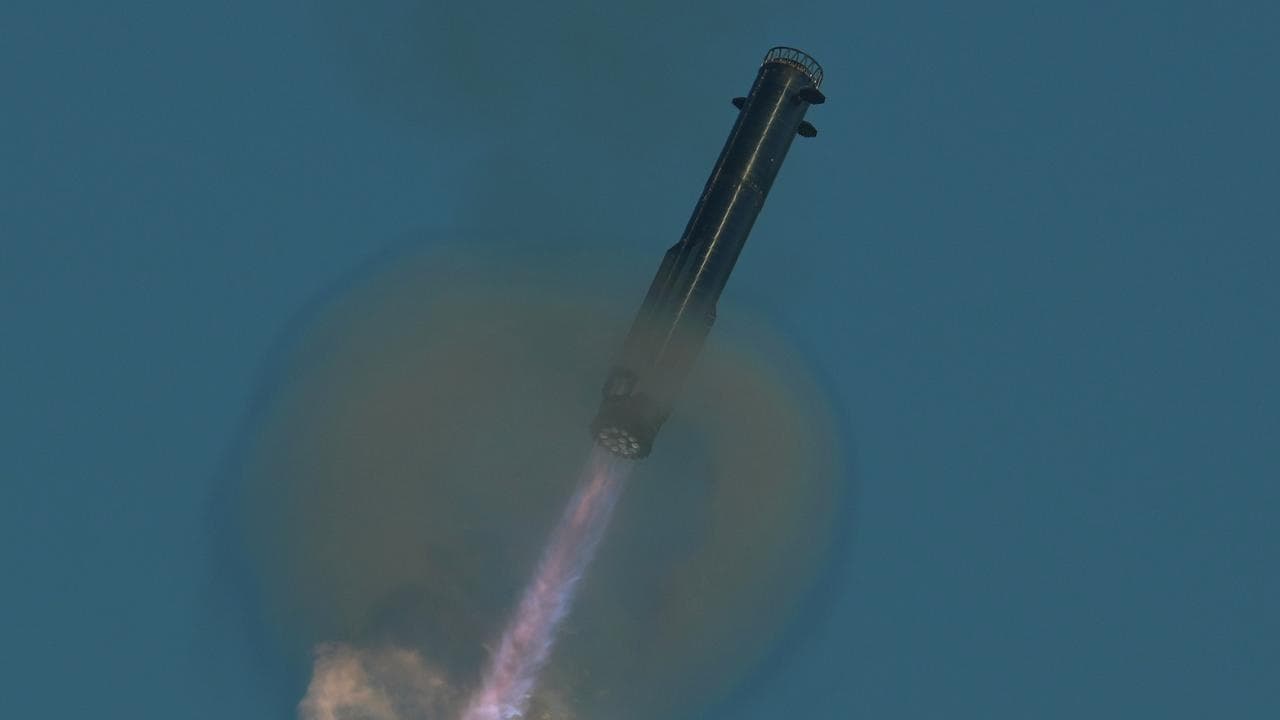
Charred from the blazing heat of its return from space, the ship shut down its engines and hung still after the rocket system's longest mission yet.
The towering two-stage rocket's Super Heavy booster - the rocket's bottom half - carried Starship to space on Friday, lifting off from SpaceX's Starbase, Texas, facilities.
That booster had failed to make a similar return to the launch pad some 10 minutes after liftoff, nixing SpaceX's plan to recover both parts of the rocket for the first time.
But the Starship upper stage's successful return after orbiting Earth 14 times for over 22 hours marked a key engineering milestone in the whirlwind, multibillion-dollar development of Starship, which billionaire Elon Musk sees as the future workhorse for SpaceX's lucrative Starlink satellite business, as well as ambitions to put data centres in orbit, return humans to the moon and, eventually, settle on Mars.
After deploying 26 Starlink satellites in orbit on Friday night while cruising some 260km in altitude, Starship on Saturday fired one of its engines to begin an atmospheric plunge.
It faced blistering heat as its orbital speed of some 17,000 miles per hour slowed to a supersonic free-fall in the skies above SpaceX's Starbase facilities on the Gulf Coast of south Texas.
SpaceX's dominance in the global launch industry is centred on its workhorse Falcon 9 rocket, which has launched over 700 times since 2010. That rocket's first stage is reusable, but its second stage - the part that delivers payloads into orbit - is discarded into the ocean after each flight.
With Starship, Musk wants a rocket system that can fly to space and back in a manner and tempo akin to commercial airplanes.

Though Saturday's Starship recovery is a key milestone in that effort, SpaceX has yet to recover both Starship stages in a single mission. And Starship's heat shield, composed of black hexagonal tiles that protect it from the blazing heat of atmospheric re-entry, is itself not yet fully reusable.
SpaceX is trying to engineer new tile designs that will require little to no refurbishment after each mission.
NASA's Space Shuttle system that ferried astronauts to the International Space Station before its 2011 retirement was partially reusable; its booster stages that got it off Earth were discarded after each flight. The reusable spacecraft itself had to go through extensive refurbishment before re-flying.


