SpaceX has taken the wraps off its initial public offering, opening the books of the company that has already revolutionised rocket technology, with even larger ambitions to colonise Mars and build AI data centres in space.
The listing is poised to become the first-ever trillion-dollar US market debut and could set the stage for a number of monumental IPOs in coming months, among them potentially technology giants OpenAI and Anthropic.
The sale would immediately cement SpaceX as one of the world's most valuable publicly traded companies, the second in Elon Musk's sprawling business empire to surpass $US1 ($A1.4) trillion in market value.
“We do not want humans to have the same fate as dinosaurs,” the filing stated.
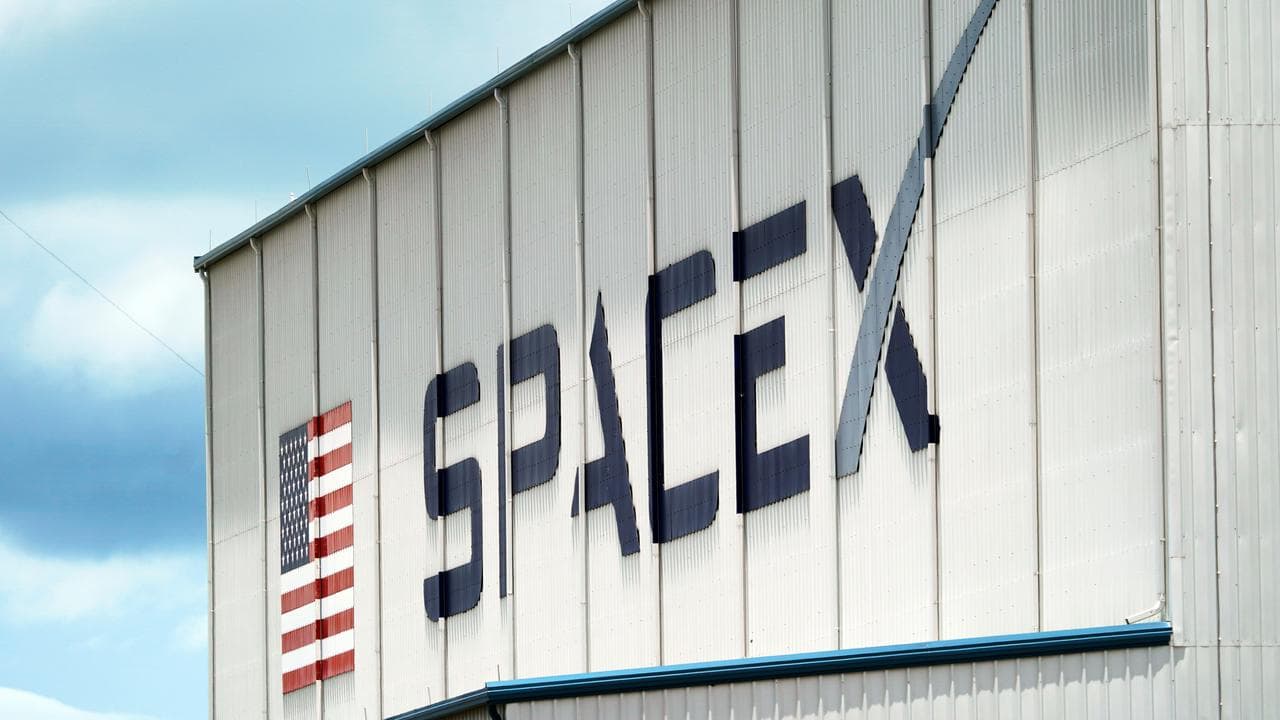
SpaceX has grown into the world's largest space business since its founding in 2002 by launching thousands of Starlink internet satellites.
Its pioneering use of reusable rockets has transformed the economics of space, forcing competitors like Jeff Bezos' Blue Origin to play catch-up.
While SpaceX made its name by building rockets and launching satellites into space, most of its $US18.67 billion ($A26.23 billion) in revenue in 2025 came from its Starlink satellite internet business and much of its future growth hinges on artificial intelligence-related businesses.
Its nascent xAI unit still loses money, according to the filing made on Wednesday in the US.
A successful sale could value the company at a record-setting $US1.75 trillion ($A2.46 trillion), which would put its founder on track to become the first trillionaire in history, validating years of defying accepted logic through the development of rockets that can land and be flown again.
The company's regulatory disclosure comes during a critical week for the rocket maker, which is preparing to launch a test flight of its next-generation Starship rocket.
Musk will retain 85.1 per cent of the combined voting power of the company, the filing showed.
SpaceX is aiming to list its shares as early as June 12, with a roadshow launch targeted for June 4 and the share sale expected as early as June 11, Reuters reported last week.
The company said it was targeting a potential total market of $US28.5 trillion ($A40 trillion) across its businesses, with a majority of that possible revenue tied to AI.
The figures, disclosed for the first time to the public in its S-1 regulatory filing, show how SpaceX depends on its Starlink-driven revenue base, but believes its long-term prospects centre around AI and related infrastructure operations that are currently unprofitable.
SpaceX will use a dual-class share structure that gives Class B shareholders 10 votes each, concentrating control with Musk and a handful of other insiders, while Class A shares sold to public investors will carry one vote each, the prospectus showed.
The company has adopted numerous provisions that, taken together, severely limit shareholder rights, forcing legal claims through arbitration, restricting where cases can be filed and protecting Musk from being fired by anyone other than Musk.
The company reported revenue of $US4.69 billion ($A6.59 billion) in the three months ended March 31, compared with $US4.07 billion ($A5.72 billion) a year earlier.
The loss over the same period came in at $US1.27 ($A1.78) per share, compared with a loss of 18 cents a year earlier.
The scale of the offering has drawn attention to the increasingly interconnected structure of Musk's business empire, often dubbed the "Muskonomy", which includes leading electric vehicle company Tesla, as well as his businesses in AI and brain-chip implants.
SpaceX merged with Musk's artificial intelligence startup xAI in a deal that valued the rocket company at $US1 trillion ($A1.4 trillion) and the developer of the Grok chatbot at $US250 billion ($A351 billion).
With AP


