As New Zealand's too-close-to-call election nears its climax, the National party appears increasingly worried about cannibalisation of support through strategic voting.
John Key, three-term National prime minister, is fronting ads warning supporters not to play around with their vote in the November 7 election.
But that's exactly what National's coalition partners, ACT and NZ First, backed by anonymous wealthy supporters, are trying to engineer as they seek not just the coalition's return, but greater power for themselves.
"Give your party vote to National," Mr Key says in the ad.
"You don't want to wake up on November 8 with buyer's remorse."
National's rearguard is in response to the rise of strategic voting, or the practice of voters splitting their support in the ballot box.
At elections since 1996, when New Zealand moved to a mixed-member proportional electoral system, Kiwis get to cast two votes: one for a party, and one for an electorate MP.
Once all the electorate MPs are decided, the system then allocates additional MPs to each party based on their overall support so that parties get roughly the same proportion of MPs in parliament as their share of the vote.
There is a loophole being exploited this campaign: the overhang.
An overhang occurs when a party wins more electorate seats than its share of the party vote would otherwise allow, but crucially, it gets to keep the extra seats in an expanded parliament.
Last term is an example, with the Maori Party winning six electorates with a low party vote, giving it two bonus seats.
The left-wing party is campaigning to do the same again this election, and the right wing has cottoned on.
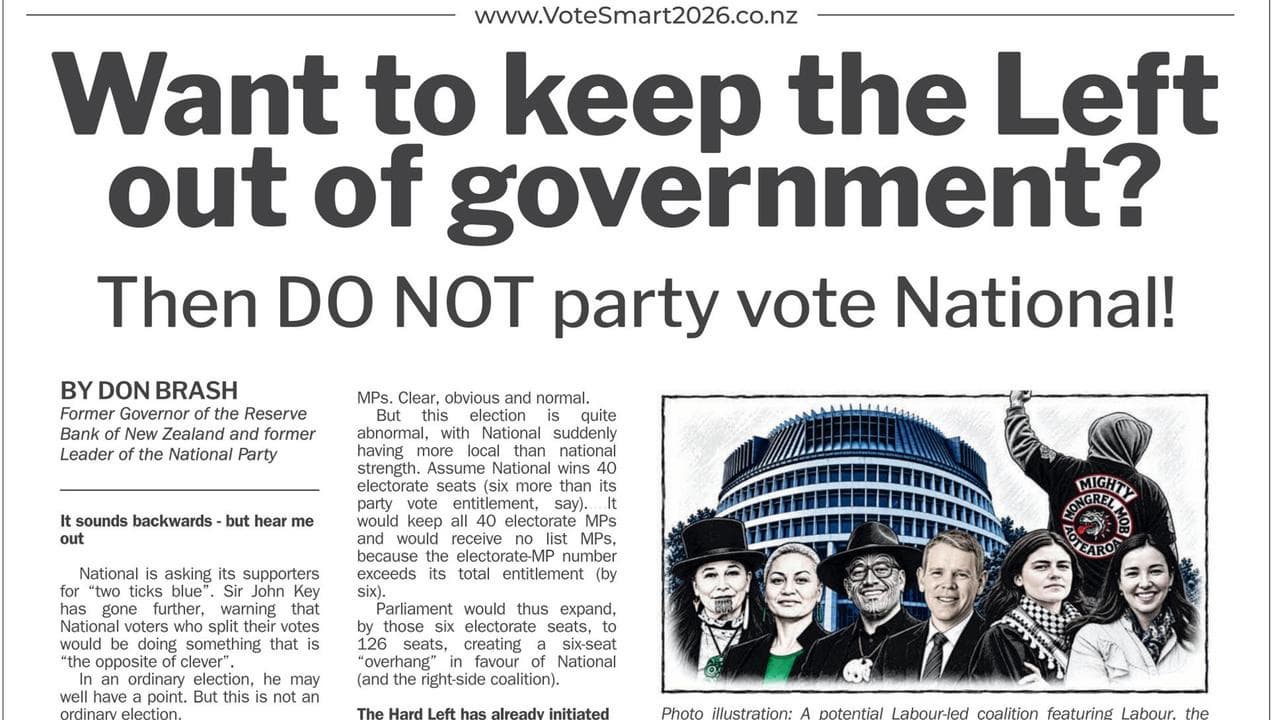
Don Brash, a former National and ACT leader, is one of the key backers of a push to promote strategic voting on the right, believing the conditions are ripe for a huge overhang that could tip the coalition over the edge in this tight campaign.
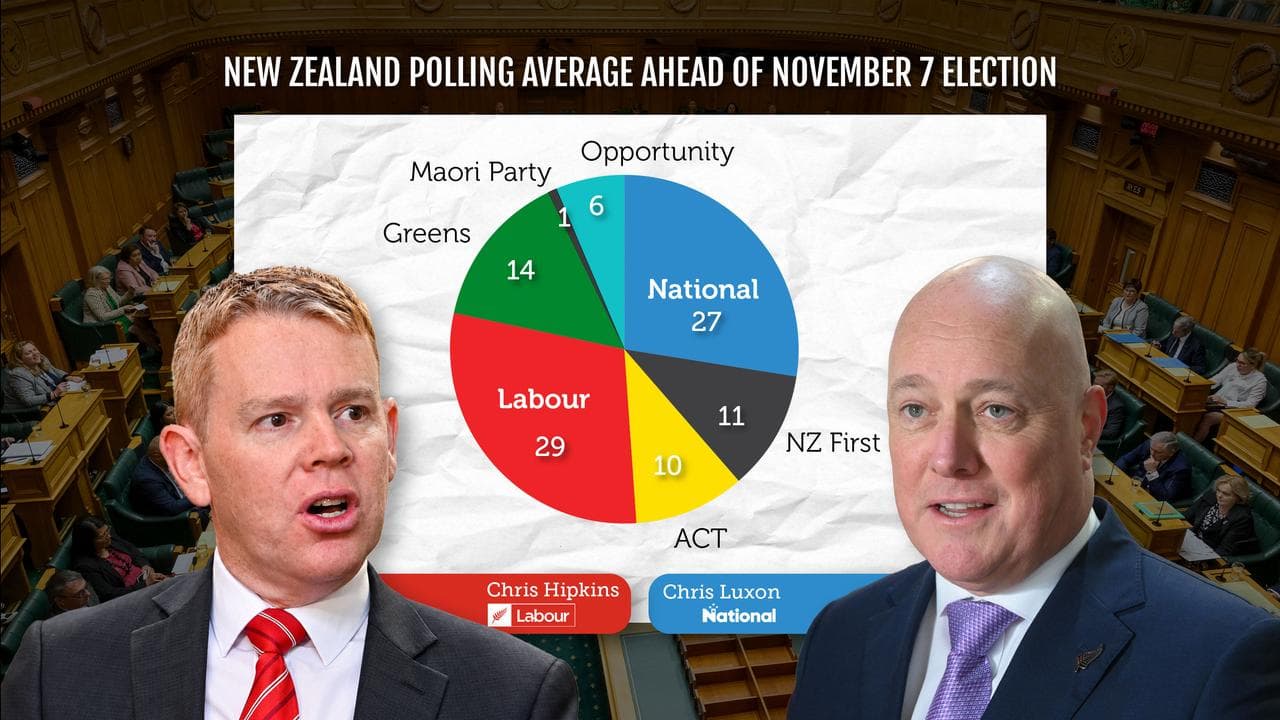
National holds 44 electorate seats, but its party vote has collapsed to the mid-20s, meaning if it can cling to those electorates, or even the bulk of them, it will get a bumper overhang.
"The indications are that National will win something like 38 to 41 electorates ... certainly more than the plausible party vote would entitle them to, and that's the motivation for the campaign," Dr Brash told AAP.
Dr Brash is fronting campaign ads urging conservatives to split their vote, but won't reveal who is funding them.
Another enthusiastic supporter is Harry Mowbray, father of billionaire entrepreneur Nick Mowbray.
For National, winning government this way would be bittersweet.
Not only would it have reduced power around the cabinet, it would lose several key ministers who are not electorate MPs.
Finance Minister Nicola Willis, Defence Minister Paul Goldsmith and Speaker Gerry Brownlee look certain for the chop if it comes to pass, as does Infrastructure Minister Chris Bishop, who is unlikely to hold his marginal electorate.
Prime Minister Chris Luxon is on red alert to this threat, telling National supporters each day "not to overthink it" and vote "two ticks blue".
Dr Brash is unrepentant, saying his campaign is necessary only because National has been polling so poorly in its first term.
"People say we don't care about Nicola Willis. I do care about Nicola Willis and the people who will lose their position in parliament because of this," he said.
"But that's not being caused by strategic voting, it's being caused by the fact that National's party vote is likely to be very low indeed."
Winston Peters, veteran NZ First leader, said the prime minister was "in an absolute fix of his own making and there's no way out".
"Sanity must prevail here," he told Newstalk ZB.
"National (supporters') party vote will not count if they make it National's way."


