
"Make no mistake ... strangulation is a killer's calling card."
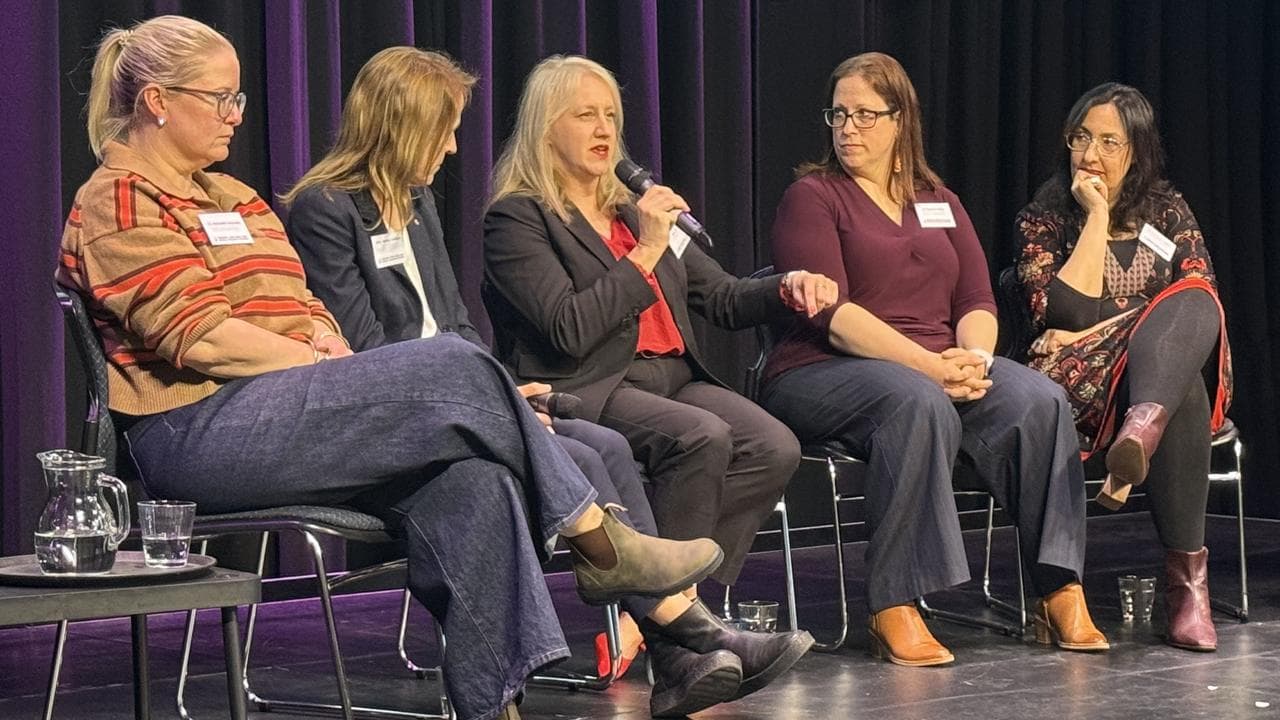
That assertion by Red Rose Foundation chief Lucy Lord set a sobering tone at a landmark forum probing harm caused by non-fatal strangulations.
The national domestic violence not-for-profit's latest death review report found one in five domestic homicides had non-fatal strangulations in their histories.
This supports a pioneering 2008 study that found domestic violence victims who have been strangled are 7.5 times more likely to be killed by their partner.
"Those are the ones that we know about," Ms Lord told first responders and family and sexual violence specialists in the crowd at the Hobart event on Wednesday.
A victim-survivor said the only difference between fatal strangulation and non-fatal strangulation was the amount of time and pressure put on a neck.
"It only takes seconds for your brain cells to start dying," the woman said.
She told the First Response to Non-Fatal Strangulation forum she didn't contact police after she was strangled by an intimate partner because, like 50 per cent of cases, she didn't sustain visible injuries.
Despite not always leaving marks, non-fatal choking can lead to serious internal injuries, including memory loss, speech difficulty, PTSD and even stroke, even if the victim does not lose consciousness.
Between 18 to 37 per cent of people that experience partner violence may sustain a brain injury as a result of non-fatal strangulation, according to brain injury researcher and University of Tasmania lecturer Christine Padgett.
Brain injuries sustained can further damage the credibility of victim survivors as they try to engage with law enforcement, health services and the legal system.
"People can be considered unreliable when they've had that brain injury," Dr Padgett said.
Specific strangulation offences now exist across all Australian jurisdictions, after Victoria became the last state to introduce a dedicated criminal offence for non-fatal strangulation in 2024.
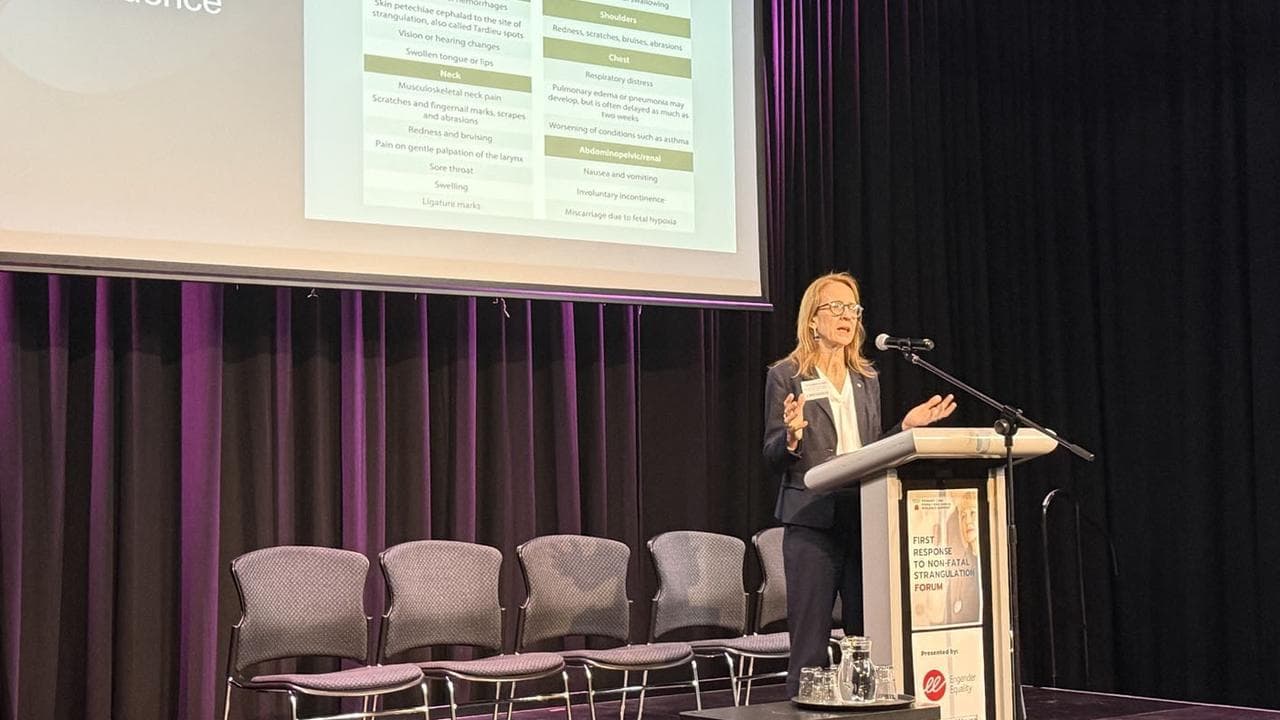
But first responders and legal professionals face significant hurdles when documenting these incidents, law professor and leading author on non-fatal strangulation Heather Douglas told the forum.
"This is a real problem for strangulation, that we often do not have any visible medical, physical evidence of the strangulation," she said.
"The maximum penalties are really high, but what we're seeing in reality in Tasmania is actually quite low penalties being placed on people who've strangled."
Panellists called on first responders to watch out for warning signs of non-fatal strangulation, including confusion, a coarse voice and vision disruption.
Sexual strangulation had become more prevalent in recent years, Prof Douglas noted, with a recent a survey reporting more than half of the 4700 young people surveyed had either been choked by or strangled an intimate partner.
In August, a 16-year-old girl died in a Sydney hospital after a suspected sexual choking incident.
1800 RESPECT (1800 737 732)
Lifeline 13 11 14
Men's Referral Service 1300 766 491
National Sexual Abuse and Redress Support Service 1800 211 028


