Sales of coffee machines are driving the earnings of one of Australia's best-known appliance groups, despite a turbulent year marked by disruptions because of the Middle East conflict.
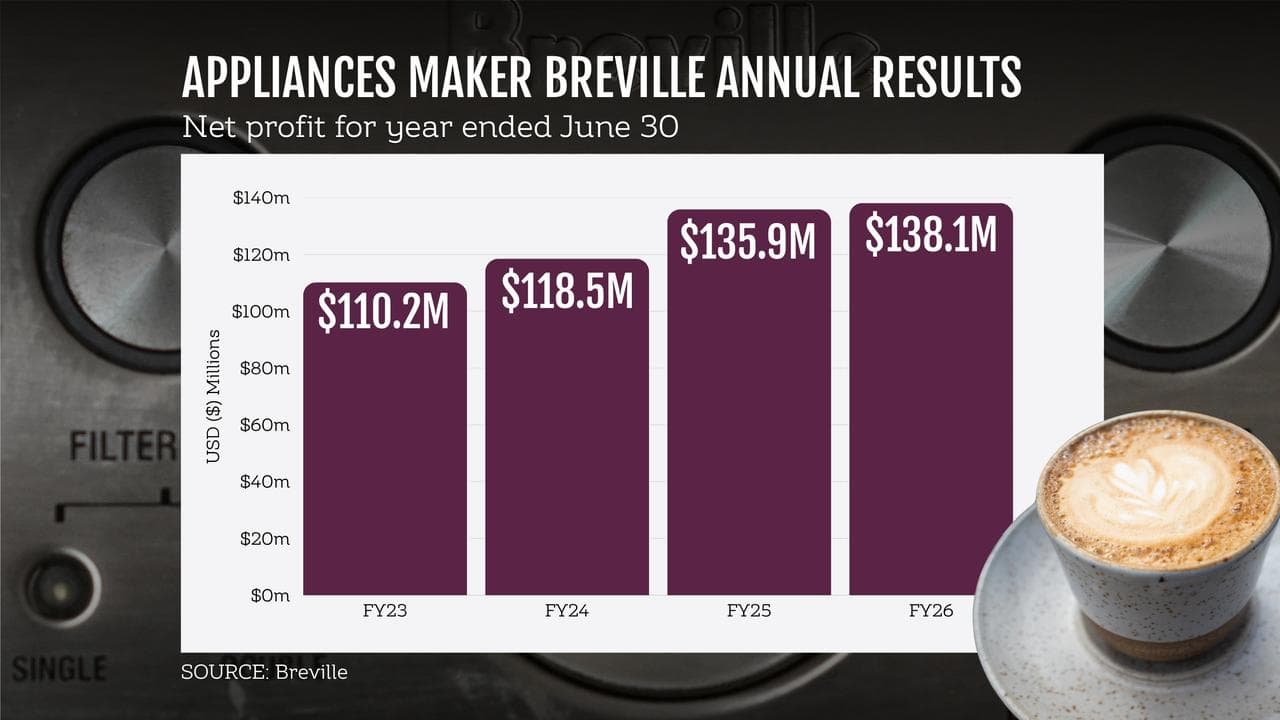
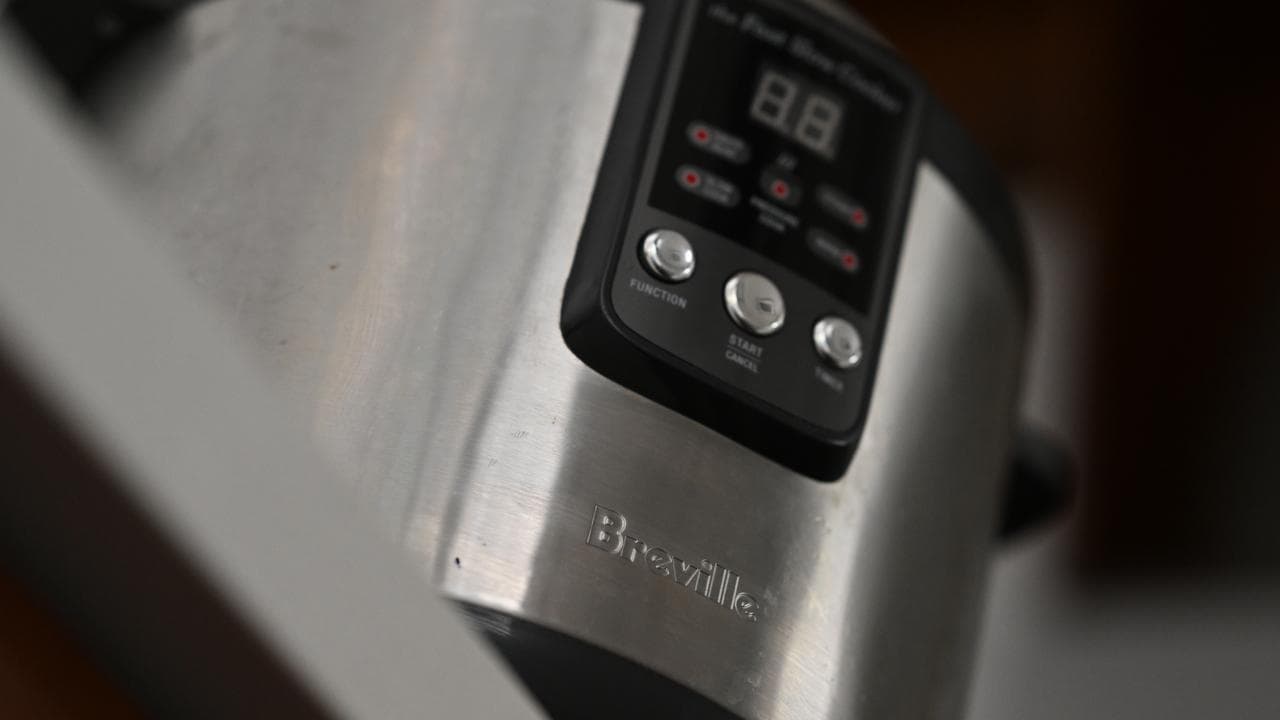
Breville, which is also known for its toasters, sandwich makers and air fryers, made a net profit of $138.1 million in 2025/26, up 1.7 per cent from the previous year.
Group sales revenue was a record $1.8 billion and a gain of 6.7 per cent, for the 12 months ended June 30.
The results came after Breville completed changes to its manufacturing to reduce its reliance on China, which helped it cut its exposure to supply chain issues caused by the war, after the Strait of Hormuz was closed to shipping.
It was still exposed to US President Donald Trump's tariffs of 10 per cent or more on foreign goods and materials, although the decision did help offset some of that impact, it said.
"Financial year 2026 was an operationally complex period, which we navigated remarkably well to deliver a very solid set of results," chief financial officer Martin Nicholas told an earnings call on Wednesday.
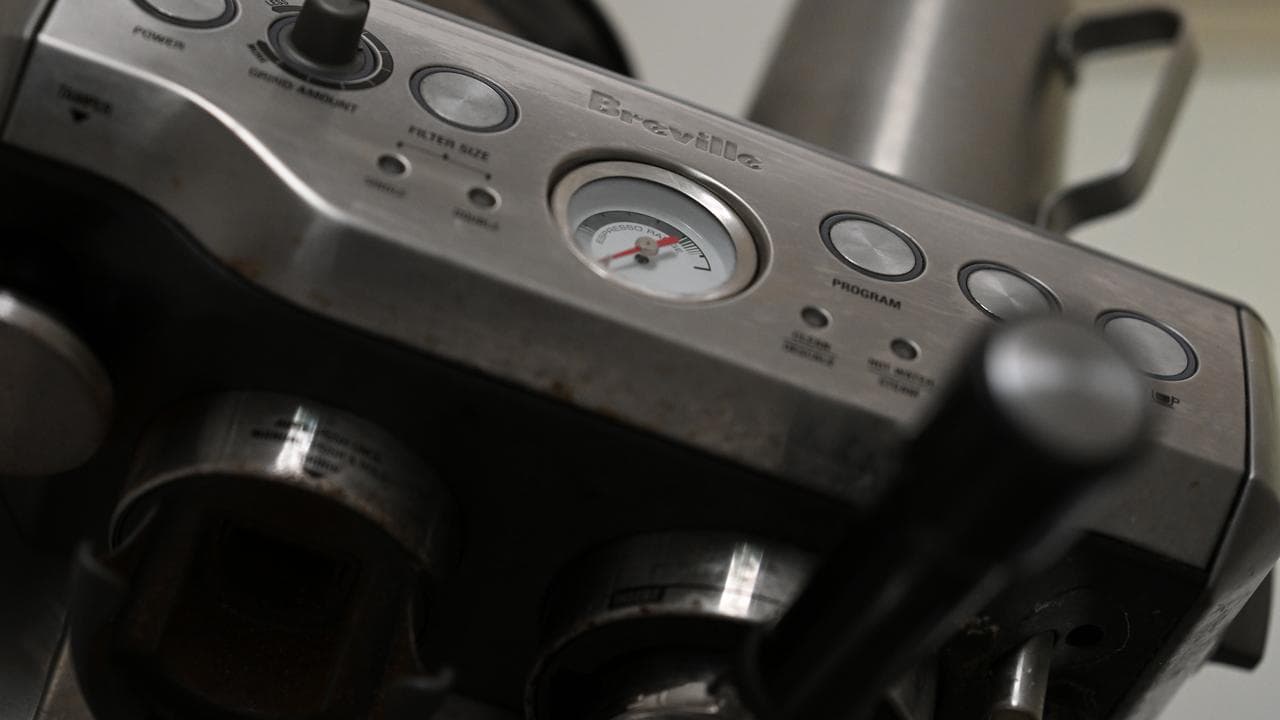
Its coffee and cooking appliances divisions both returned revenues in the double digits, supported by new products including the Baratza Encore coffee grinder and the Lelit MaraX3 coffee machine, and in-store investments, particularly in the US.
Revenue from food preparation products, such as the Kitchen Wizz processor, generated single-digit growth.
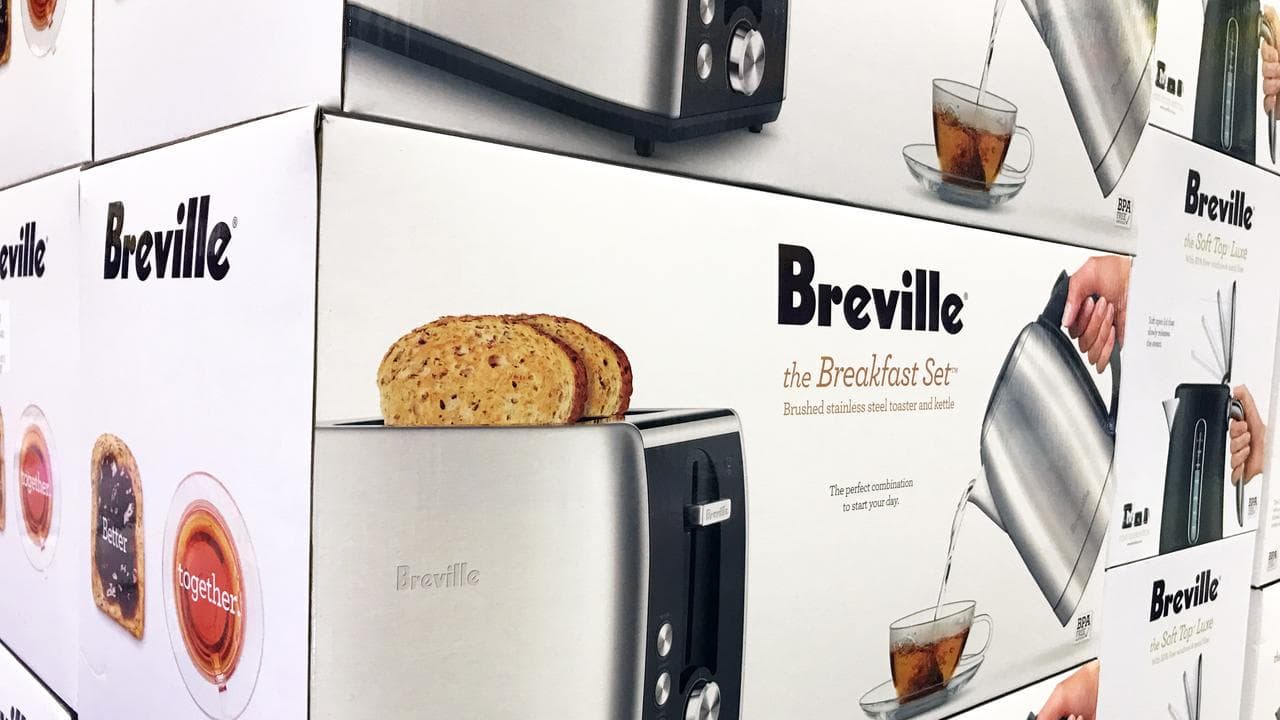
Breville's biggest export market is the US, where it now distributes to multiple stores, including Best Buy and Target, supported by its online Amazon Prime presence.
"Across financial year 2026, we actively managed the challenges of a volatile US trade policy," Mr Nicholas said, noting tariffs had a minimal impact on net profit.
The group did receive tariff refunds following a recent US Supreme Court decision, but that hasn't stopped Mr Trump from pursuing other reasons to apply the levies.
Breville also played up its foray into China, where it just completed its first full year of direct sales operations.
That effort delivered more than seven times the revenue generated by its previous distributor.
"Our young, direct markets of China, Korea, Mexico and the Middle East continue to excite, growing at over 70 per cent" in the year, Mr Nicholas said.
"The growth trajectory will be increasingly important to the group as they continue to scale."
Breville also played up potential opportunities in the Middle East for its coffee machines.
"The Middle East continues to thrive, despite obvious challenges, which confirms the encouraging outlook for the coffee-centric region," Mr Nicholas said.
Shares in Breville, which has a market value of $5 billion, were down more than six per cent to $31.08 in afternoon trading.
RBC Capital Markets analyst Wei-Weng Chen said Breville's results were "OK".
Underlying earnings - before interest and tax - rose 1.2 per cent to $207 million, in line with its guidance.
Breville said it expected demand for its products to remain resilient, although some issues were ongoing.
"The risk of oil-based supply chain disruption and cost inflation across both materials and transport continues to evolve," the company said.
"In the US, our biggest market, the tariff environment remains fluid, and the effective tariff rate we will face in financial year 2027 remains unclear."
Breville declared a final dividend of 19 cents, taking the total for the year to 38 cents.


