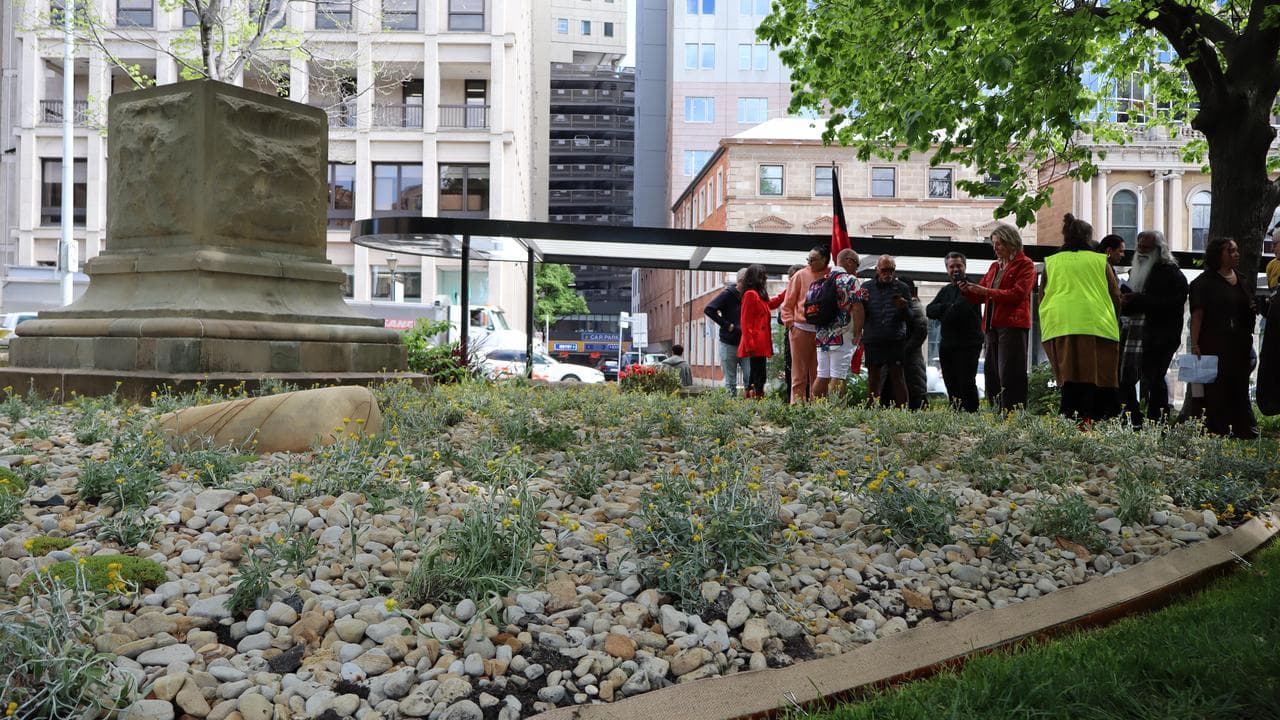
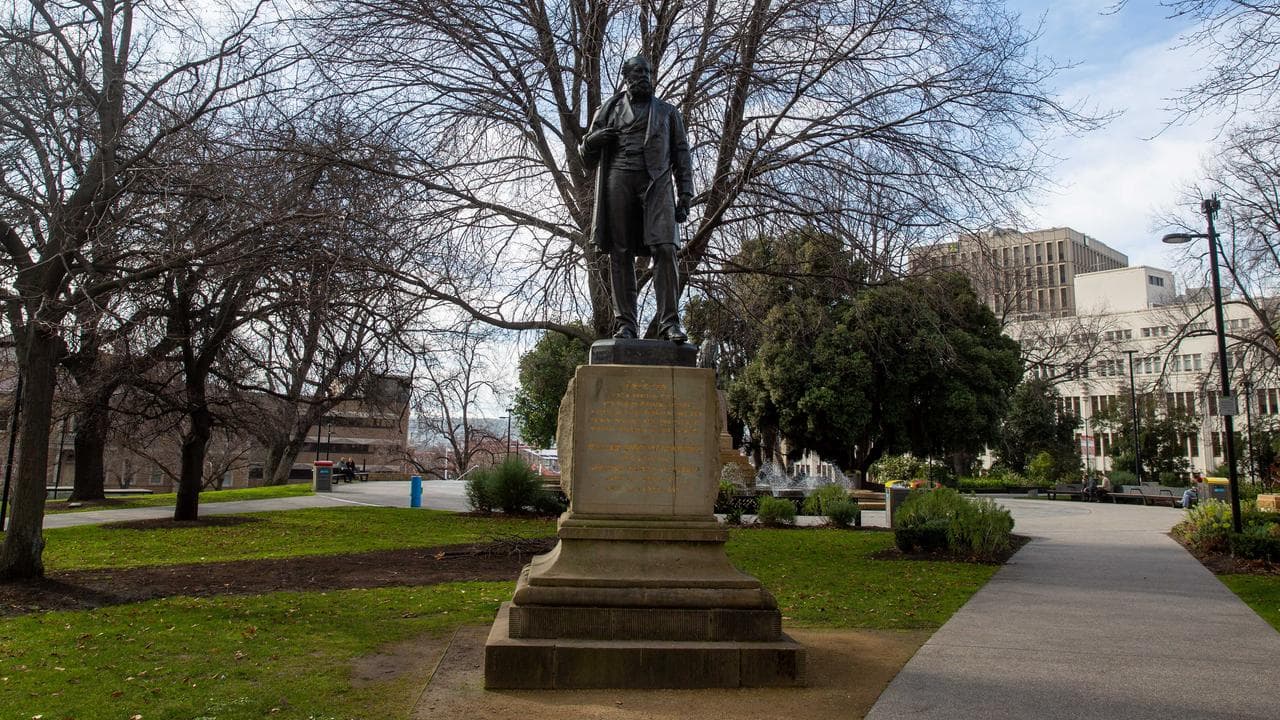
The statue of a controversial colonial surgeon has been officially replaced by a garden and ring of truth telling in what some hope can spark a broader discussion about Australia's history.
Hobart City Council on Tuesday unveiled its reinterpreted project at the site where the statue of former premier William Crowther once stood.
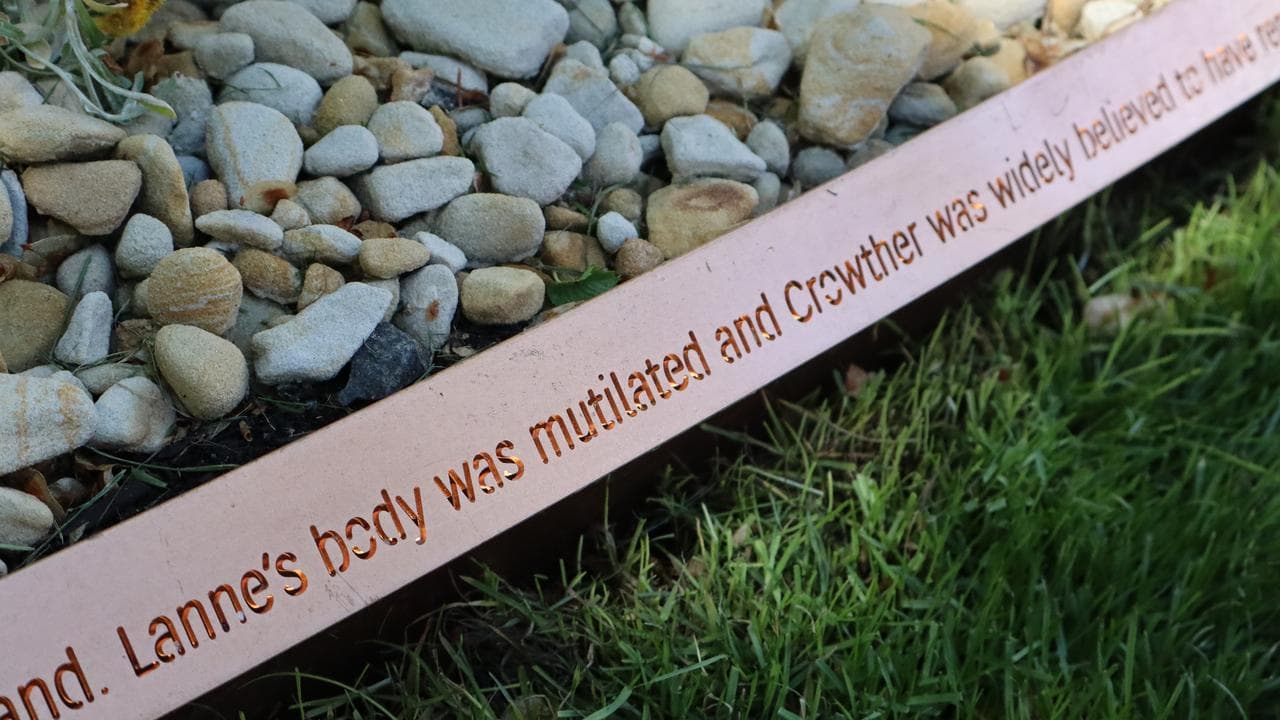
Dr Crowther is widely believed to have entered a hospital in 1869, where the body of Aboriginal man William Lanne was kept, and taken his skull and replaced it with the skull of another man.
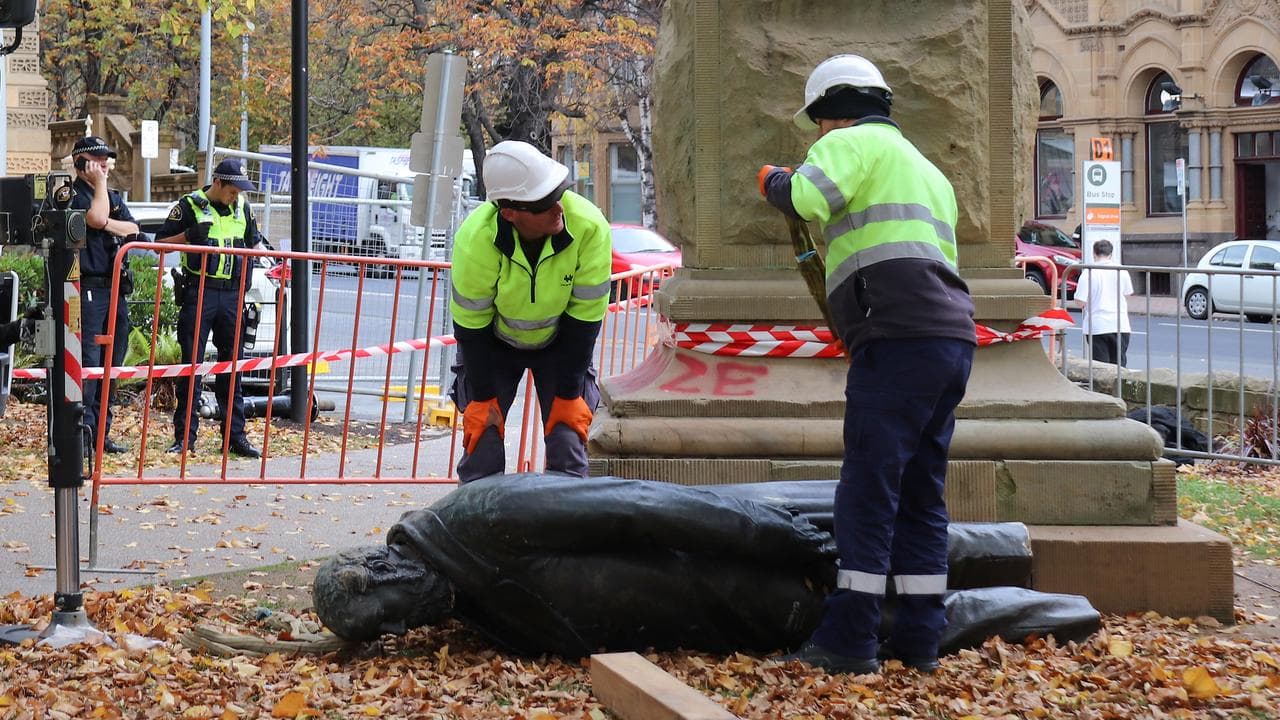
The council voted in 2022 to take down the statue but before they could it was toppled and spray painted by vandals in mid-2024.
The remaining stone plinth is now the centre of a bronze ring and native garden.
The ring has been inscribed with contributions from three writers about Mr Lanne, Dr Crowther, Indigenous history and social commentary about statues.
"It's not about changing our history, it’s about widening the narrative," contributing artist and Palawa and Warlpiri woman Nunami Sculthorpe-Green said.
"I wanted to make sure Lanne’s story was told. This marks a great first step for spaces to be more inclusive."
The project, which cost the council $80,000, is believed to be the first example of an Australian council deciding to remove a colonial statue through a democratic process.
Hobart mayor Anna Reynolds said a broader history of the city was now on display.
"There's lots of lessons that can be learned in places all around Australia from this project," she said.
Other colonial statues have fallen victim to vandals across the nation, including one of explorer James Cook in Melbourne which was sawn off at the ankles in 2024.
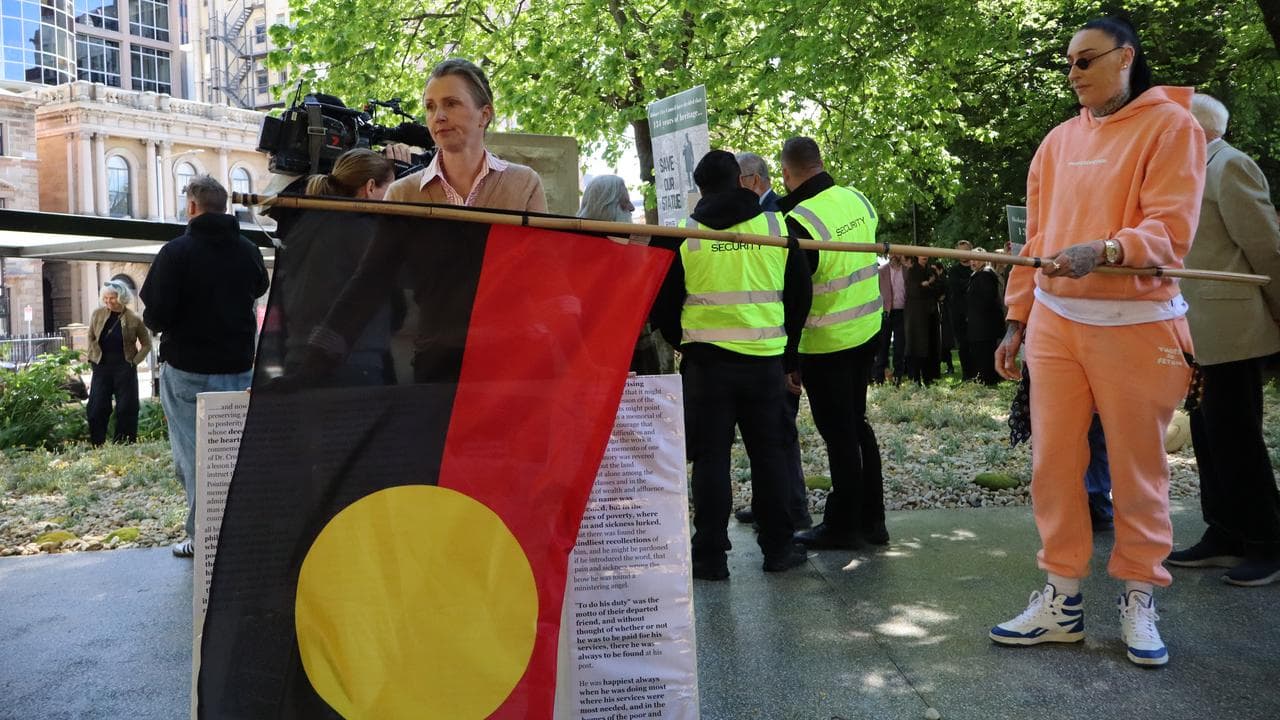
There were a handful of protesters at the Hobart unveiling calling for the statue to be saved, including councillor Louise Elliot, prompting shouts of "always will be Aboriginal land".
Council had taken an "activist stand" to erase history and Dr Crowther was being silenced despite being loved by thousands of Tasmanians, Ms Elliot said.
The statue was erected in 1889, four years after Crowther died and is being kept by council with no plans to put it on display.
The circular design of the reinterpretation was chosen as an act of healing.
"This whole process has been about surfacing the reality ... that Aboriginal people have known about for a very long time," architect Mat Hinds said.
Mr Lanne, who died in 1869, was captured along with his family in 1842 and taken to the remote outpost of Flinders Island.
He is said to have been the third partner of Aboriginal woman Truganini, who has featured prominently in art, music, and literature.


