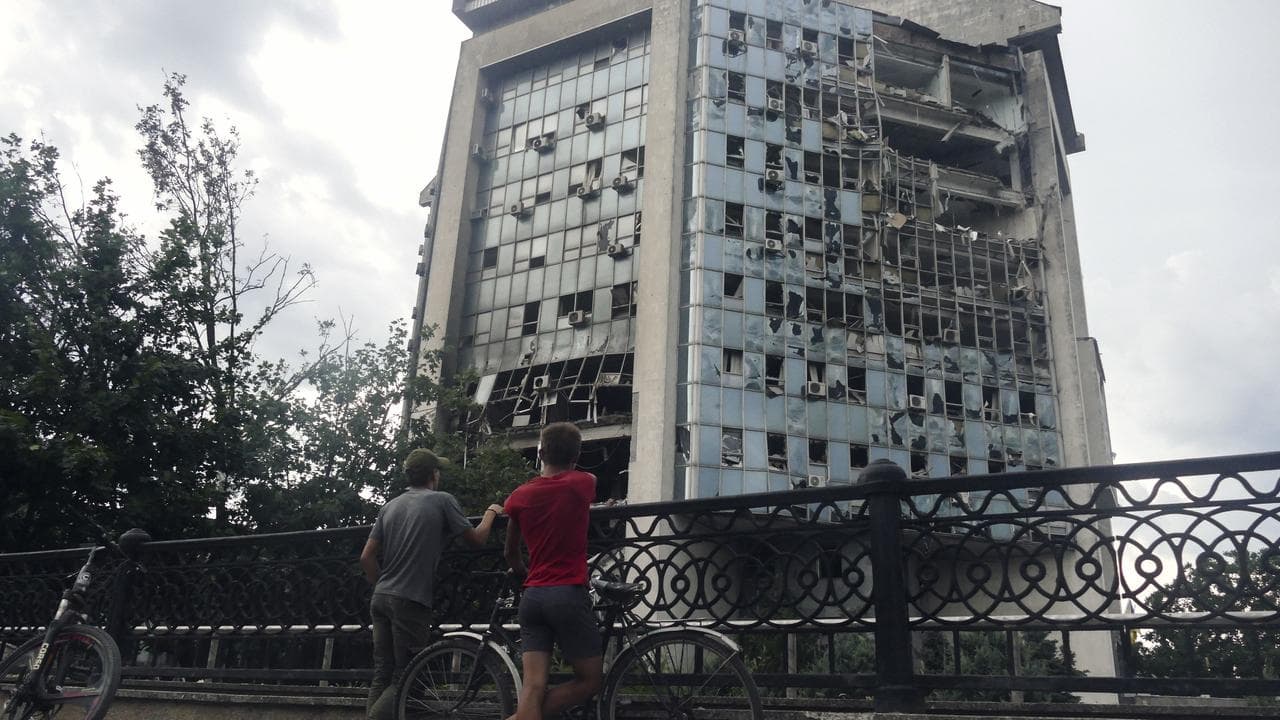
A Russian air attack has damaged port infrastructure in Ukraine's Izmail city, while Russian authorities say they have downed four drones launched by Ukraine that were headed towards Moscow.
Izmail, home to the largest Ukrainian port on the Danube River, is a frequently hit strategic location.
"Port infrastructure facilities in the city of Izmail were damaged," local officials said on Tuesday, adding that nearly all aerial attack weapons were destroyed.
"Fortunately, there were no casualties or significant destruction."
Elsewhere in Ukraine, two people were rescued and one person may still be trapped under rubble after a Russian drone attack on the northeastern city of Kharkiv, Mayor Ihor Terekhov said on Telegram.
Peace efforts to end the war that began with Russia's 2022 invasion of Ukraine have stalled.
Each side has accused the other of regular attacks on military, civilian and energy targets. Both sides deny deliberately targeting civilians.
Moscow Mayor Sergei Sobyanin said on Telegram that four drones heading for the capital had been downed and that emergency services had been deployed, but provided no further details.
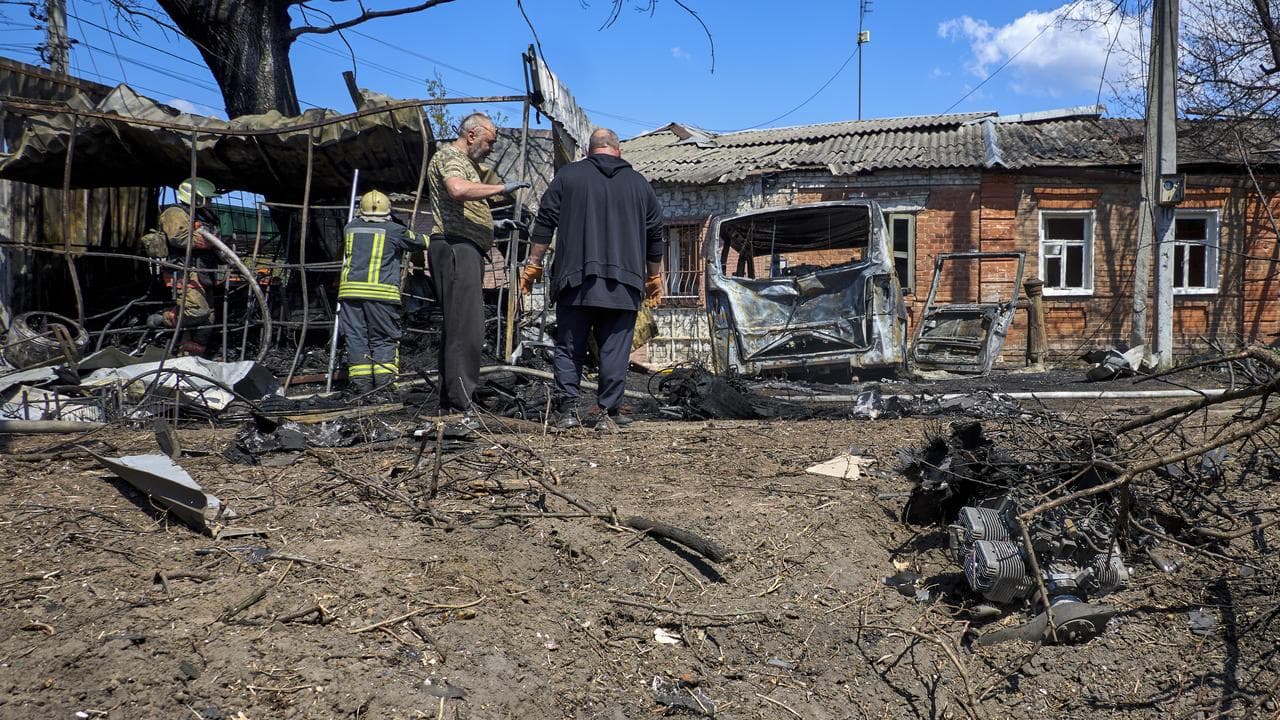
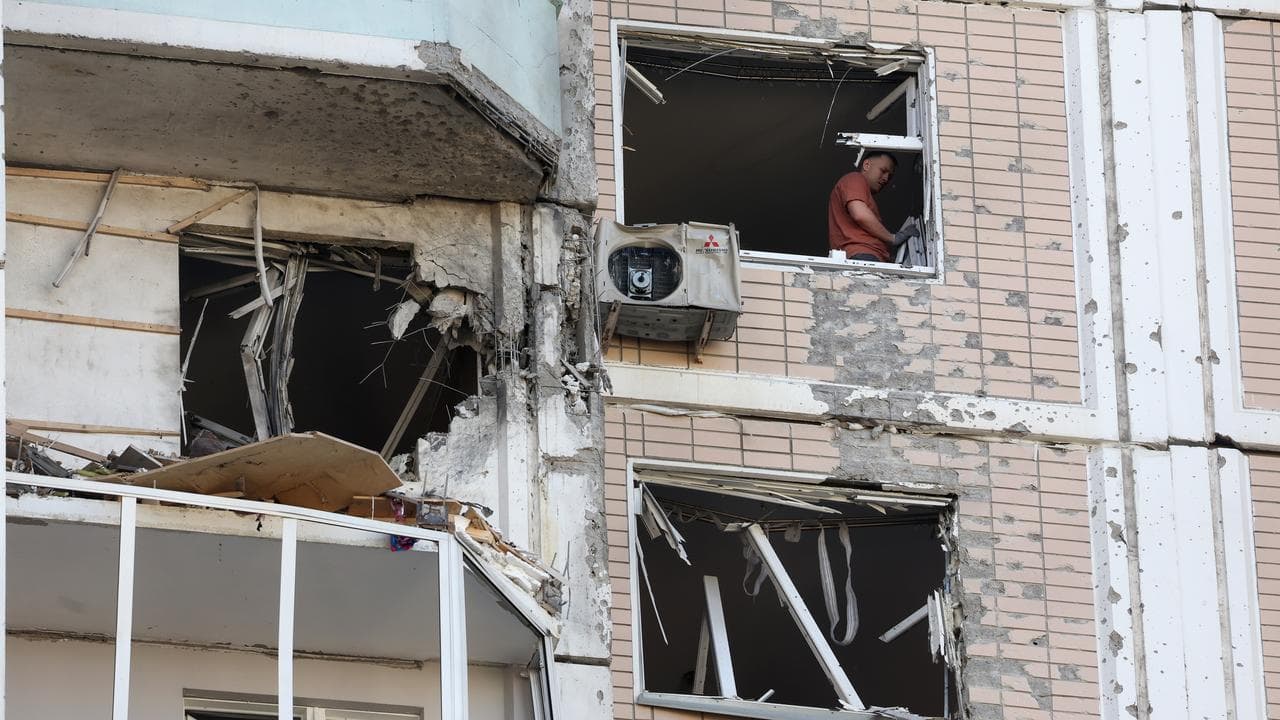
The attack follows a heavy Ukrainian drone attack on Moscow over the weekend, after which Russia struck the Ukrainian cities of Odesa and Dnipro with missile and drone attacks that damaged residential buildings and injured dozens of people.
In the Russian Kursk region bordering Ukraine, a woman has died and two people were injured as a result of a Ukrainian attack on Monday evening, the Kursk operational headquarters said on Telegram.
Russia's southern Rostov region and Yaroslavl, northeast of Moscow, have also come under drone attacks, regional authorities said on Telegram.
In Yaroslavl, where Russia has oil refining infrastructure, Governor Mikhail Yevrayev warned drivers heading towards Moscow of the threats of drone attacks.
Ukraine has sought to deprive Russia of energy revenues. Ukrainian President Volodymyr Zelenskiy wrote on X overnight that over the past few months Russian refining capacity has dropped by 10 per cent and oil wells have been shut.
"(Russian President Vladimir) Putin has, of course, built a war chest - but certainly not enough to fight indefinitely," Zelenskiy said.
with DPA


