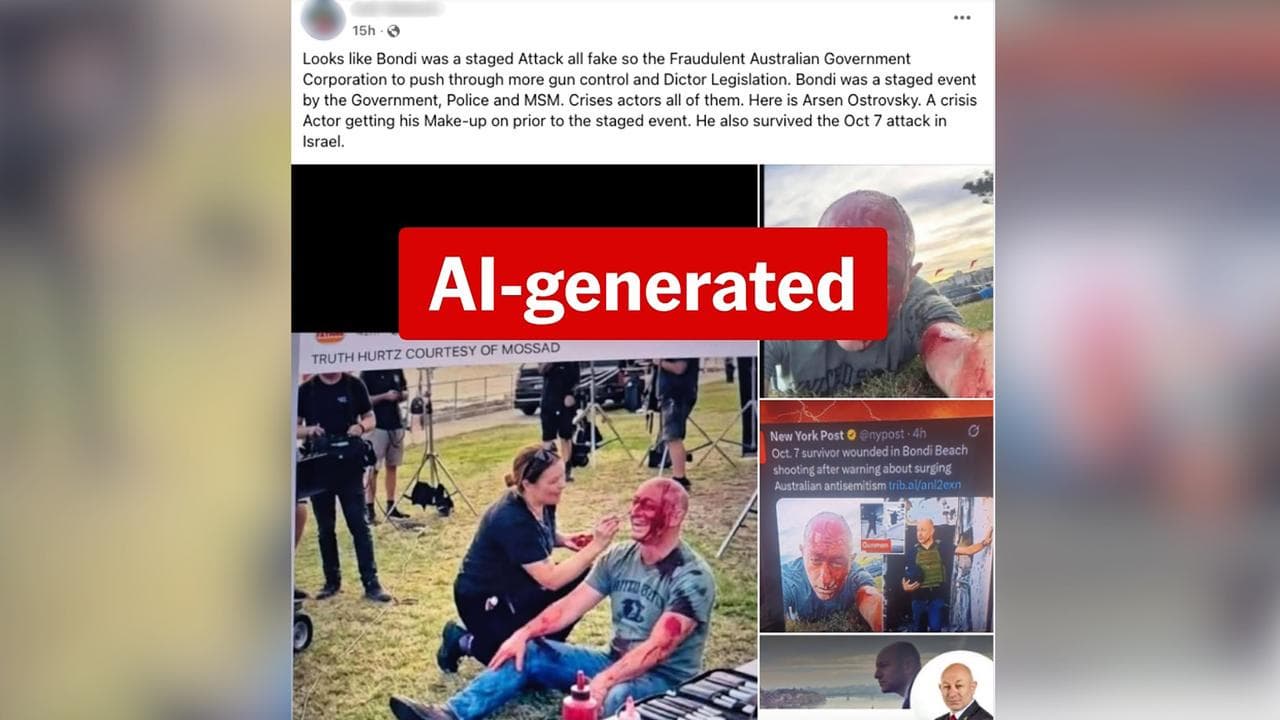
Within hours of the Bondi Beach atrocity, misinformation flooded social media, with claims of a fake hero and a paid actor, and countless clips pushing false narratives.
The shooting by father and son Sajid and Naveed Akram, which left 15 people dead at a Sunday Hanukkah celebration, has raised further alarm over AI images and fake news.
Australian Associated Press' FactCheck service has found at least a dozen examples of falsehoods and conspiracy theories spreading online.
They include bogus reports that a 43-year-old IT professional named Edward Crabtree was the man - later correctly identified as Ahmed Al Ahmed - who was captured on video snatching a gun from the hands of one of the Bondi terrorists.
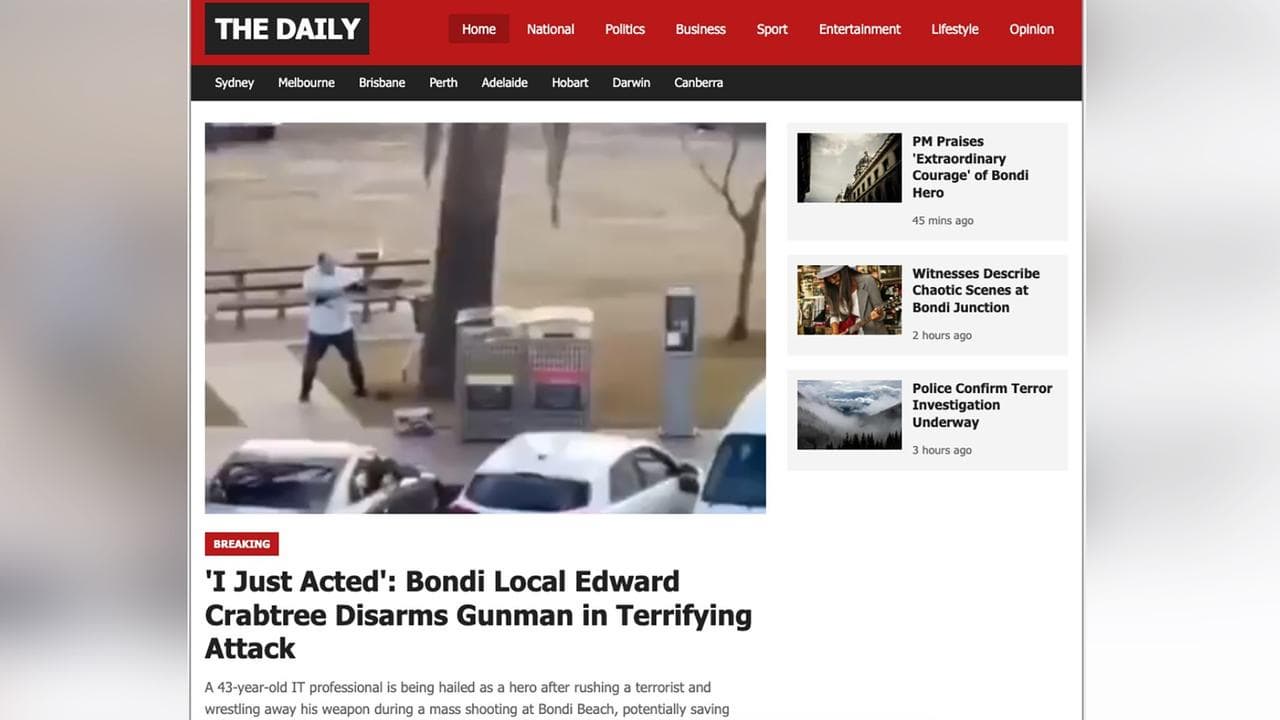
The claim was made in an article published on a fake news website called The Daily under the byline of a supposed reporter named Rebecca Chen.
Neither Crabtree nor the journalist are real, while a search of the website's domain information shows it was registered on the day of the attack, December 14, to an address in Iceland.
Manipulated videos have also been circulating including a clip that shows Prime Minister Anthony Albanese supposedly announcing the visas of all Pakistani nationals would be cancelled following the terrorist attack.
Another features fabricated footage of NSW Premier Chris Minns announcing then-unconfirmed details about one of the shooters being an Indian national.
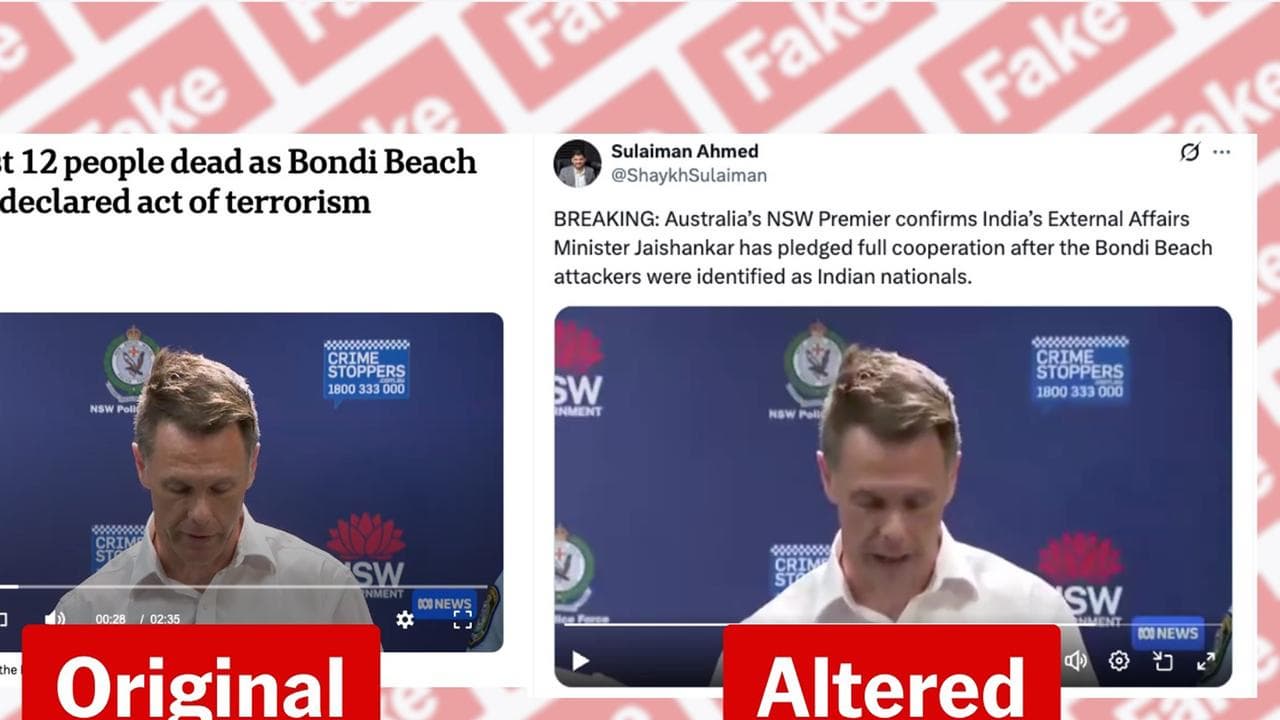
Both videos have been confirmed as fake by AAP's FactCheck researchers.
There have also been false claims one of the shooters previously served in the Israel Defense Forces.
But misinformation has spread beyond online posts, with a number of AI-generated images going viral.
A still has been circulating falsely claiming Arsen Ostrovsky, who was interviewed by television news journalists bandaged and bloodied after the attack, was a paid “crisis actor”.
The mock image, shared widely, purported to show Mr Ostrovsky having make-up applied while surrounded by a film crew, suggesting the massacre launched from the Campbell Parade footbridge was staged.
Mr Ostrovsky was targeted a second time by claims that a photo, which has been manipulated, showed his injuries were fake.
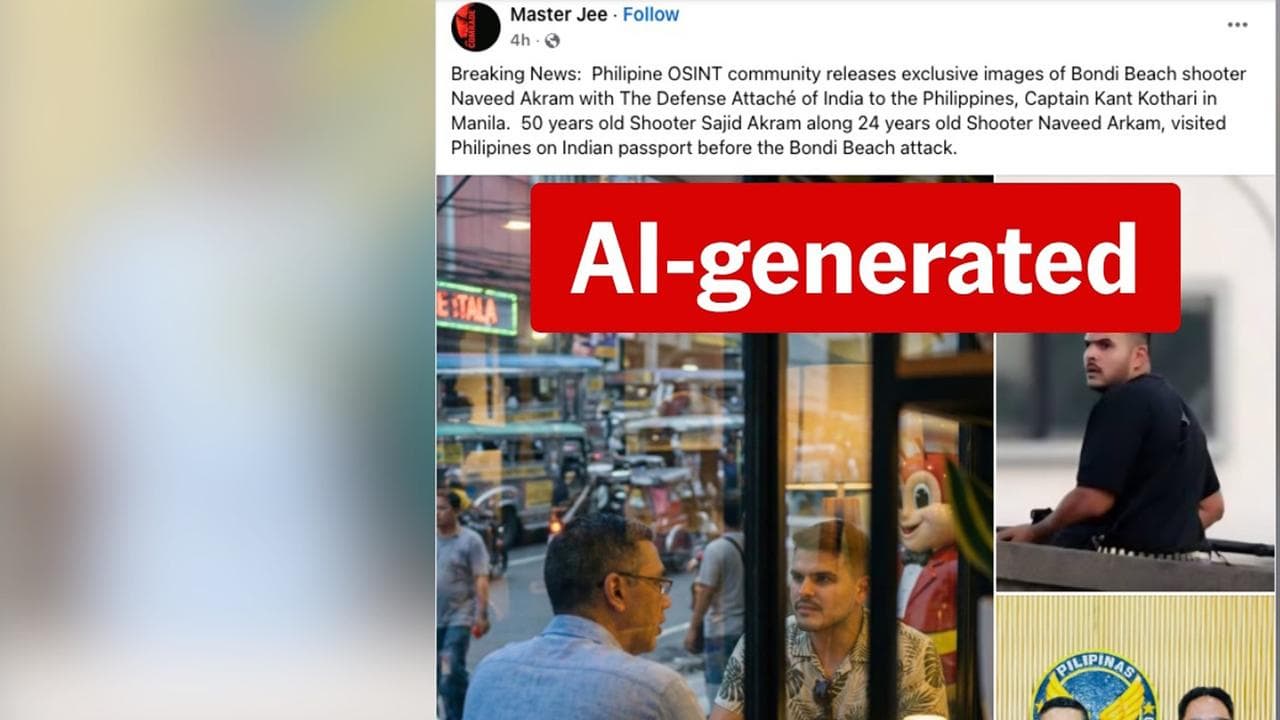
Elsewhere, doctored pictures have emerged claiming to show Naveed Akram meeting with the Defence Attache of India to the Philippines, Captain Chandra Kant Kothari.
Swinburne AI expert Atie Kia said social media platforms, combined with increasingly accessible AI tools, enable deepfakes and false narratives to spread quickly.
“After a tragedy, people look for answers, and that creates the perfect space for AI-generated images and false stories to spread," she told AAP.
Dr Kia said it was concerning how quickly misinformation could influence public perception during a crisis, adding that AI-generated content is becoming far more sophisticated and harder to detect.
She believes that strong verification practices and improved digital literacy could help limit the spread.
"People think it takes a professional to create fake videos but it just takes some clicks," Dr Kia added.
"It is easy to place a real person’s face into a violent image and even when proven fake, the reputational damage can last."
It's never been more important for people to do their own research before sharing viral posts, Dr Kia added.
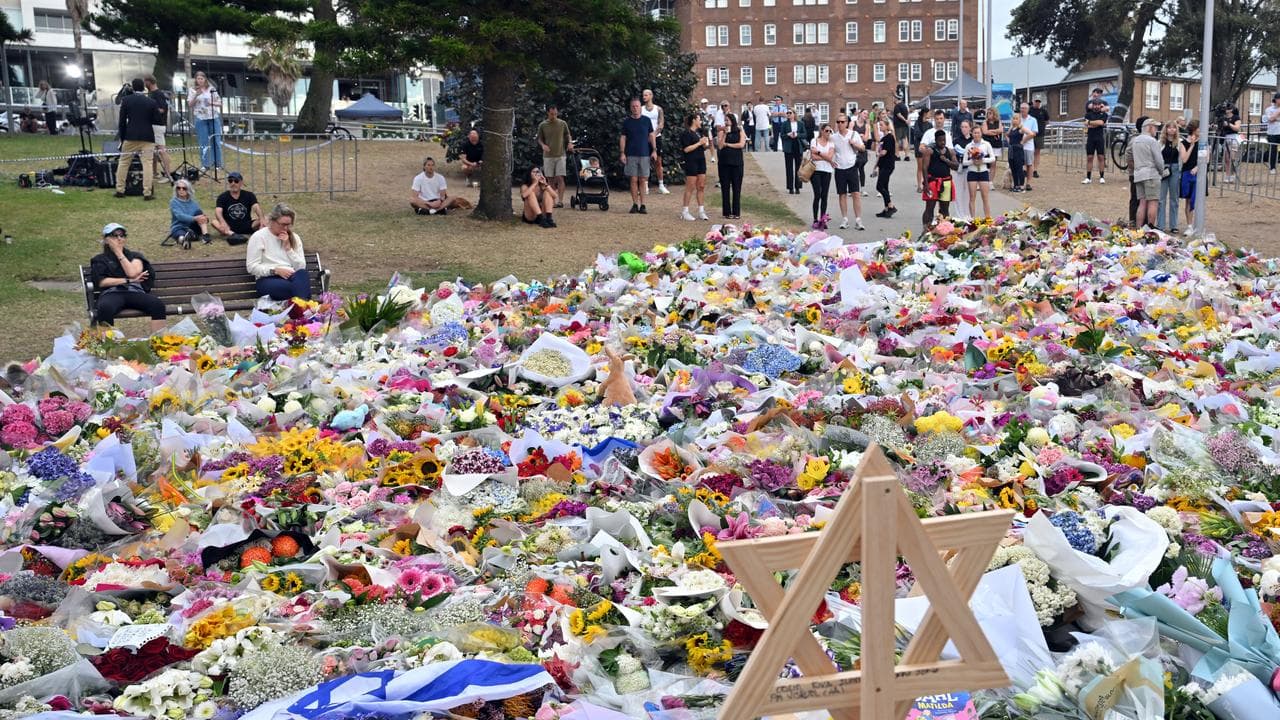
Even a week since the deadly attack, the spread of fake content continued.
This includes heated online debates about the nationalities of the gunmen despite authorities having already released details.
The Australian government has confirmed one of the gunmen was born in Australia and Indian police have said the other was originally from Hyderabad.
Lifeline 13 11 14
beyondblue 1300 22 4636


