
It's a question that has perplexed scientists for 150 years.
Now a PhD candidate aided by one of Australia's most powerful computers might have finally determined what caused swathes of Earth's geological record to disappear.
“Imagine a book where a huge section in the middle has been ripped out," University of Wollongong researcher Santosh Dhungana said.
"The Great Unconformity is that gap in Earth’s story, with the narrative jumping from the early chapters straight to a much later part of the story.
"Our research suggests these pages weren't lost by chance."
Layers of rock usually stack in a gradual sequence, from the oldest at the bottom to the youngest at the top.
But geologists have identified areas across the globe where sedimentary rocks from the Cambrian period - which marks the explosion of animal life 540 million years ago - sit directly on top of rocks at times more than one billion years old.
Many have theorised about the dynamics behind the Great Unconformity, which was first identified in the 1870s.
Yet testing these hypotheses has been difficult because the evidence lies in what is missing.
Mr Dhungana and UOW Associate Professor Nicolas Flament used Gadi, one of Australia's most powerful supercomputers, to run mantle convection models and solve the long-standing mystery.
Each simulation took about 75,000 core-processing or CPU hours to finish.
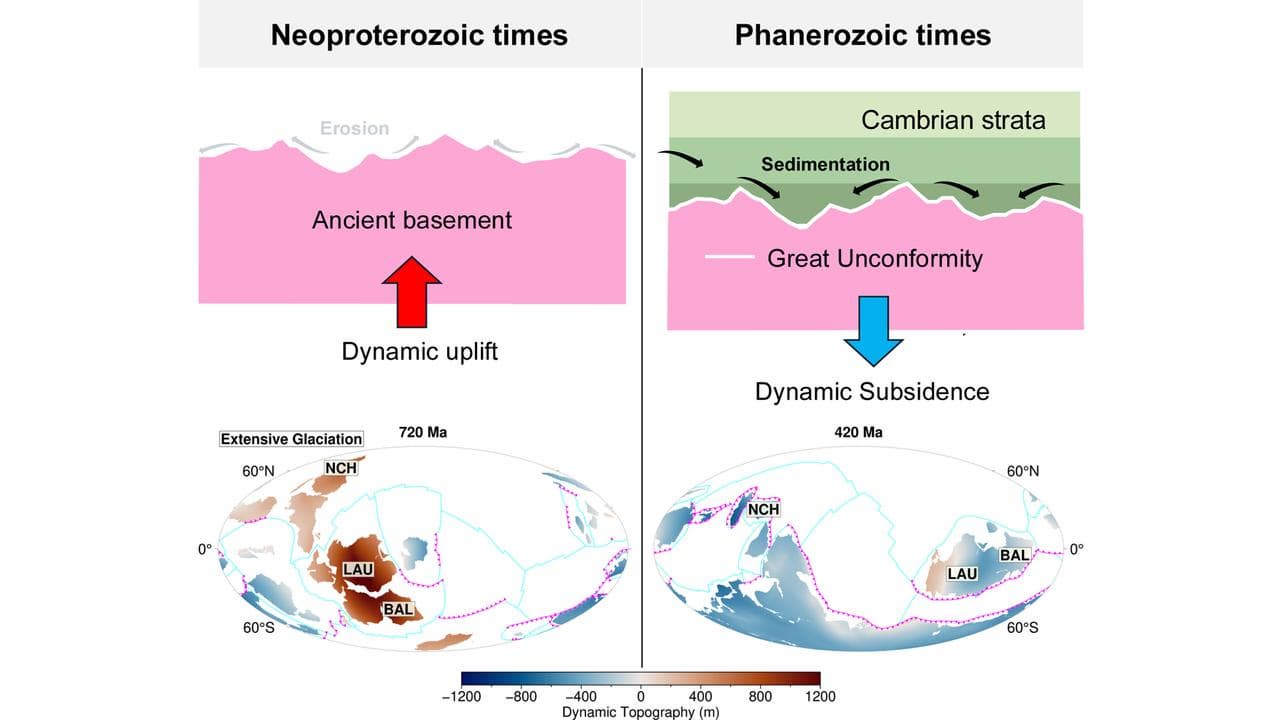
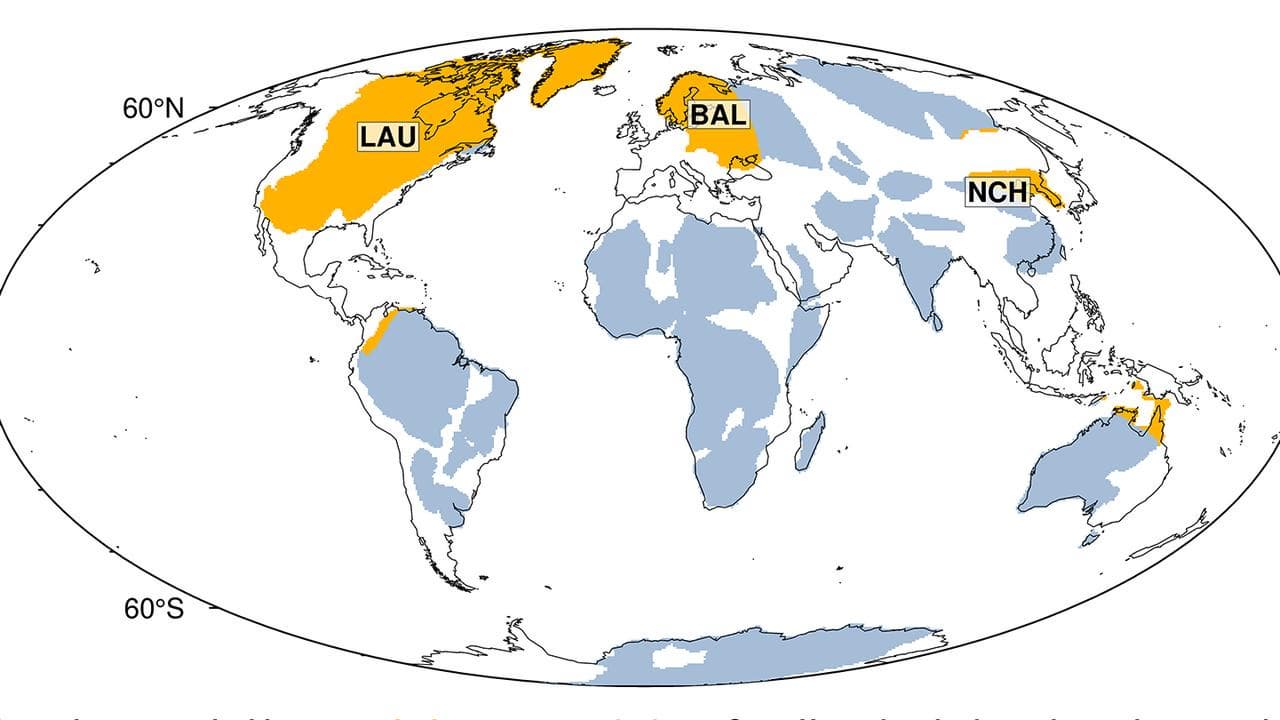
Their model showed the ancient cores of North America (Laurentia) and northern Europe (Baltica), along with northern China, rose during the Neoproterozoic Era, between one billion and 540 million years ago.
It then subsided during the Phanerozoic eon, which marks the past 540 million years.
As these ancient continental cores gradually sank into the ocean, the rock surface was buried, forming the Great Unconformity, according to research published in the journal Nature.
Mr Dhungana told AAP the phenomenon was starkest in the walls of the Grand Canyon, in the US state of Arizona.
Here, sedimentary rock from about 540 million years ago or younger sits directly on top of an ancient basement rock that could be up to two billion years old.
“Sometimes what is missing can tell us more about the story of Earth than what we can see," Assoc Prof Flament said.
"A single, long period of uplift followed by a long period of sinking would have been the ideal recipe for removing the rock and preserving the worn surface."
Many explanations for the Great Unconformity have been proposed but Assoc Prof Flament said few have been tested against how the Earth actually behaved over time.
"It is a thrill to be able to propose a solution to this geological puzzle,” he said.


