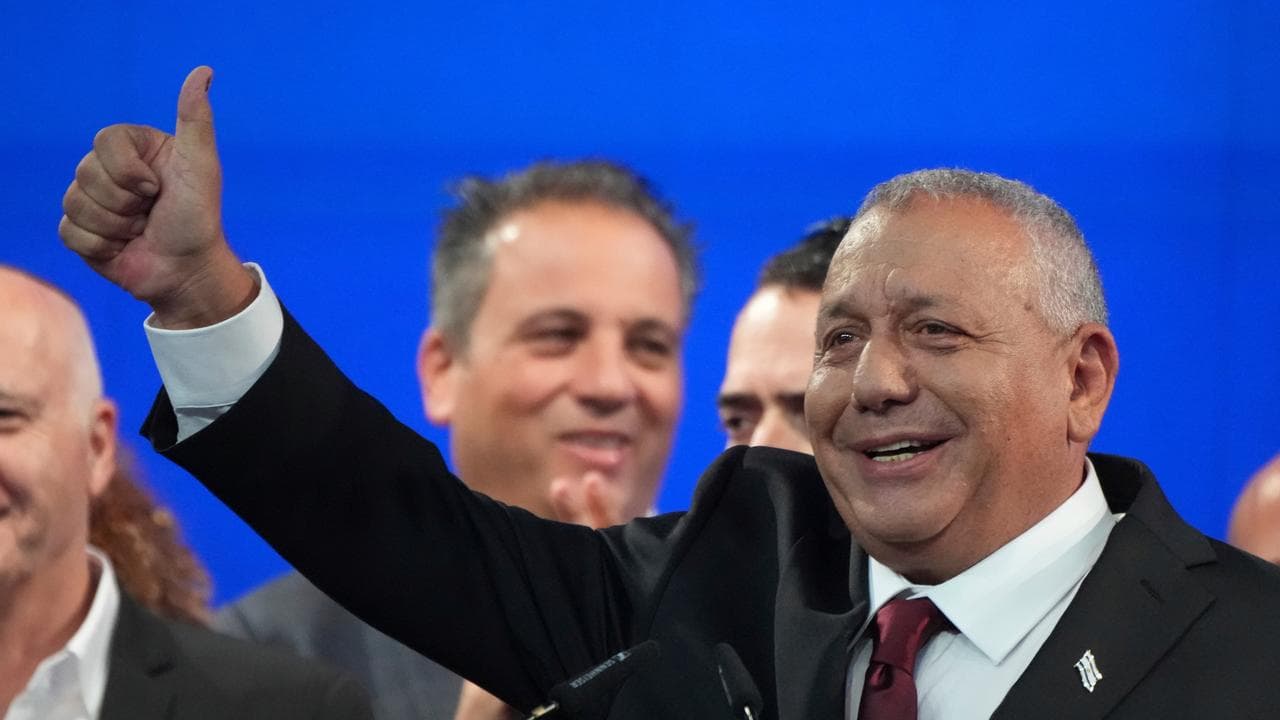
Israel's president has chosen Gadi Eisenkot, Prime Minister Benjamin Netanyahu's strongest rival, to try to form a new government following a deadlocked election that left neither man with a clear path to power.
Netanyahu, Israel's longest-serving leader, is fighting to stay in office after his religious-nationalist coalition lost its majority in an October 27 election but still emerged as the largest bloc in parliament.
Eisenkot, a former military chief, has declined to join forces with Arab parties, with whose support he would have a majority of seats in parliament.
But Arab leaders, incensed by what they view as the racist policies of Netanyahu and his ultranationalist allies, still nominated Eisenkot to try to form a government first - giving him the most endorsements.

President Isaac Herzog's office confirmed the decision on Saturday.
"President Herzog has invited Gadi Eisenkot to the President's Residence, where he will be tasked with forming the government tomorrow," a spokesperson said.
The Israeli president's largely ceremonial role involves nominating a candidate to form a coalition after elections.
Weeks of protracted negotiations are expected to follow Eisenkot's nomination.
He has 28 days to try to forge a government, with a possible 14-day extension.
His potential pathways to power include trying to form a minority government with Arab support from the outside; forming a coalition with ultra-Orthodox parties that he and his allies have shunned in the past; or forging a unity government with Netanyahu.
Analysts say that all three options are unlikely to take shape.
If Eisenkot fails, another candidate can try to form a government and if that candidate fails, parliament can nominate another.
There is a deadline for the process of about 100 days.
If no one succeeds, another election is held.


