
What was claimed
Official data reveals 3400 people migrated to Australia each day in February.
Our verdict
False. The data used measures border crossings, not migration.
AAP FACTCHECK - Social media posts are falsely claiming that more than 3400 migrants arrived in Australia each day in February.
The data used to calculate the figure measures border crossings, not migration, and generally overstates the number of people actually moving to live in Australia.
The claims were shared online following the Australian Bureau of Statistics (ABS) release of the February 2026 Overseas Arrivals and Departures (OAD) data.
"...96,110 migrants arrived and settled in February 2026, marking the third highest February on record," an April 30 Facebook post states.
"This surge brought in approximately 3,432 people per day."

"Australia is adding over 3,400 people every single day through record immigration, yet we can’t even house our own citizens," another post reads.
The false claim is also made in a Facebook video with more than 205,000 views.
"So the immigration numbers for February just dropped, and it's bad," the man in the video claims. "It's over 3000 a day.
"That's gotta be some record, right. We took in over 100,000 in the month of February alone."
However, experts told AAP FactCheck the OAD data is not an accurate measure of migration and figures for the month of February were an outlier due to international students entering Australia at the start of the academic year.
James Raymer, a professor in the school of demography at the Australian National University, said the OAD data did not capture how long those who arrived stayed in the country.

"[It] can be easily misinterpreted if used to represent numbers of migrants," Professor Raymer said.
Instead, it measures all arrivals and departures and groups them by visa category, he said.
The 96,110 figure mentioned in the video is calculated by adding the number of permanent arrivals, long-term resident returns and long-term visitor arrivals, then subtracting the long-term resident departures and long-term visitor departures.
This measure is called net permanent and long-term (NPLT) movements.
When this total is divided by the 28 days in February 2026, it equates to 3432 people per day - the figure that appears in the social media posts.
However, experts and the ABS say this figure is inaccurate because it measures border crossings rather than migration.
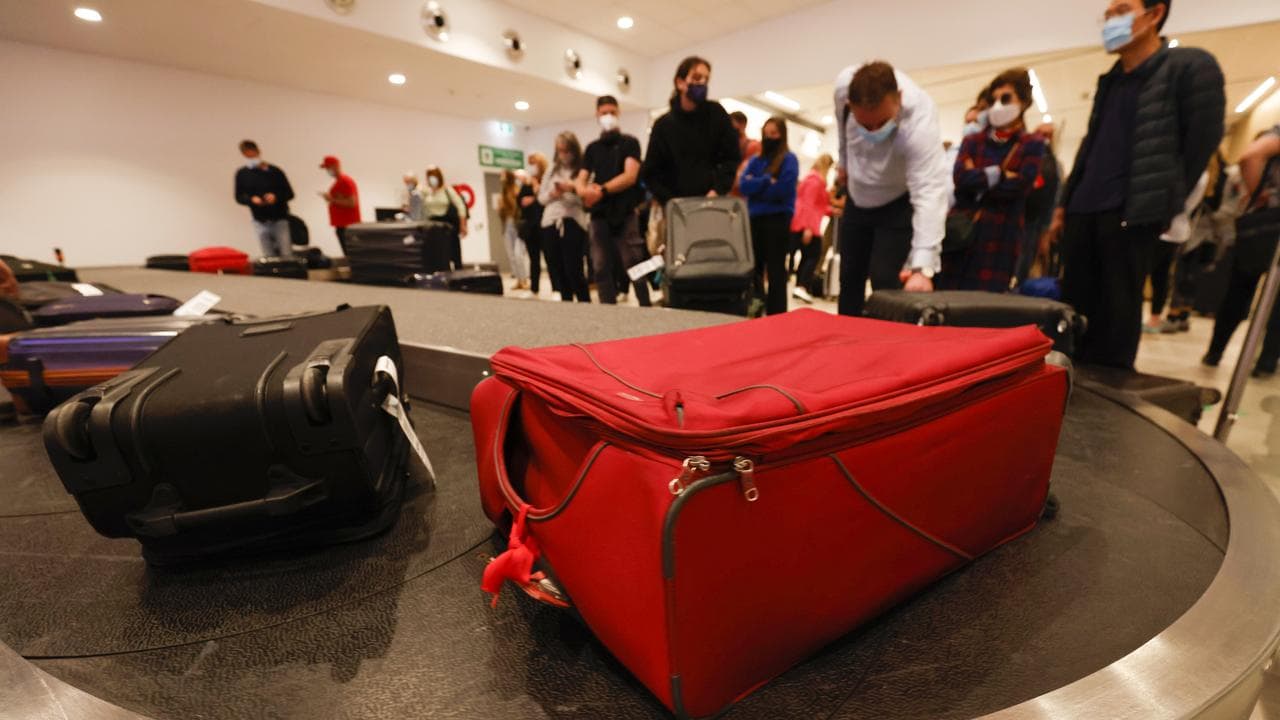
The ABS put out a statement last year after the figures were used in commentary on migration, which it said "may lead to inaccurate conclusions on migration".
"Permanent and Long-term movements come from traveller declarations and are not contingent on the traveller’s residency status prior to travel," the ABS said in the statement.
"For example, this means a person who has been living in Australia for three years on a temporary visa, and travels overseas multiple times, can count as a long-term visitor arrival many times, even though they only migrated here once."
This means that, historically, these figures have consistently been higher than actual migration levels, the statement explained.
Instead, the ABS recommends using a different measure - net overseas migration (NOM).
The NOM measure counts only those who have lived in Australia for 12 months out of a 16-month period as migrants, a method called the 12/16 month rule.
This means there is a delay in NOM figures being recorded. The latest data is for the September 2025 quarter, when net overseas migration reached 87,821 people, equivalent to 954 people per day.
In the year to September, net overseas migration was 310,991, which is 852 per day.
AAP FactCheck previously debunked a similar claim made in August 2025 that used OAD data to claim 1544 migrants were arriving every day.
Alan Gamlen, a migration expert at the Australian National University, told AAP FactCheck at the time that OAD data could not be used as a reliable indicator of how many migrants were arriving in Australia.
Anna Boucher, a migration expert at the University of Sydney, also told AAP FactCheck that OAD data only captured movement in and out of the country and agreed it was not an accurate measure of immigration.
Prof Raymer also said that using the February OAD in isolation would yield a misleading figure for the overall number of arrivals, because that's when many international students entered the country to begin their university semesters.
By comparison, the December 2025 OAD figures showed 90,130 arrivals and 82,580 departures, equating to 243 net arrivals each day.
The equivalent figure for January 2026 would be 1847 net arrivals each day.
"So, the story can change depending on the month of data used," Prof Raymer said.
The latest figures include March 2026 and show the number of net permanent and long-term arrivals was 40,400, equating to 1303 per day - less than half the number for February.
AAP FactCheck is an accredited member of the International Fact-Checking Network. To keep up with our latest fact checks, follow us on Facebook, Instagram, Threads, X, BlueSky, TikTok and YouTube.


